Industrial RO recovery is a design decision, not a fixed percentage copied between projects. It links source-water chemistry, pretreatment, concentrate routing, membrane operating conditions, production demand and the owner’s tolerance for operating risk.
Start industrial RO recovery rate planning with the actual process requirement
Industrial RO recovery is a design decision, not a fixed percentage copied between projects. It links source-water chemistry, pretreatment, concentrate routing, membrane operating conditions, production demand and the owner’s tolerance for operating risk. For an industrial project, the first engineering question is what quality, flow, pressure and availability are required at the real point of use. A generic equipment label or a nominal capacity does not define an acceptable duty. Production, quality, facilities and procurement should agree the water-use profile before a configuration is frozen.
Document normal and peak demand, operating hours, planned expansion, sampling points and the consequence of an interruption. This turns an early enquiry into a usable design basis and helps suppliers compare like-for-like scope rather than quote a system with unstated assumptions.
- Define the point-of-use requirement and measurement basis.
- Separate average consumption from short peak events.
- Record known constraints and open technical questions.
- Use representative source-water information for the next design step.
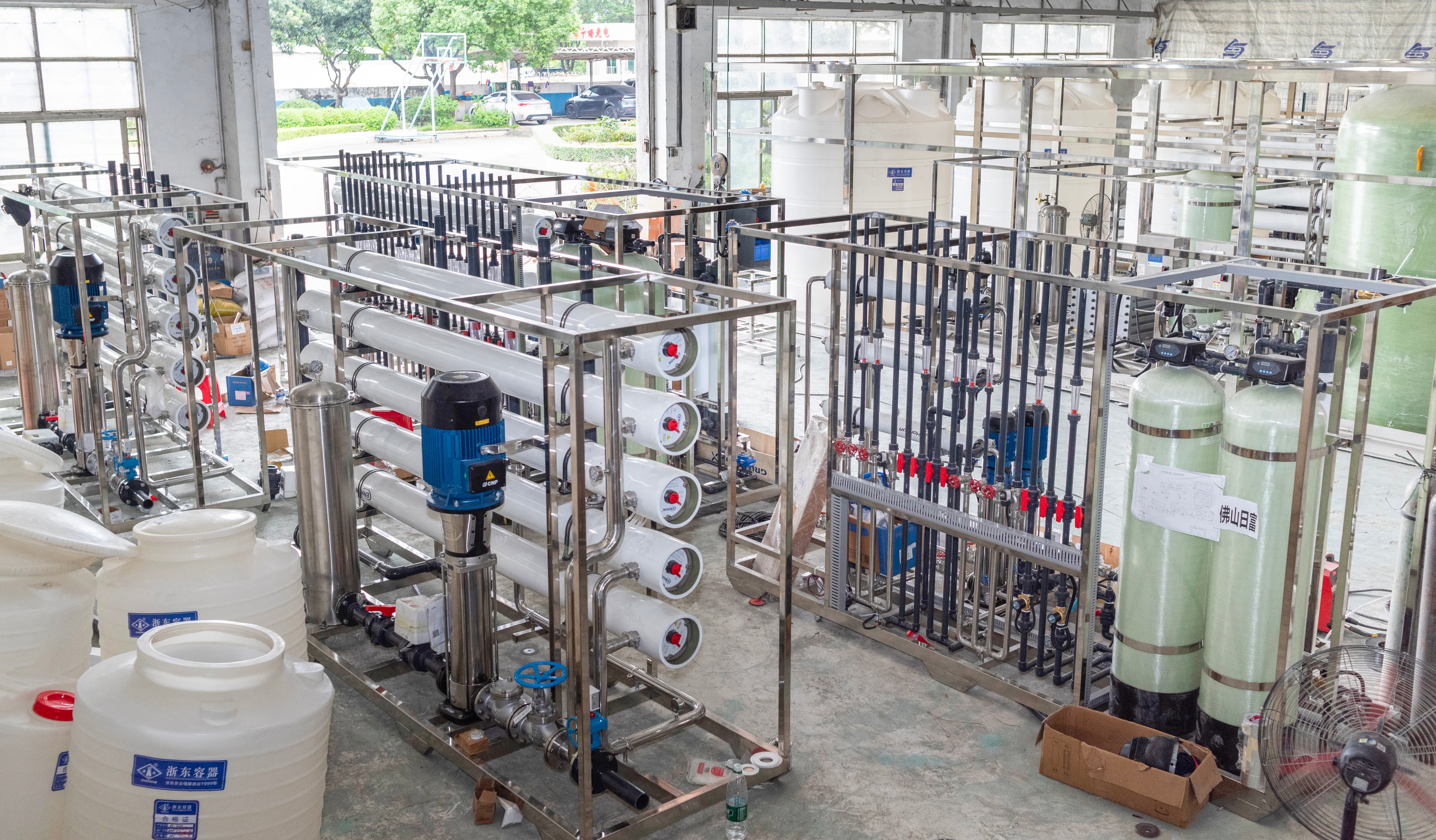
Characterize the feed water and project boundary
The treatment train should be selected around scaling, fouling, silica, hardness, organics, seasonal variation and the ability to manage the concentrate stream. A dated laboratory analysis is a starting point, but the team should also understand sampling location, source changes, temperature range and variation over time. These conditions influence equipment selection, monitoring and the margin needed for stable operation.
Define the boundary between incoming water, pretreatment, the main treatment skid, storage, distribution, drainage and the final use point. A strong technical proposal makes these interfaces visible. It should not imply that a single skid can control quality after water has passed through unfinished external piping or an undefined storage arrangement.
- Confirm that the water analysis represents normal and adverse conditions.
- Identify upstream treatment and its operating responsibility.
- Map utility, drain, external pipe and access interfaces.
- State which values are design inputs and which require final confirmation.
Send the feed-water analysis, target quality, required capacity and operating profile. We will help structure the next engineering questions.
Send your project inputsSelect the industrial reverse osmosis recovery and concentrate management route from risk, not a generic template
The appropriate process route follows the balance between product-water yield, membrane protection, pretreatment scope, cleaning strategy and site discharge constraints. Each treatment stage should solve a defined problem and be supported by an instrument, alarm or operating procedure that makes the result verifiable. Adding equipment without a clear quality or reliability purpose increases interfaces without necessarily improving the project outcome.
During technical clarification, request a process-flow diagram, stated design assumptions, instrumentation list, alarm philosophy, materials of construction, utilities, consumables and exclusions. These documents make it possible to compare bids on the same technical boundary and identify where a lower quoted price may omit a necessary function.
- Ask for the design basis behind stated capacity and performance.
- Review process, controls and utility requirements together.
- Separate guaranteed requirements from preliminary estimates.
- Confirm the owner, supplier and EPC responsibilities at each interface.
Plan operating control, maintenance and quality evidence
Reliable operation depends on tracking normalized flows and pressures, sampling feed and concentrate and responding to changing source-water conditions before membrane performance is affected. The operating plan should describe the normal monitoring points, the response to an out-of-range condition, data retention, calibration responsibility and when a sample or process review is required. A single measurement is rarely sufficient to prove that the whole process remains within an approved specification.
Maintenance planning should cover access, isolation, flushing or cleaning where applicable, consumables, spare parts and the site’s available skills. These topics belong in the project review because they determine whether the selected process can be operated as intended after commissioning rather than only demonstrated during a factory run.
- Define operating indicators and quality release points separately.
- Include alarms, interlocks and escalation actions in the control narrative.
- Plan maintenance access and consumables before layout is released.
- Keep baseline data from commissioning for later troubleshooting.
Use factory testing and commissioning to manage project risk
A factory acceptance test should follow a mutually agreed checklist. Depending on the scope, it can review equipment identification, electrical-panel functions, instruments, alarms, pumps, available operating run, piping condition and documentation. It should clearly distinguish factory observations from final site acceptance, because source water, utilities and external distribution may differ at the installed location.
Before shipment, verify packing, preservation, lifting and installation information together with approved drawings and connection schedules. At site, record incoming-water conditions, operating flows, pressures and product-water observations. These records create a defensible baseline and reduce the chance that a later site-interface issue is incorrectly attributed to the treatment equipment.
- Agree FAT criteria before fabrication is complete.
- Confirm shipping and site-utility interfaces before release.
- Use commissioning records for feed, flow, pressure and quality observations.
- Close outstanding actions with responsible parties and dates.
Prepare a focused RFQ and next engineering review
For a meaningful industrial RO recovery rate proposal, provide the latest water analysis, required product-water quality, peak and daily demand, operating schedule, location, utilities, drainage, available space, delivery constraints and documentation requirements. If any information is provisional, identify it clearly so the project team can assess its impact rather than treating it as a fixed guarantee.
BAIHUIPU can review these inputs with the proposed application, process boundary and future expansion plan in mind. Final capacity, treatment route, materials, controls and acceptance criteria should be established in the approved technical agreement after engineering review—not inferred from a general educational guide.
- Attach water-analysis and demand information to the enquiry.
- State product-water target and sampling point.
- Include site utilities, drains, access and installation constraints.
- Request the PFD, P&ID, control narrative, FAT basis and documentation list.
Questions buyers commonly ask
Is a higher RO recovery always better?+
No. A higher recovery can reduce feed-water use, but it also increases concentrate concentration and may increase scaling or fouling risk. The acceptable range must be engineered from actual analysis and operating assumptions.
What data are required to select RO recovery?+
Use a representative source-water analysis, production demand, temperature range, pretreatment information, proposed concentrate destination, cleaning philosophy and target product-water quality.
Can recovery be changed after installation?+
It can sometimes be adjusted within the equipment and membrane supplier’s approved operating envelope, but it should not be changed without reviewing concentrate chemistry, pump duty, flows, pressures and warranty conditions.
How does UF pretreatment affect RO recovery?+
UF can reduce particulate loading and help stabilize feed quality where it is an appropriate pretreatment barrier. It does not remove the need to assess dissolved scaling constituents and other recovery limits.
Turn the guide into a project brief.
Final process selection and performance commitments should follow the complete feed-water analysis, application requirements, site utilities and approved technical agreement.