Electronics Manufacturing
RO permeate is configured as a stable process-water basis before polishing or distribution stages where required.
Industrial RO systems engineered around feed-water chemistry, required capacity and product-water quality for continuous process and production water.
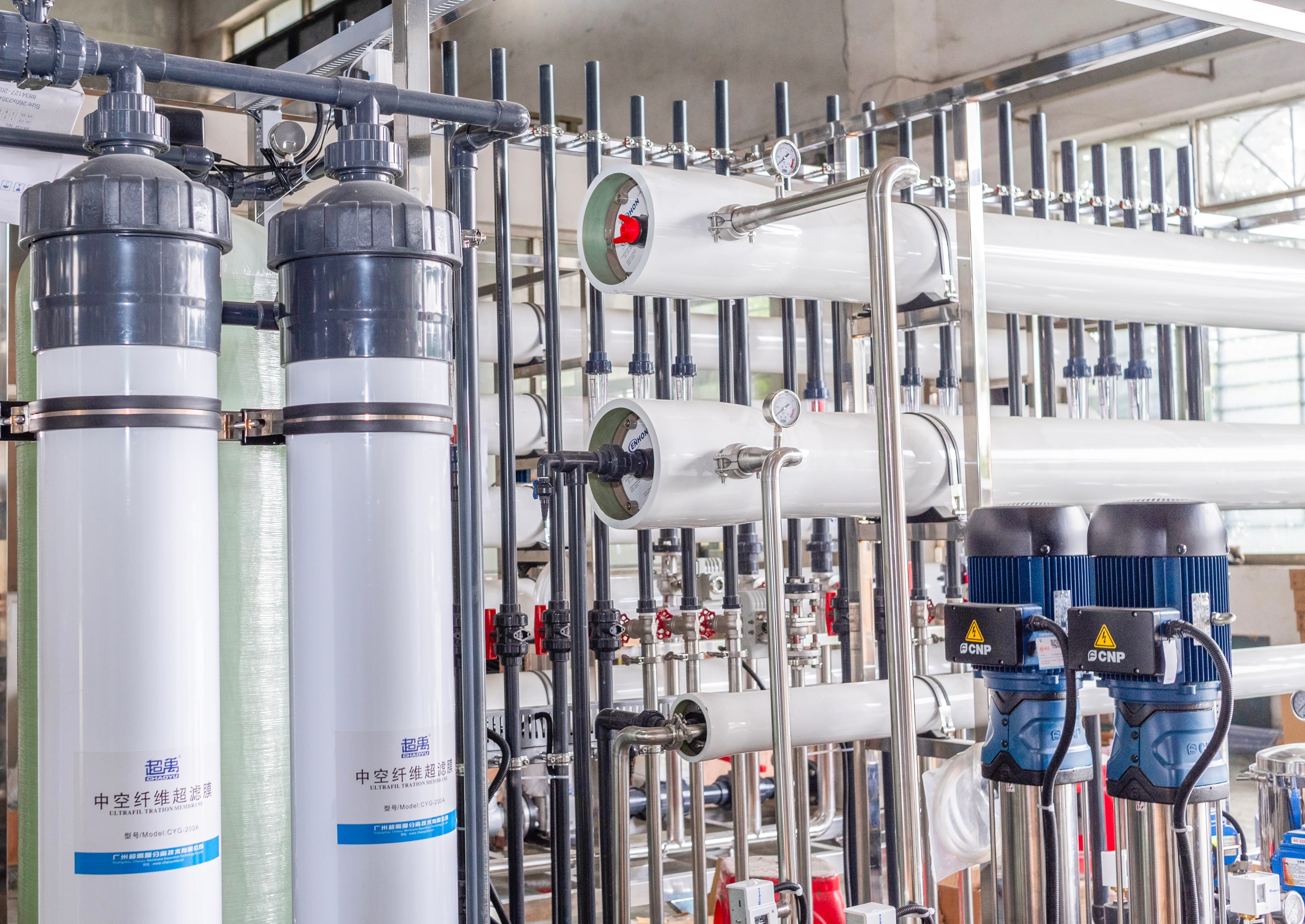
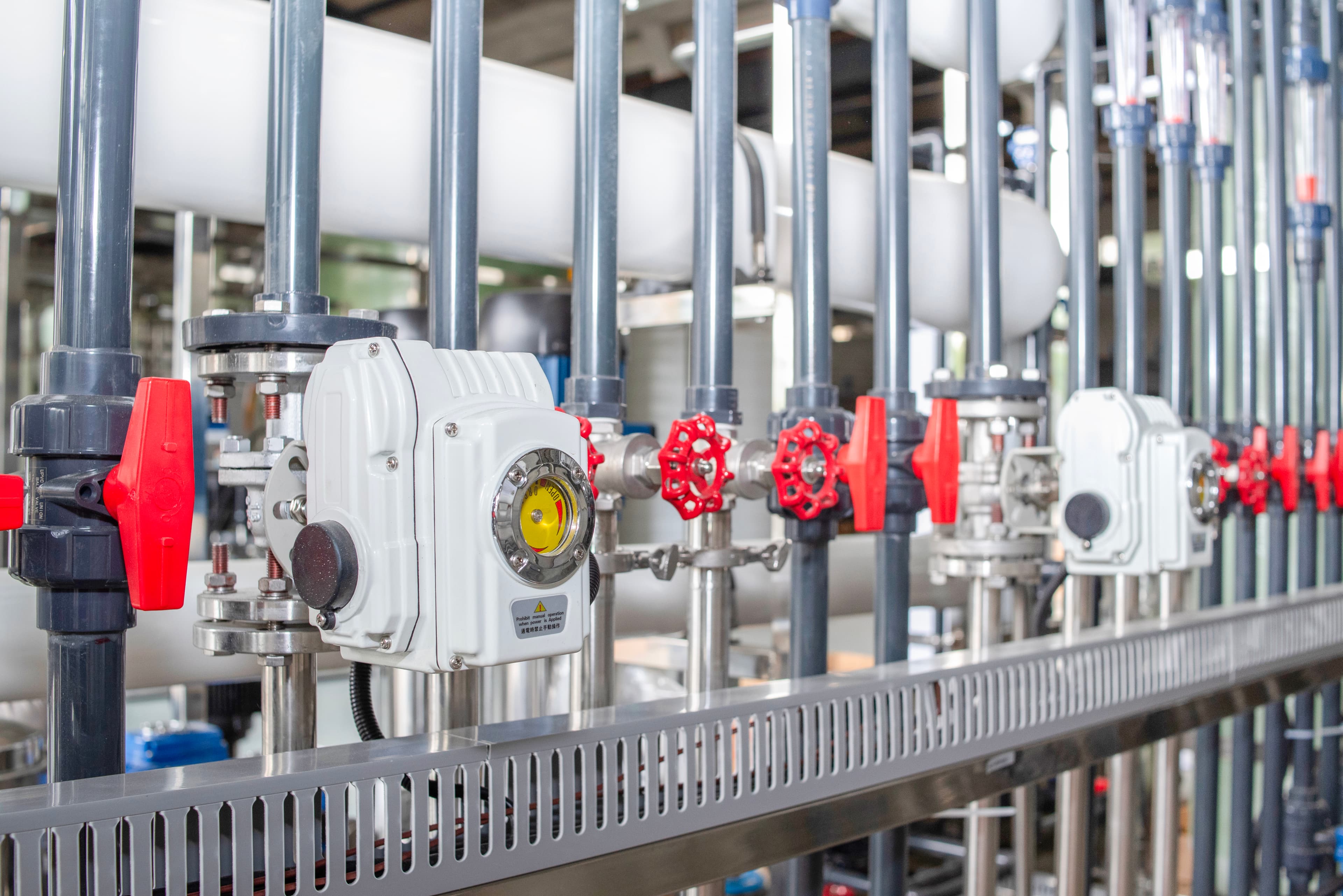
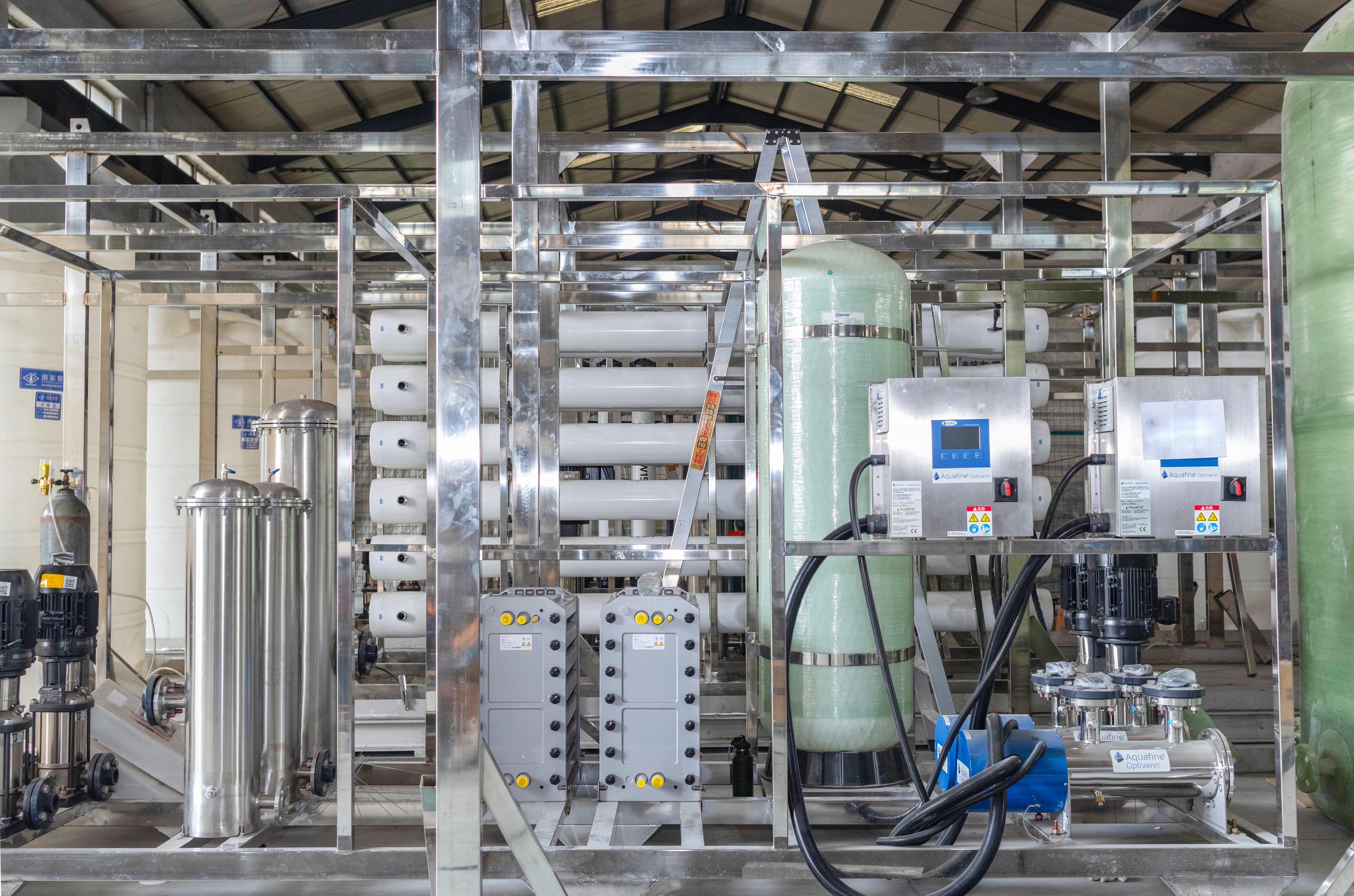
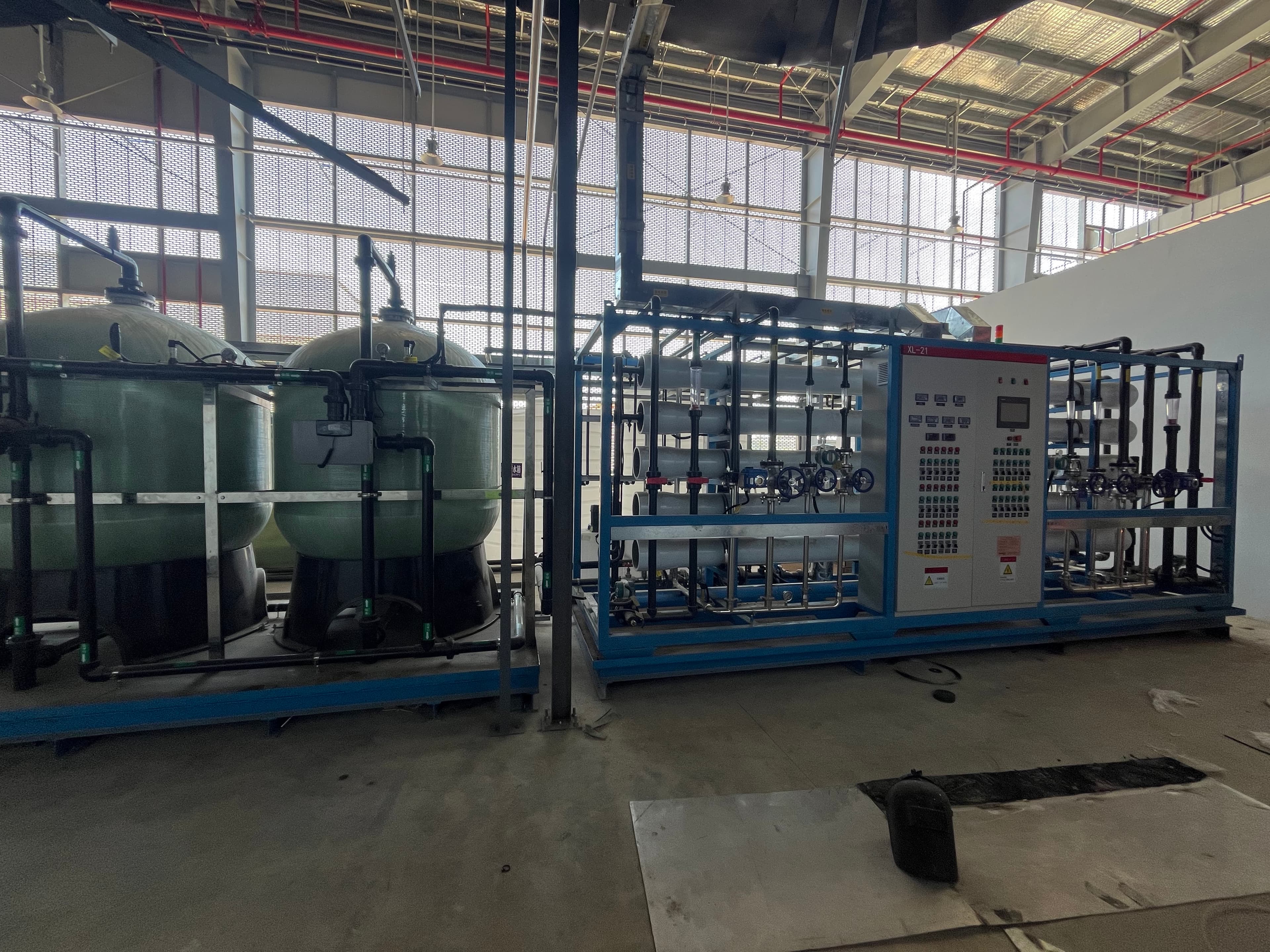
Industrial RO is reviewed around the actual point of use, source-water conditions and production duty — not selected as a generic machine.
RO permeate is configured as a stable process-water basis before polishing or distribution stages where required.
Treatment scope is reviewed against make-up water, process demand, operating hours and specified quality controls.
Utility and process-water duties are assessed with material, documentation and quality-monitoring requirements in view.
Source-water conditioning and RO are considered for ingredient, cleaning and production-utility water applications.
Feed-water variability, compatibility and the intended process use determine pretreatment and operating safeguards.
Industrial RO supports production water, washing, cooling-tower make-up and other confirmed utility duties.
The industrial RO platform combines appropriate pretreatment, high-pressure membrane separation, instrumentation and automatic control. Each configuration begins with feed-water chemistry and the required product-water duty.
Capacity, target water quality, operating hours and site conditions define the treatment route. Pretreatment, RO stages, monitoring positions and automatic control are then coordinated into the approved engineering scope.
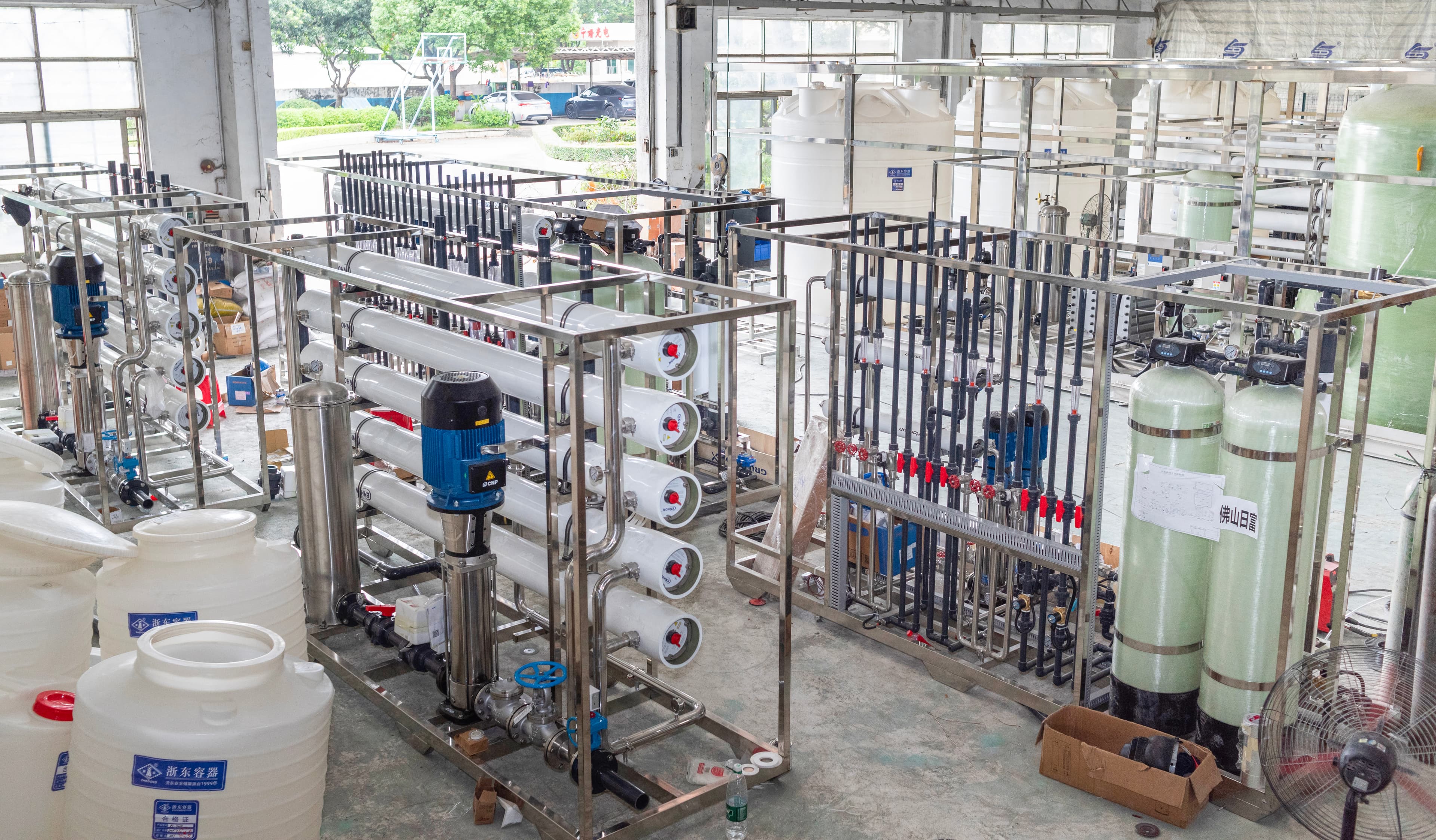
Water analysis and project conditions are the starting point for a reliable industrial RO selection.
| Design Input | Required Information | Why It Matters |
|---|---|---|
| Water Source | Municipal, groundwater, surface water or pretreated supply | Sets the treatment basis and confirms what pretreatment needs review. |
| TDS | Water analysis required | Influences membrane loading, pressure, rejection expectation and recovery review. |
| Hardness | Confirmed during engineering | Determines scale-control, softening or antiscalant requirements. |
| Silica | Water analysis required | Can affect recovery assumptions and cleaning strategy. |
| Turbidity / SDI | Confirmed during engineering | Guides filtration and pretreatment needed to protect RO membranes. |
| Temperature | Project-specific | Affects membrane flux and the capacity basis. |
| Required Capacity | Project-specific | Defines train size, storage, redundancy and hydraulic configuration. |
| Target Conductivity | Confirmed by process requirement | Determines whether single-pass, double-pass or downstream polishing is appropriate. |
| Operating Hours | Continuous or batch operation | Informs duty cycle, tank sizing and automation philosophy. |
Each stage has a defined protection or treatment role; the final route follows the agreed engineering basis.
Source water enters against the confirmed project basis.
Protects downstream equipment according to source-water conditions.
Captures fine particles before the high-pressure stage.
Provides membrane operating pressure with protective monitoring.
Reduce dissolved salts to the required product-water duty.
Permeate is monitored and directed to the agreed use point.
Storage and distribution are configured around plant operation.
As an industrial RO system manufacturer, BAIHUIPU selects the process route, materials, controls and delivery format from the confirmed feed water, final-water target and production duty.
Selected where a single RO stage can meet the confirmed product-water requirement.
Adds a second RO stage when lower conductivity or improved feed quality for downstream polishing is required.
Uses EDI for continuous ion-removal polishing after correctly conditioned RO permeate.
Technical values shown are typical selection references. Final specifications are confirmed from feed-water analysis and required product-water quality.
| Parameter | Typical Option / Range | Engineering Note |
|---|---|---|
| Capacity | Project-specific | Sized around required flow, peak demand and operating hours. |
| Feed Water | Municipal / groundwater / pretreated water | Final pretreatment follows the confirmed water analysis. |
| Feed TDS | Confirmed during engineering | Used to review membrane arrangement, pressure and recovery. |
| RO Arrangement | Single-pass or double-pass | Selected against product-water quality and downstream treatment duty. |
| Recovery | Determined by feed water and design | Confirmed with chemistry, fouling risk and concentrate considerations. |
| Salt Rejection | Membrane and design dependent | Verified through the approved membrane selection and design basis. |
| Membrane Configuration | Project-specific | Train quantity, vessel arrangement and redundancy are engineered to duty. |
| Control System | PLC / HMI or relay control | Configured around the approved operating and reporting scope. |
| Product Water Monitoring | Flow and conductivity as required | Positions and alarms follow the process duty. |
| Materials | UPVC, FRP and stainless-steel options | Material selection follows water chemistry and project standards. |
| Power Supply | Configured to destination | Electrical architecture is defined for local voltage and approvals. |
| System Format | Skid / modular / containerized | Chosen from access, footprint, shipment and installation conditions. |
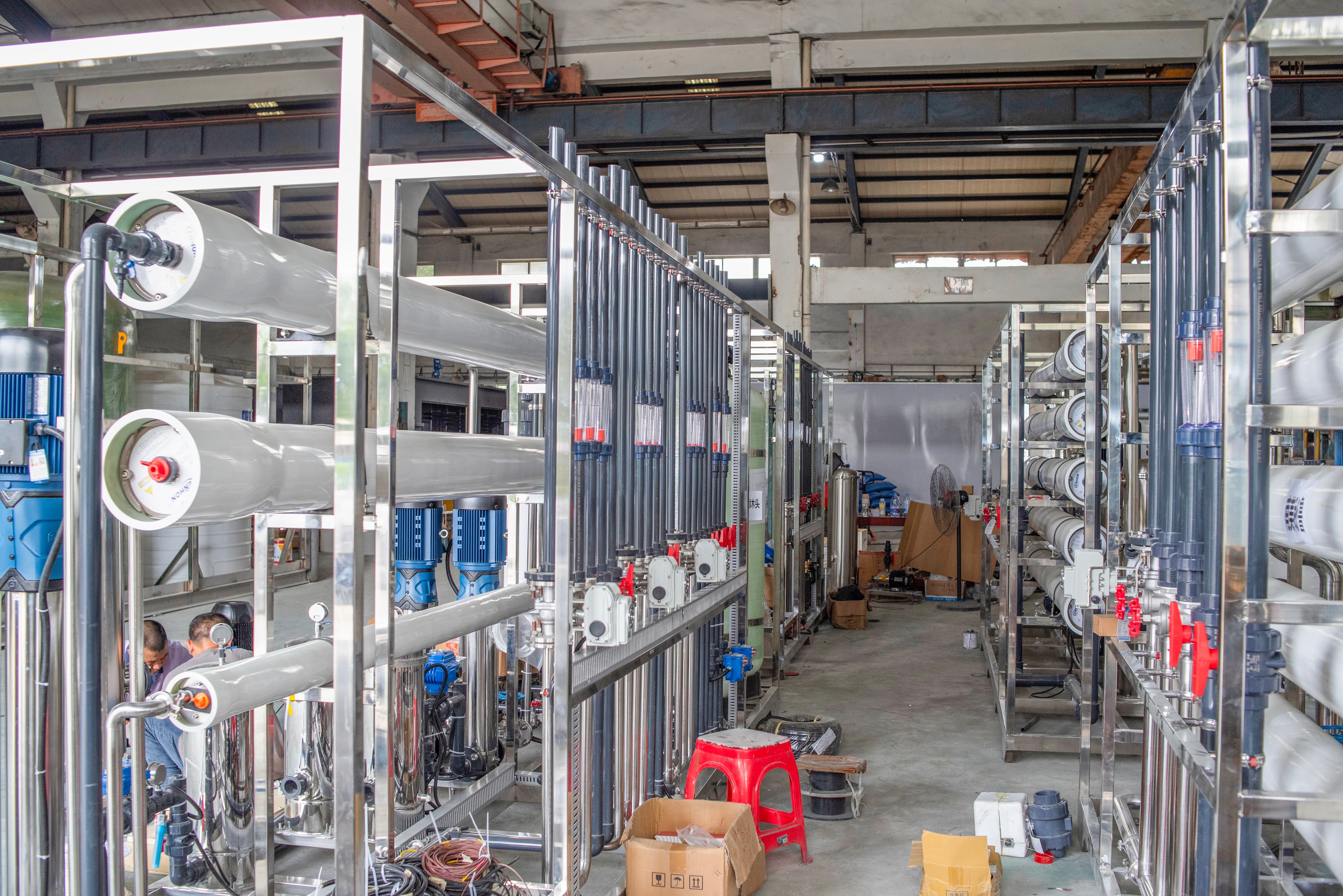
Brand selection can be discussed according to project requirements.
Control architecture and electrical standards are configured according to the approved project requirements.
Optional modules are selected from the technical scope rather than added as standard features.
Multimedia Filter
Activated Carbon
Water Softener
UF Pretreatment
Chemical Dosing
Second-Pass RO
EDI
UV
Final Filtration
CIP
Remote Monitoring
Container Enclosure
Material Options
Documentation Requirements
Equipment layout and interfaces should be reviewed before fabrication and shipment to make site installation predictable.
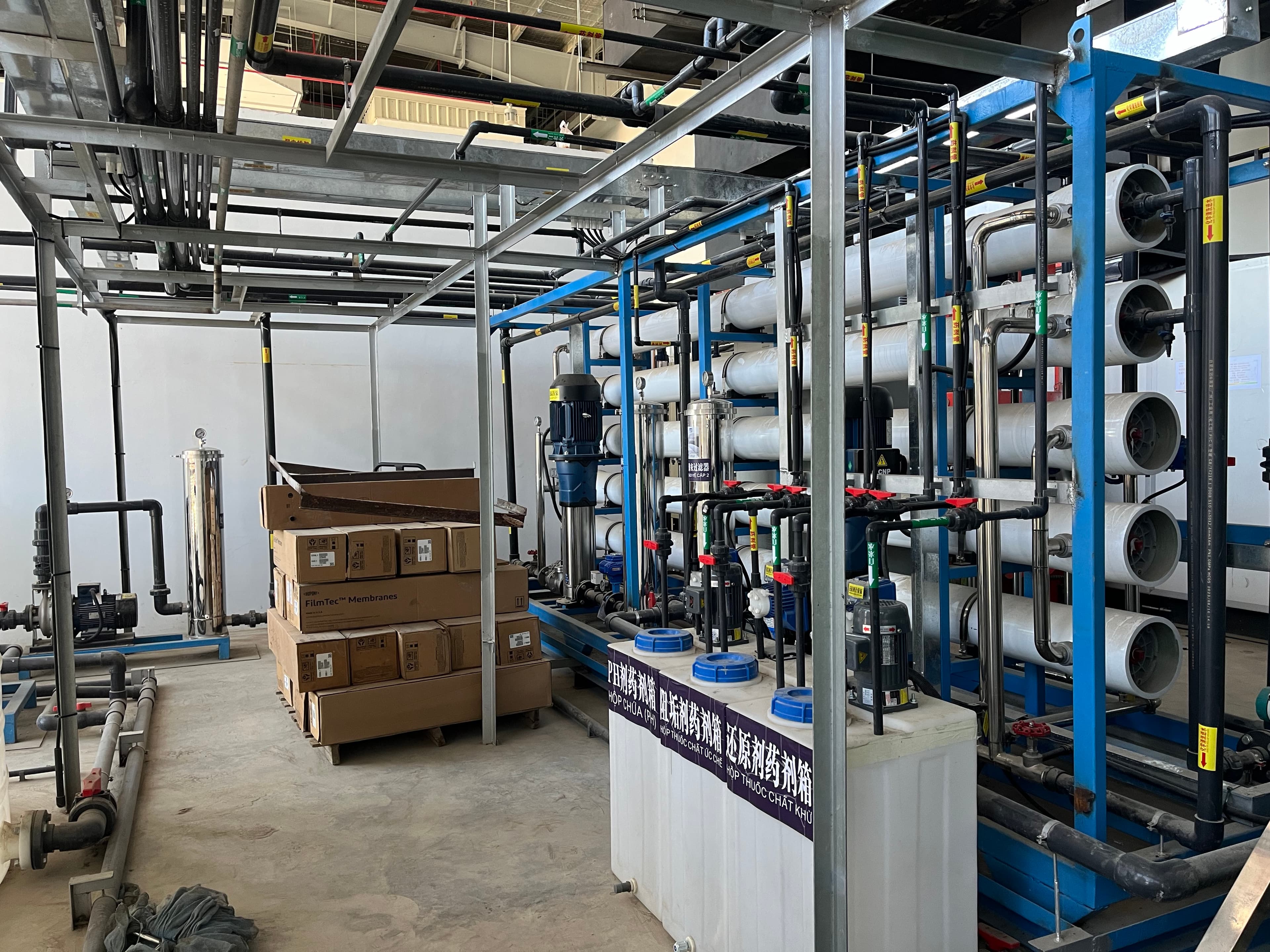
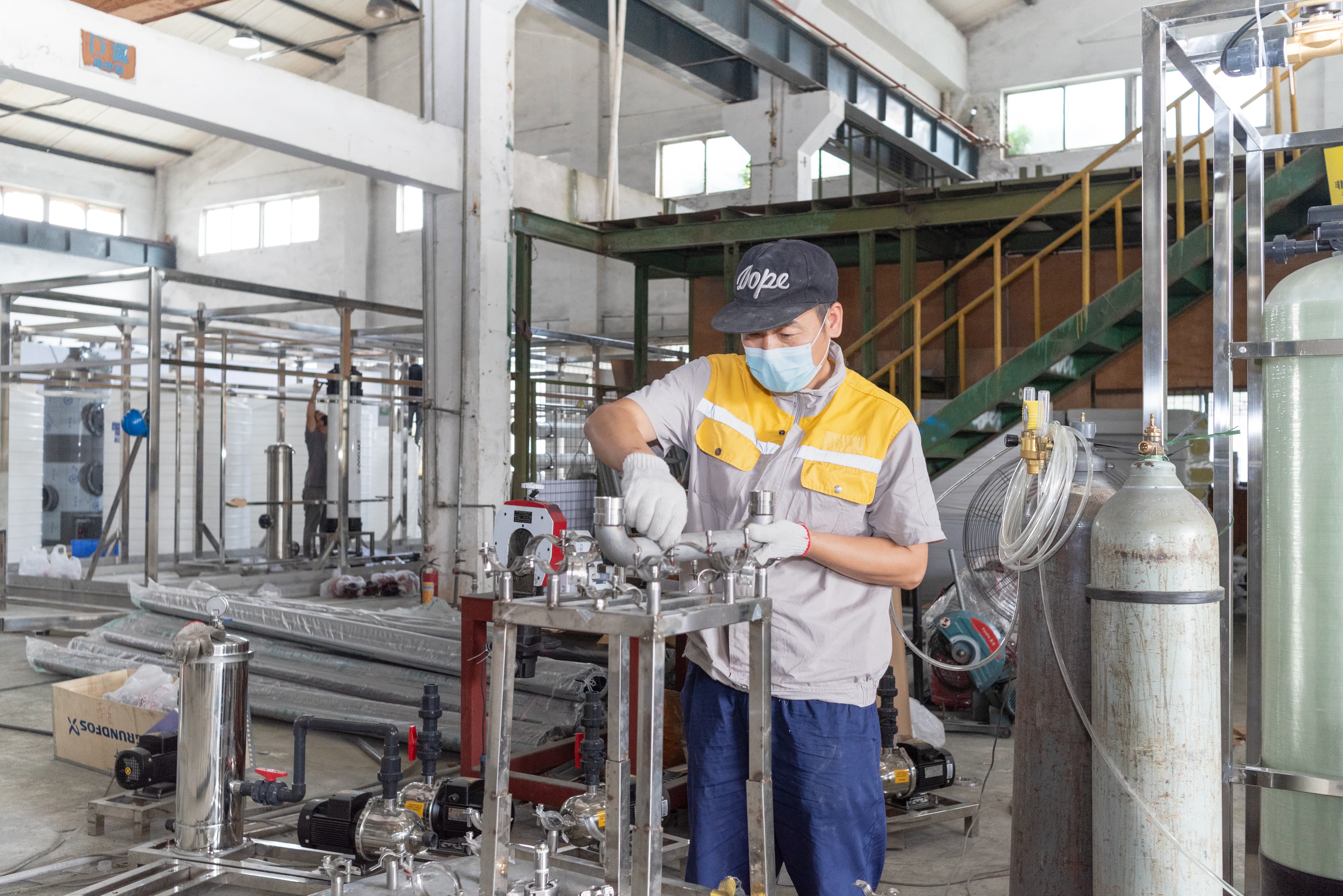
Assembly, inspection and functional review are planned against the approved technical agreement and agreed project scope.
Final FAT scope and acceptance criteria are confirmed in the approved technical agreement.
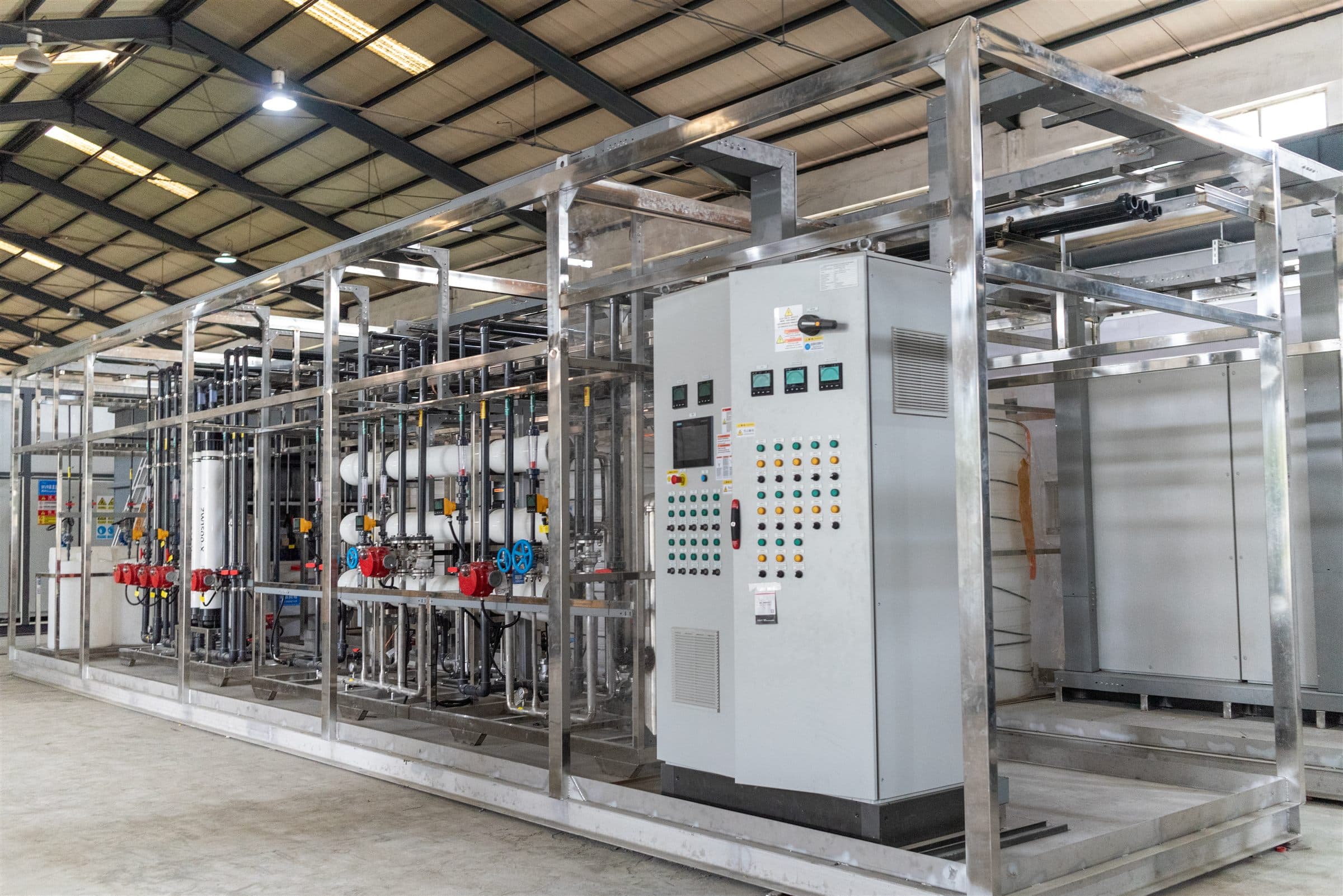
An integrated treatment line developed around process-water quality, production continuity and a compact equipment layout.
Industrial RO systems are quoted from an agreed technical scope rather than a generic machine price.
Direct answers for engineering, procurement and project-planning discussions.
A feed-water analysis, required capacity, target product-water quality, operating hours, available utilities and site constraints are needed before a reliable treatment route can be reviewed.
Single-pass RO is selected where it can meet the confirmed product-water requirement. A second pass is considered where lower conductivity or better downstream feed quality is required.
Pretreatment depends on source-water chemistry and may include multimedia filtration, activated carbon, softening, UF pretreatment or chemical dosing.
Recovery is confirmed during engineering because it depends on feed-water chemistry, scaling risk, membrane selection and concentrate-management conditions.
Yes. Skid, modular and containerized formats can be discussed around transport, access, climate protection and site installation requirements.
Membrane service life depends on water quality, pretreatment, operating conditions, cleaning practice and the performance requirements agreed for the project.
Yes. Electrical architecture, voltage, frequency and panel requirements are configured according to the destination and approved project scope.
Send the water analysis, capacity, target water quality, application, country, operating hours and any site or documentation requirements for an engineering-led proposal.
| System | Industrial RO | RO + EDI | Ultrapure Water |
|---|---|---|---|
| Best For | Process and production water | Stable high-purity production water | Critical purity applications |
| Typical Route | Pretreatment → RO | Pretreatment → RO → EDI | RO → EDI → polishing stages |
| Water Purity | RO permeate to confirmed duty | Lower conductivity with EDI polishing | Configured around critical purity requirement |
| Common Applications | Manufacturing, utilities, make-up water | Battery, electronics, precision manufacturing | Critical industrial and laboratory duties |
| When to Upgrade | When product-water quality requires polishing | When a further purity stage is required | When specifications require additional controls |
Share your feed-water analysis, required capacity and target water quality. Our engineering team will review the treatment route and key design inputs.