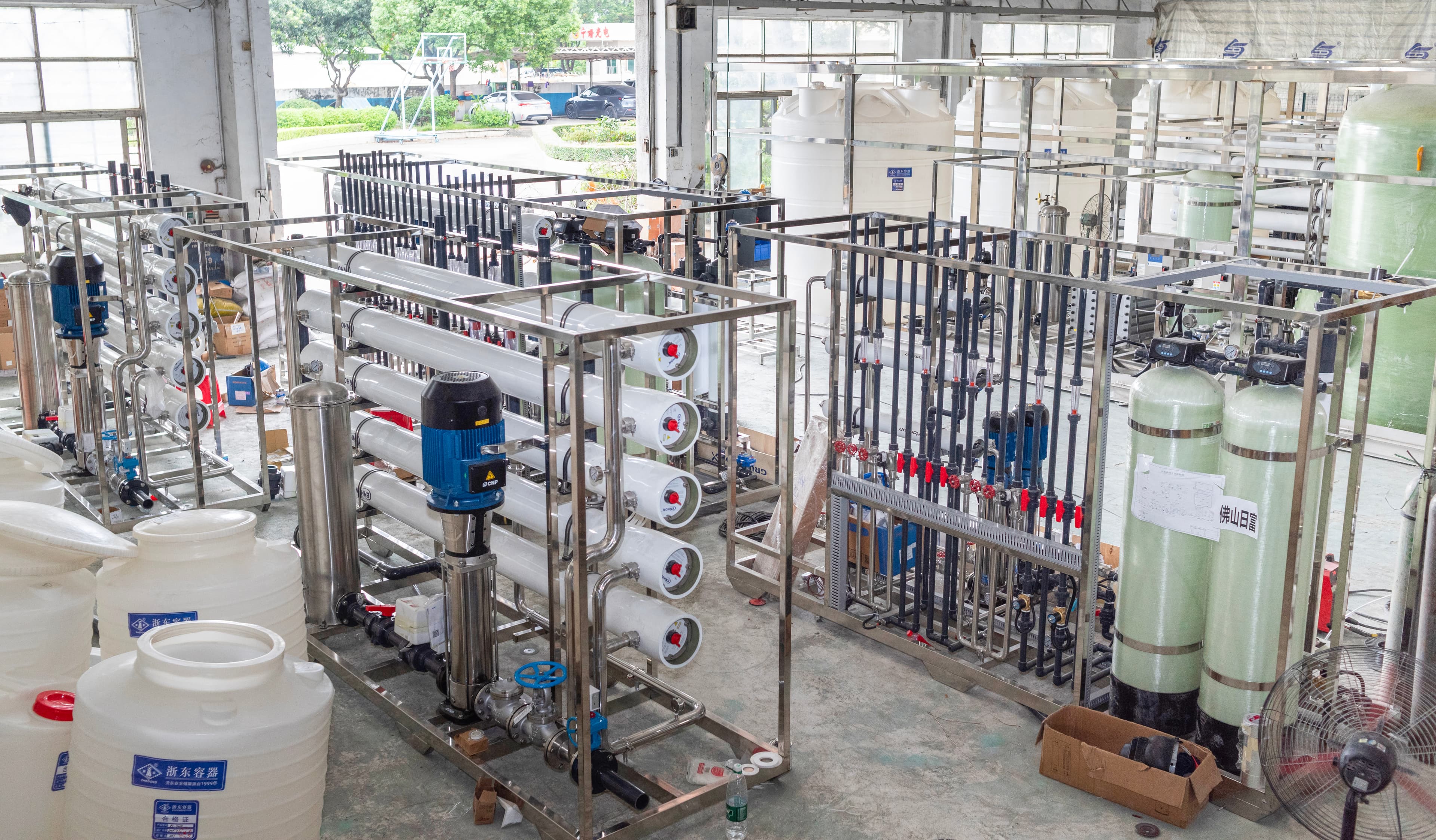
Industry solution / Power & Boiler Feed
RO & EDI Water Treatment for Boiler Feed and Power Generation
Select pretreatment, RO, optional second pass and EDI around boiler duty, feed-water chemistry and the required water chemistry. Avoid applying a fixed final number to every boiler.
Quick engineering overview
Establish the design basis before selecting equipment.
Each point below is specific to this industry; final values belong in the customer’s process specification.
Where water is used
Map water use across Power & Boiler Feed.
Each use point has its own quality, demand and delivery context. The process map comes before equipment selection.
Boiler feed
Required water chemistry follows the boiler duty and operating basis.
Make-up water
Supply demand is mapped against operating load and blowdown strategy.
Power utilities
Utility points may need an independent water route.
Cooling makeup
Cooling and boiler requirements should not be conflated.
Maintenance
Cleaning and consumable access support long-term operation.
Typical water challenges
Resolve these inputs before selecting equipment.
Hardness and silica can create scaling risk.
Conductivity and dissolved solids must be tied to boiler duty, not a generic number.
The correct route depends on operating condition and required water chemistry.
Water quality priorities
Specify the parameters that matter to this process.
Relevant parameters are shown here for engineering discussion, not as generic guaranteed specifications.
ParameterWhy it mattersEngineering basis
HardnessCan influence scale formation and upstream treatment choice.Review source-water analysis.
SilicaCan be relevant to boiler-feed quality decisions.Confirm based on duty.
ConductivityUsed as an operational indicator in selected routes.Set by required chemistry and sampling point.
Recommended treatment process
Build the route around the confirmed production requirement.
Select pretreatment, RO, optional second pass and EDI around boiler duty, feed-water chemistry and the required water chemistry. Avoid applying a fixed final number to every boiler.
Source waterConfirm water and process inputs
PretreatmentConfigured from the approved treatment route
ROConfigured from the approved treatment route
Optional second passConfigured from the approved treatment route
EDI where requiredConfigured from the approved treatment route
Boiler feedDeliver to the defined production use
Pretreatment manages hardness and feed risk.
RO provides primary dissolved-solids reduction.
A second pass or EDI is selected for the actual boiler duty.
The final route is confirmed from required water chemistry.
How each treatment stage works
A water system is a connected process, not a single machine.
The exact stages depend on water analysis and the agreed process duty.
01
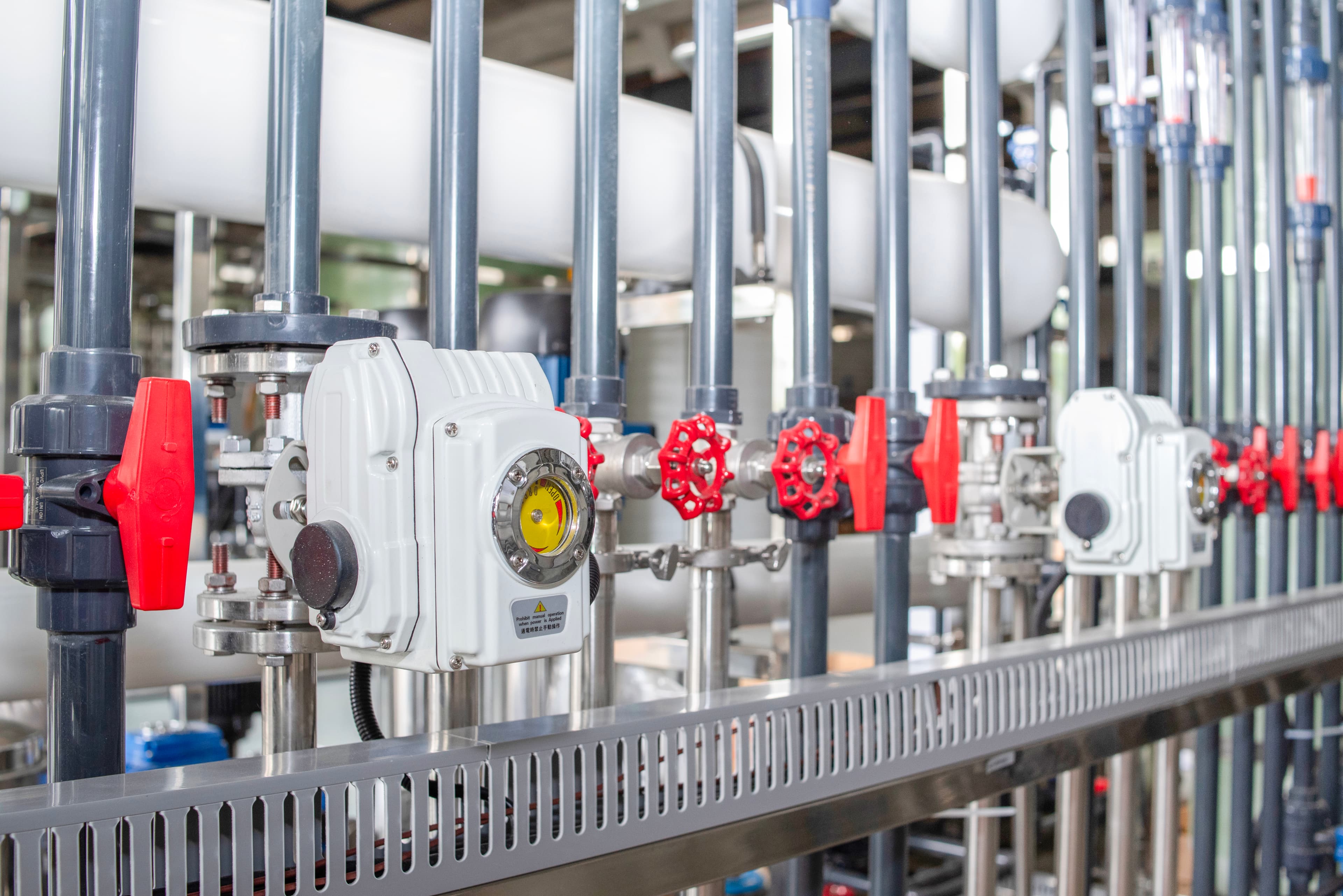
Pretreatment
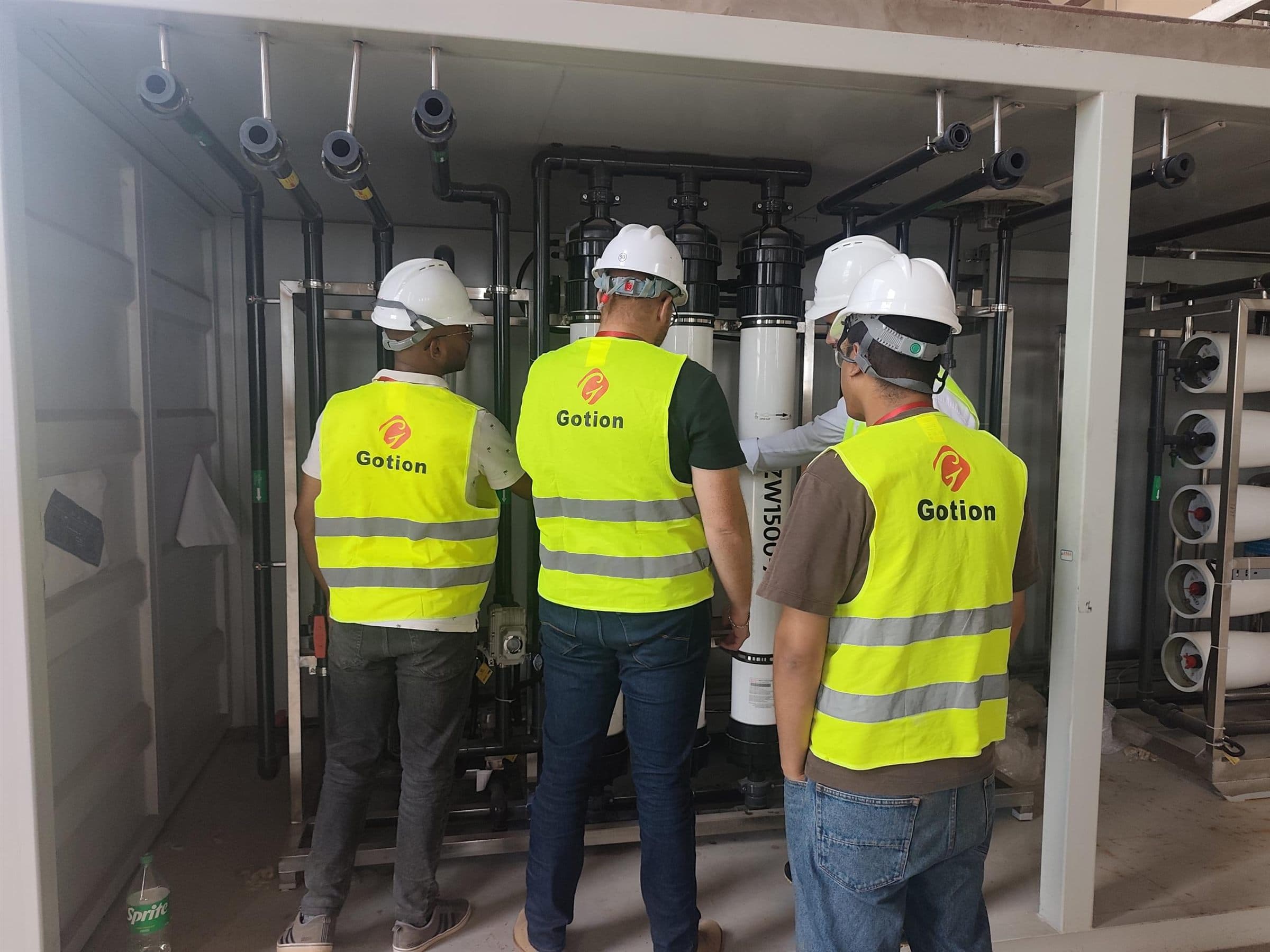
Filtration, media treatment, softening or ultrafiltration are selected to protect downstream membranes and match the feed-water condition.
02
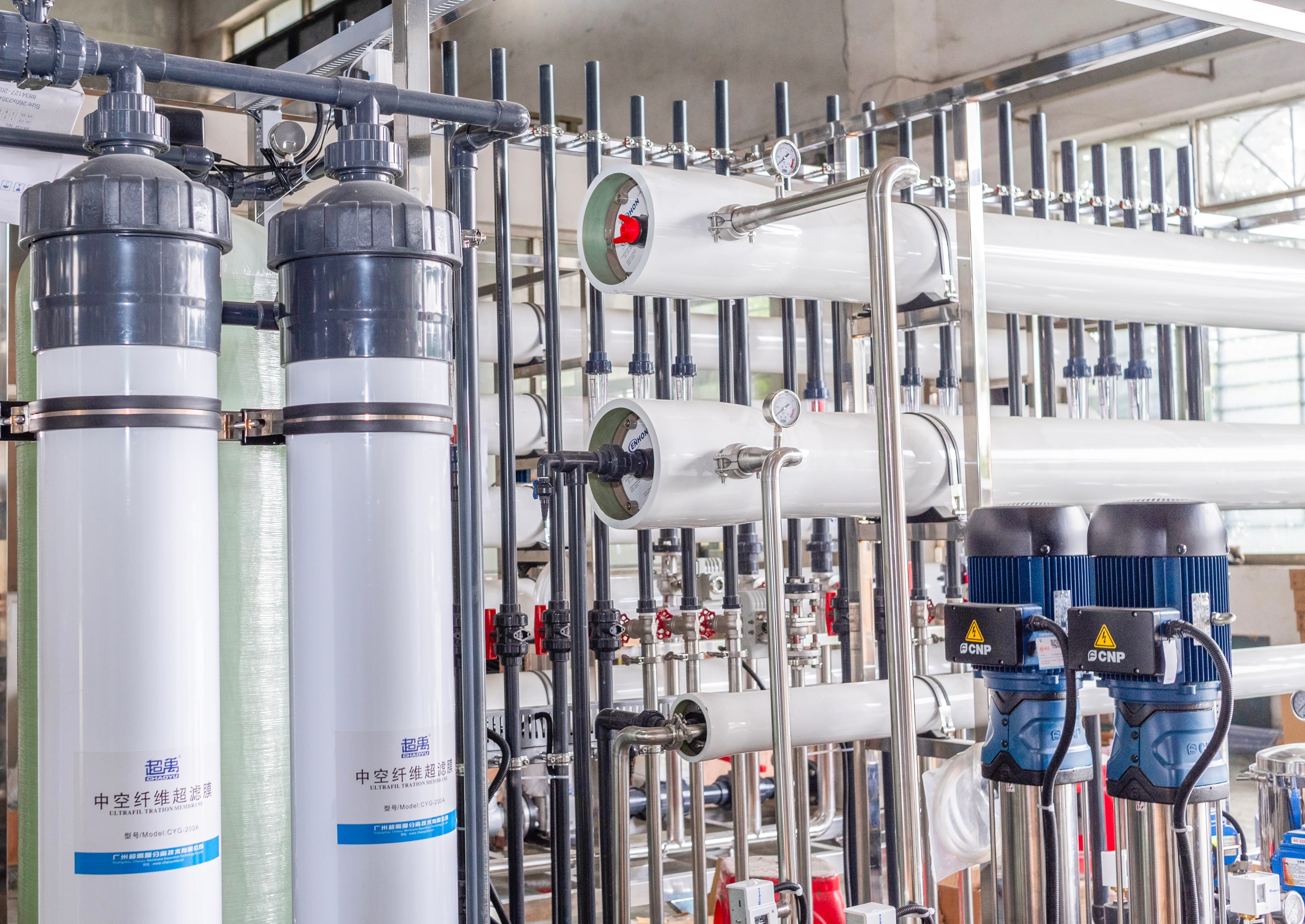
Reverse osmosis
RO removes dissolved salts and reduces conductivity. Single-pass or double-pass arrangements are selected from the required water quality.
03
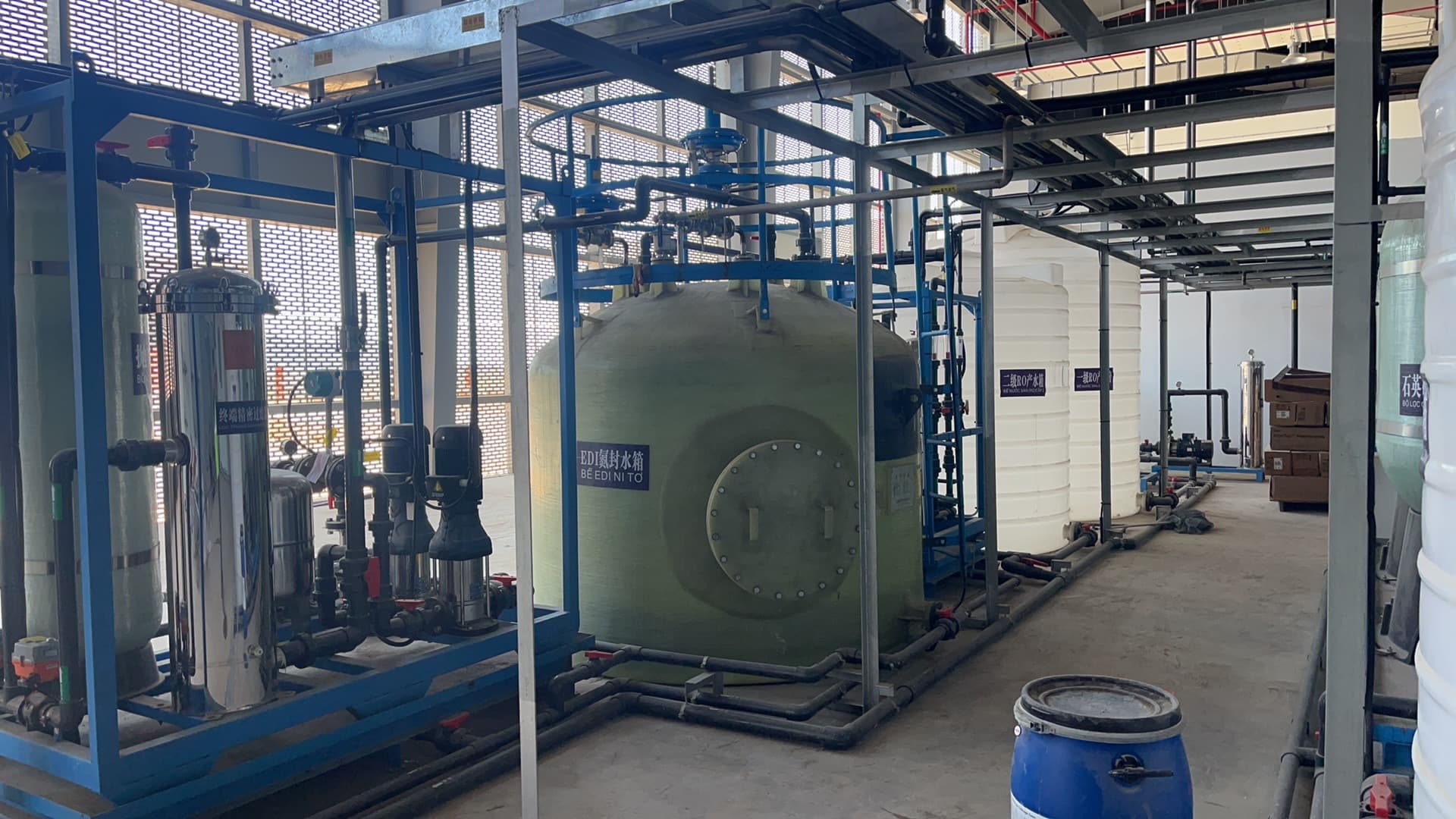
EDI and final polishing
EDI, UV or final filtration are added only where the confirmed process duty requires a higher-purity or controlled final-water condition.
04
Storage and distribution
Tank sizing, recirculation, monitoring and use-point interfaces are part of the delivered water system—not an afterthought after generation.
Boiler duty selection
Boiler duty determines the treatment route.
A water-treatment solution must be selected from the operating condition and required chemistry, rather than copying a generic purity value from another site.
- 01Source water
- 02Pretreatment
- 03RO
- 04Optional second pass
- 05EDI where required
- 06Boiler feed
Recommended systems
Equipment platforms relevant to this solution.
These established platforms provide a starting point. The final system configuration remains project-specific.
Reverse OsmosisIndustrial RO System
Industrial RO systems engineered around feed-water analysis, capacity and product-water duty.
View system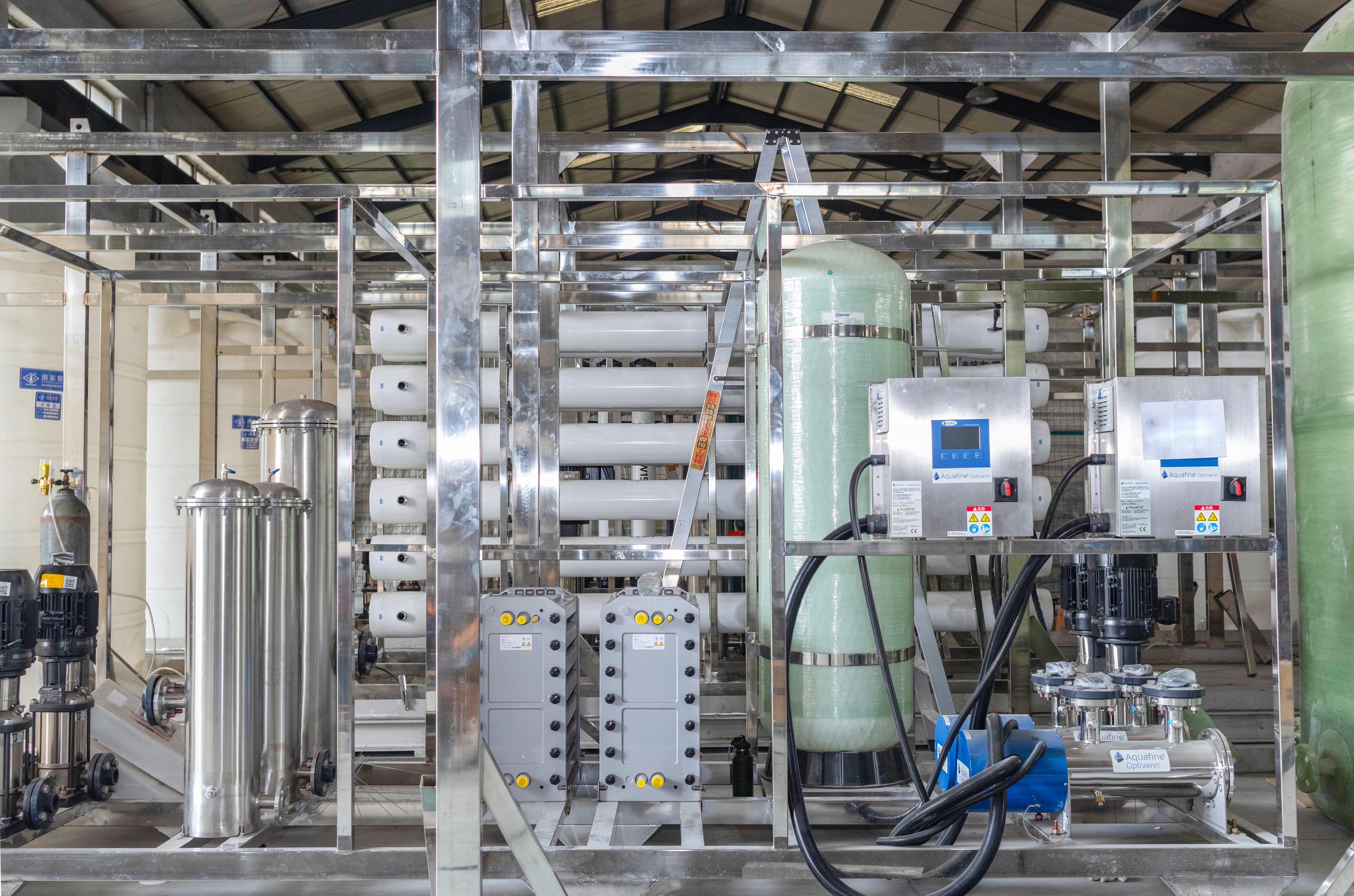 Pure Water
Pure Water System
Integrated treatment for stable industrial process water and production utilities.
View system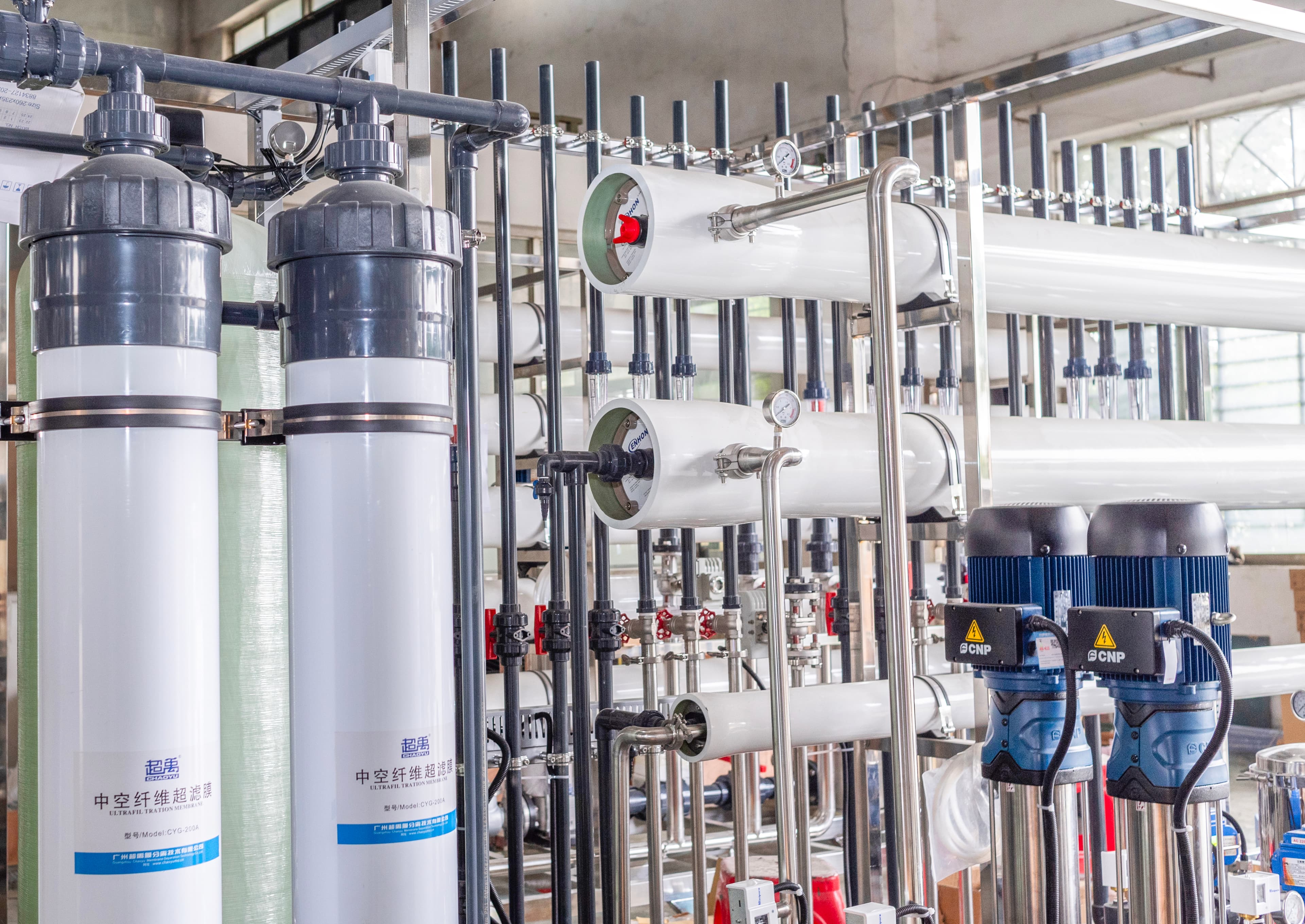 RO + EDI
RO + EDI System
RO primary desalination with continuous EDI polishing for confirmed high-purity water duties.
View systemElectrodeionizationEDI System
Continuous electrodeionization polishing for correctly conditioned RO permeate.
View systemEngineering outcomes
What the solution review should clarify.
A route tied to the real production use point
A clear basis for configuration, controls and distribution
Final requirements confirmed from the customer’s process specification.
Reliable operation
Operation and maintenance are part of the design.
Quality and flow monitoring points defined for the duty
Protective sequencing and maintainable service access
Operating responsibilities made visible before handover
Installation & integration
Plan the site interfaces before delivery.
Piping, electrical, drain and footprint interfaces identified
Factory-assembled skid or modular delivery assessed
Commissioning inputs planned with the site team
Buyer checklist
Confirm the variables that are unique to this industry.
Bring the core project inputs plus the items at right to an engineering discussion.
01Feed water
02Required capacity
03Target water quality
04Operating hours
05Country
06Electrical standard
07What is the boiler duty and operating condition?
08Which hardness, silica and chemistry limits apply?
09What are the make-up demand and availability requirements?
Technical FAQ
Questions before the technical proposal.
Does every boiler need RO + EDI?+
No. The treatment route follows boiler duty, water chemistry and operating condition.
Why is silica reviewed?+
Silica can influence the treatment route for boiler feed, depending on the required water chemistry.
Can RO alone be sufficient?+
It may be, where the confirmed boiler requirement and feed-water analysis support the route.
How is a second RO pass selected?+
It is selected when the required quality and operating margin justify it; it is not automatic.
Should cooling makeup share the boiler-feed system?+
Not automatically. Cooling and boiler duties can have different water-quality requirements.
What is needed to specify a system?+
Provide water analysis, boiler duty, make-up demand, operating condition, target chemistry and site utilities.
Related technical resources
Continue the engineering review.
reverse osmosis
How to Size an Industrial Reverse Osmosis System: Capacity, Recovery, Pretreatment and Cost Inputs
Industrial RO sizing is a water-balance and risk-management exercise. Start with the point-of-use demand profile, then work backwards through storage, distribution, RO permeate flow, recovery, feed flow and pretreatment. A quoted m³/h figure is incomplete unless its temperature, feed-water quality and recovery assumptions are stated.
Read technical guide reverse osmosisDouble Pass RO vs RO + EDI: Which Water Treatment System Should Industrial Plants Choose?
Choose the treatment route from the required point-of-use water quality and the real feed-water analysis—not from a generic machine name. Single-pass RO is often an efficient starting point; double-pass RO adds a second desalting barrier; RO + EDI is used when a stable, low-conductivity polishing stage is required.
Read technical guideRelated solutions
Continue from another engineering angle.
Engineering review
Review your power & boiler feed water-system inputs.
Share water source, water analysis, required capacity, water quality, industry, country and project timeline. Final selection follows the complete requirement.