A multimedia filter quotation should explain how the selected vessel and media will handle the measured feed solids and how the bed will be backwashed at the site. Nominal service flow is insufficient when wash water, drain capacity or production continuity is undefined. Treat filtration, backwash and return to service as one equipment duty.
Define the solids-removal requirement and its limits
Provide representative feed-water results and explain how the source changes during the year. Include turbidity, suspended solids and any available particle or fouling indicators relevant to the downstream RO. Identify upstream oxidation or coagulation because these processes change the material arriving at the bed. A multimedia filter is a particulate-treatment stage. It should not be purchased on an assumption that it removes dissolved salts, hardness or every membrane-fouling substance. State the downstream feed requirement and ask the supplier to explain which inputs support its selection.
Define where the performance samples will be collected and how the filter outlet will be assessed. A clear-looking sample does not establish that RO pretreatment is adequate. Keep turbidity and the membrane supplier's relevant fouling measurements distinct, and agree the test conditions before placing an order. When the water contains difficult colloids or variable chemical carryover, request treatability evidence rather than a universal removal guarantee. The equipment specification can then identify whether a granular bed is sufficient or whether another barrier or upstream process review is necessary.
Select vessel area and bed configuration together
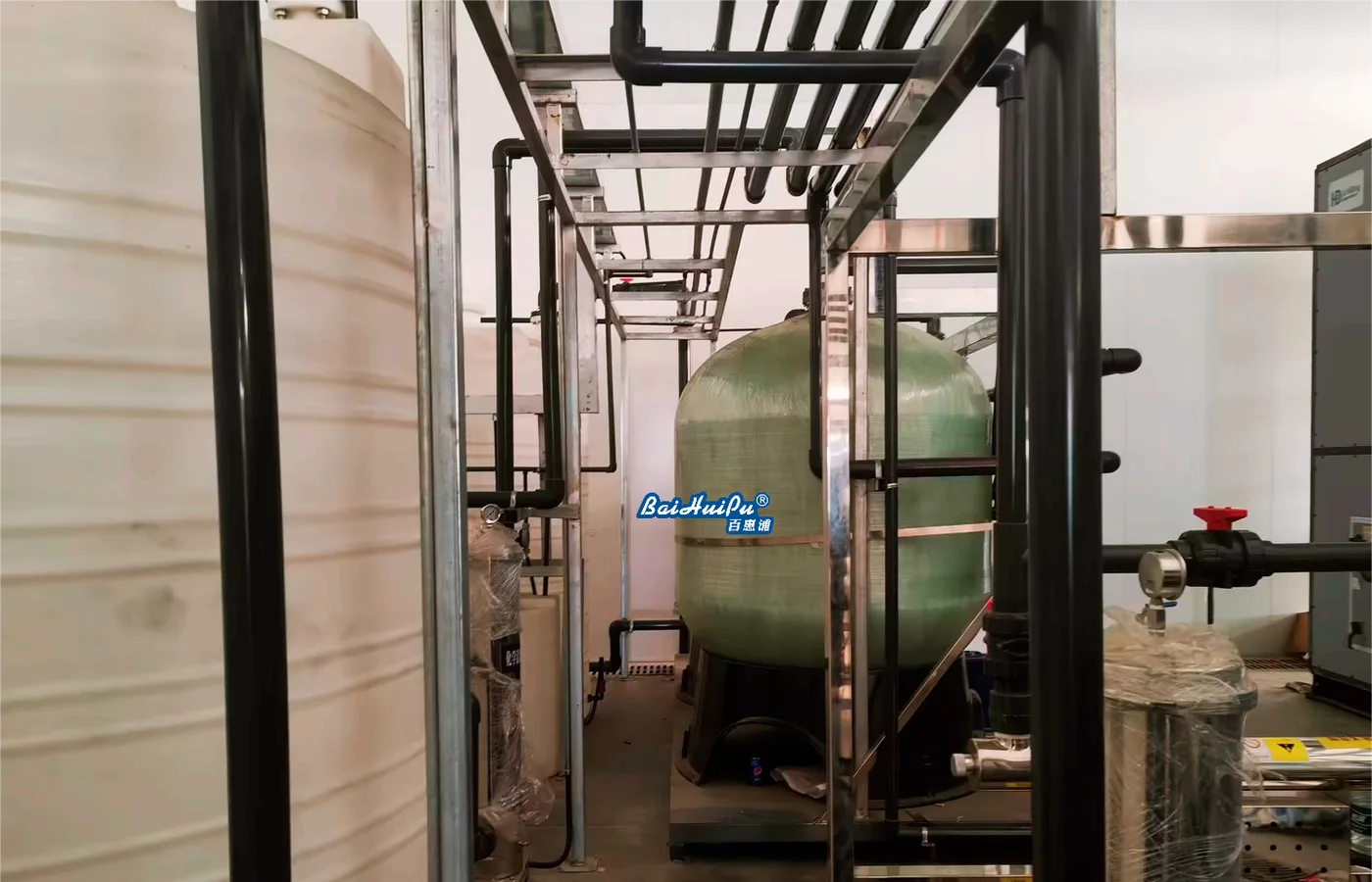
For each vessel, relate service flow to its effective filtration area. Flow divided by area gives hydraulic loading in compatible units; the acceptable value must follow the proposed media and feed duty. Request the media grades, particle-size distribution, layer depths and support arrangement. Vessel diameter alone does not describe filtration capacity. Compare quotations on the same net production basis and make clear whether the rated flow applies to a clean bed, normal operation or the maximum permitted end-of-run pressure loss.
Ask the vendor to explain how the media arrangement is maintained after washing and how the selected underdrain distributes flow. Specify the vessel's pressure and temperature design conditions, wetted materials and inspection access. Include corrosion or lining requirements appropriate to the water. Obtain the loading and replacement procedure so a future media change can reproduce the approved configuration. Procurement should retain the exact media schedule with the vessel drawing; a generic sand-and-anthracite label cannot support a reliable comparison between beds with different depths and properties.
Send the feed-water analysis, target quality, required capacity and operating profile. We will help structure the next engineering questions.
Send your project inputsMake the backwash water balance explicit
Backwash must provide the conditions needed to clean the selected bed without losing media or damaging the distribution system. Request the required wash flow and duration for the specified media across the relevant water-temperature range. The supplier should confirm the associated expansion requirement and vessel freeboard. Do not adopt a backwash rate from an unrelated filter with a different media schedule. Identify whether wash water comes from filtered-water storage, an independent supply or another vessel, and confirm that the source can actually deliver the specified duty.
Calculate the available wash-water volume from the complete agreed sequence, including rinse and any other water-consuming steps. Account for tank level restrictions and other simultaneous demands. If a pump supplies the wash, define its duty at the actual piping and valve losses. Request drawings for drain connections and confirm the receiving system can accept the instantaneous flow. A tank with enough total volume may still have an outlet or pump that cannot provide the necessary rate. Both rate and usable volume belong in the equipment interface schedule.
Choose an arrangement that supports the production schedule
A single vessel may require production to stop during backwash and rinse. Parallel vessels may provide continuity, but the remaining equipment must be rated for the resulting flow rather than simply sharing the original nominal capacity. State the operating combinations and the production allowed while one vessel is unavailable. Consider planned media replacement separately from the routine wash cycle. If temporary reduced output is acceptable, document it with the owner instead of allowing different bidders to make incompatible assumptions about continuous supply.
Show how individual vessels are isolated, washed and returned to service. Review shared inlet, outlet and drain headers for unintended crossflow and pressure interaction. If a treated-water tank supports downstream production during washing, coordinate its usable volume with the plant demand profile. Define wash scheduling so several vessels do not request the same limited utility simultaneously. The selected arrangement should appear in a valve-state schedule and control narrative. An automatic valve package alone does not prove that the plant can maintain its promised production during every operating mode.
Define wash initiation, rinse and return-to-service rules
Agree the signals that initiate a wash, such as differential pressure, elapsed operation or a documented quality concern. Identify measurement points and thresholds from the vendor's duty review. Include protection against washing with insufficient tank level or unavailable drainage. If operator initiation is required, state the prerequisites and the permitted production response. A timer can provide a routine schedule but may not detect an unusual solids load. Review how the filter will be handled when a quality measurement indicates breakthrough before the normal wash request.
Specify the rinse path and the evidence required before filtered water returns to RO service. A filter-to-waste stage may be needed to avoid sending disturbed-bed material downstream; its length or release criterion should follow the approved process basis. Record valve confirmation and the response to a valve that fails to reach position. Where air scour is proposed, obtain the vendor's sequence and utility requirements. Do not add air solely because another installation used it. The vessel internals and media must be suitable for the selected cleaning arrangement.
Provide sampling and maintenance access
Install accessible inlet and outlet sample points and pressure instruments that allow routine trends to be recorded consistently. Define a safe method for checking media condition and replacing it. Review manway access, clearance for loading equipment and the space required to work around automatic valves. Show how wash water and drained contents will be handled during maintenance. A compact skid can be difficult to service if removing a valve or accessing a vessel requires dismantling the neighbouring treatment stage.
Ask for a recommended spare-parts list covering the actual valve actuators, position feedback, seals and critical internals. Keep the media purchase specification independent of a single informal supplier description. At commissioning, record the initial pressure loss, service flow, wash flow, rinse behaviour and selected quality measurements. Retain the valve-state and alarm checks with those readings. A mechanical pressure test or a dry controls test does not demonstrate filtration on the site's feed water, so final acceptance should identify the evidence that can only be obtained after installation.
Compare the complete filter package and prepare the RFQ
Require a process basis, vessel drawing, media schedule, service and wash duty matrix, valve arrangement and utility list from each bidder. Identify whether the quote includes wash pumps, storage, air equipment, sample connections and drain piping. Review commissioning responsibilities and any treatability assumptions alongside the equipment price. A supplier offering a smaller vessel may have assumed a cleaner feed or a different allowable loading, so normalize those assumptions before drawing a commercial conclusion. Keep technical exceptions visible in the comparison.
For an existing plant, provide operating trends and the observed reason for replacing or adding the filter. Distinguish high pressure loss, poor quality and inadequate wash supply because they lead to different design responses. Retain the approved media and wash settings after handover, and reassess them when source water or upstream chemistry changes. Send Baihuipu the water analysis, RO feed requirement, service-flow range, continuity requirement and available wash utilities to develop a coordinated multimedia-filter package scope and a quotation that can be evaluated against measurable duties.
Questions buyers commonly ask
Can a multimedia filter replace every RO pretreatment stage?+
No. It addresses particulate filtration within its selected duty. Dissolved chemistry, oxidants and difficult fouling risks may require separate treatment and verification.
What information determines the backwash flow?+
The selected media, bed configuration, water temperature and required cleaning behaviour determine the vendor's wash duty. Confirm it against available pump, tank and drain capacity.
Do two filters automatically provide continuous production?+
Only if the remaining vessel or stored-water supply supports the required production while washing or maintaining the other vessel. Document those operating cases.
What should be included in a multimedia-filter RFQ?+
Provide feed-water variability, filtration targets, flow range, pressure conditions, media requirements, production schedule, backwash utilities, drainage limits and the required test and control scope.
Turn the guide into a project brief.
Final process selection and performance commitments should follow the complete feed-water analysis, application requirements, site utilities and approved technical agreement.