A factory acceptance test for an industrial water treatment system should demonstrate compliance with the approved supply scope using agreed tests and traceable records. Define mechanical, electrical, control and wet-test criteria before the equipment reaches the test bay. Record factory limitations explicitly and assign the remaining site tests, so shipment release is based on evidence rather than a general statement that the skid ran successfully.
Translate the purchase specification into an acceptance matrix
A FAT checklist is most useful when every inspection or test corresponds to an approved requirement. Start with the technical agreement, process diagram, general arrangement, equipment schedule and control philosophy. Identify what the factory can demonstrate and what depends on the final installation. Assign a test or document review to each relevant requirement and state the acceptance criterion. This prevents a standard vendor checklist from overlooking a project-specific feature such as an unusual feed connection, redundant pump arrangement or product-water diversion sequence.
For each line in the matrix, identify the required evidence, witness responsibility and consequence of failure. Separate a measured result from a visual check and from a document review. Some requirements may need an instrument reading, while others require inspection of a material record or demonstration of a control state. Agree whether tests are witnessed in person, remotely or by a delegated inspector. The protocol should be approved early enough for the supplier to prepare fixtures and instruments. A late request for an unplanned demonstration can create uncertainty about whether the equipment or the test setup is at fault.
Check documents and physical configuration before energizing
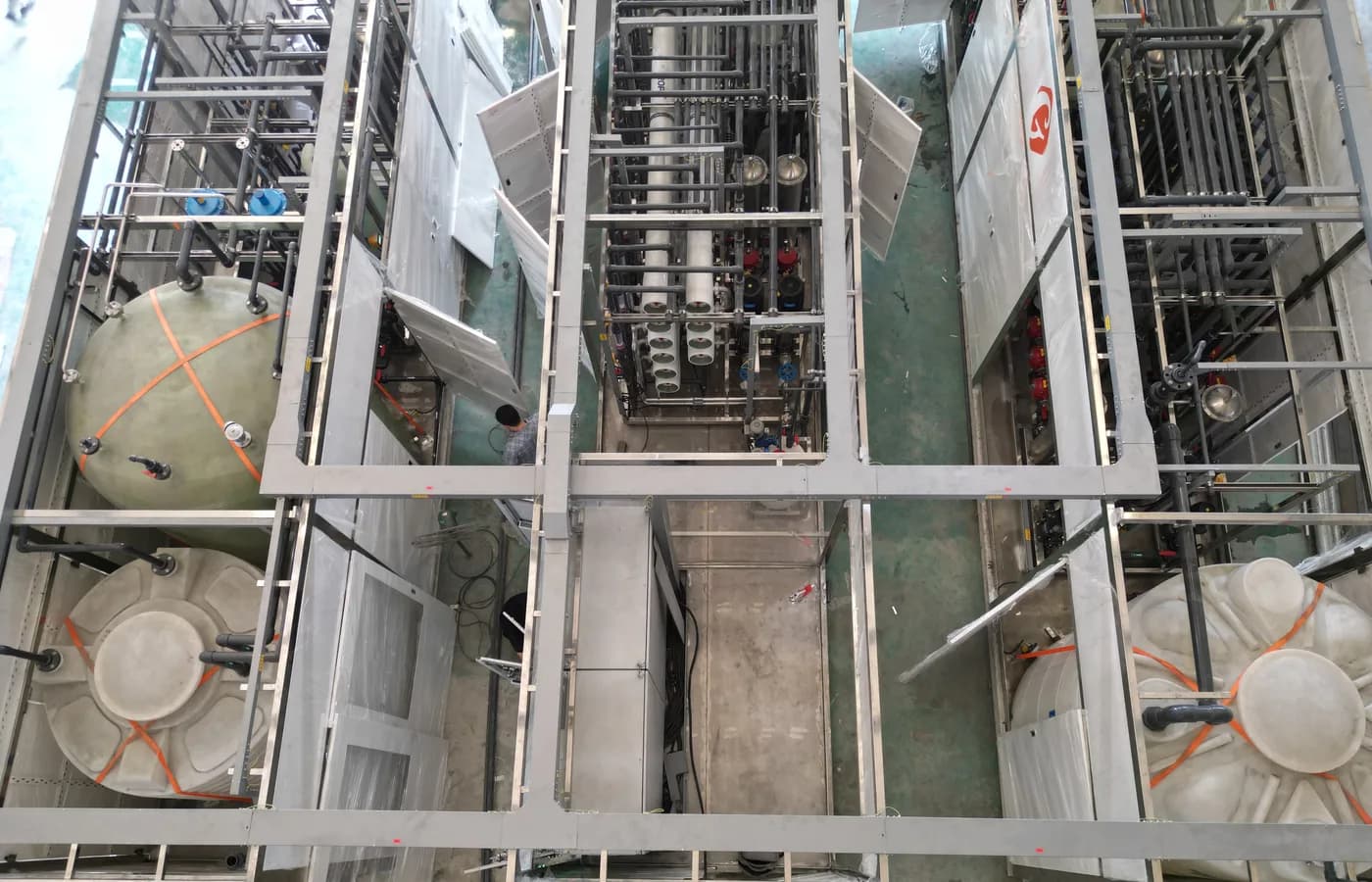
Confirm that the test equipment matches the latest approved drawings. Review the component list, model identifiers, membrane arrangement, instrument locations, connection sizes and electrical supply requirements. Record the revision of each drawing used during the inspection. If the assembled system differs, determine whether the change was approved and whether it affects performance, maintenance or interfaces. Include labels and identification of major equipment so test results can be traced to the actual items. The FAT should not silently turn an undocumented substitution into an accepted design change.
Inspect the mechanical arrangement for access, supports, protection of instruments, drainage and the intended service connections. Review fabrication and material records where they form part of the contractual scope. Check that routine maintenance tasks can be performed with the available clearances, including filter replacement, pump removal and access to valves. Identify transport restraints and loose items separately from the operating configuration. A functional test does not compensate for an inaccessible component or a missing connection. Record discrepancies with photographs and a clear reference to the affected drawing or acceptance requirement.
Send the feed-water analysis, target quality, required capacity and operating profile. We will help structure the next engineering questions.
Send your project inputsDefine mechanical checks with approved procedures
Mechanical integrity checks should follow an agreed procedure suitable for the component ratings and test boundary. State the test medium, pressure, duration, instruments and isolation arrangement rather than improvising them during the visit. Identify components that cannot be exposed to the proposed test conditions and how they will be excluded or checked separately. Inspect for leakage and record the actual result. The assembled package may contain items with different allowable conditions, so a single pressure applied to every part can be inappropriate. The approved design and equipment instructions should govern the method.
Verify that drains, vents, sampling connections and valve lineups correspond to the intended operating sequence. Review the direction of flow and the pump arrangement before a wet run. Where cleaning connections or temporary hoses are included, inspect their identification, compatibility and support. Confirm that pressure instruments can be read and that operators can reach the controls needed to isolate the system. Electrical and mechanical checks should be carried out by personnel qualified for the tasks involved. The buyer's role is to review evidence against the protocol, not to improvise test practices outside the approved procedure.
Challenge PLC logic using a cause-and-effect test
A water treatment package often depends on interlocks that protect pumps, membranes, tanks and the consuming process. Test the agreed cause-and-effect matrix systematically. Examples may include low feed pressure, low tank level, loss of transfer flow, high product conductivity, pump fault and loss of a required downstream permission. For each input, record the initial operating state, how the condition is introduced, the expected response and the observed response. Distinguish a real field signal from a simulated input so that the evidence shows exactly which part of the system was tested.
Review startup, shutdown, flushing, standby, cleaning and return-to-service sequences as applicable to the supplied package. Include the recovery behavior after power loss or restoration of a failed utility. Check alarm visibility, acknowledgement, event recording and operator permissions where specified. An alarm displayed on the HMI is not proof that a diversion valve or pump actually changed state. Verify the physical output where possible and record any output that remains simulated. Agree how bypasses and temporary test settings will be removed, and identify the approved software version delivered with the equipment.
Interpret wet-test performance under recorded conditions
A wet test can provide valuable operating evidence, but its result depends on the test water and utilities available at the factory. Record water analysis or the relevant measured characteristics, temperature, feed pressure, flows, conductivity and the operating configuration. State whether the installed membranes, polishing modules and instruments are the final supplied items. If a test loop substitutes for a site tank or long distribution line, describe that difference. The report should make the setup understandable to a reviewer who did not attend the demonstration.
Compare measured performance with criteria valid for those recorded conditions. For RO equipment, capacity and quality cannot be assessed responsibly without considering feed-water composition, temperature and the agreed design basis. If normalization or a design projection is used, identify the method and its limitations. Do not present a short factory run with favorable water as proof of long-term performance under every site condition. Separate package functionality from integrated process acceptance. Where the real feed or downstream demand cannot be reproduced, assign the remaining demonstration to commissioning or a defined site acceptance test.
Use traceable records and a controlled punch list
Test sheets should identify the equipment, drawing revision, procedure, instruments, date, witnesses and measured results. Record instrument calibration evidence where required by the protocol. Keep photographs, trend files and signed observations linked to the relevant test line. A collection of unlabeled pictures is weaker evidence than a concise record that connects a condition, result and acceptance criterion. If a test is repeated after repair, retain the original result and the closure evidence. This allows the buyer to understand what changed and why the final decision is justified.
Classify outstanding items according to their effect on the agreed supply and release conditions. A missing label may have a different consequence from a failed protective interlock or an unresolved leak, but each item still needs an owner and due date. Describe whether it must be closed before shipment, before energization at site or during a later agreed activity. Avoid vague statements that every open item will be handled during commissioning. The punch list should show evidence of closure or an explicit approved deferral. Shipment approval and completion of the technical scope are related decisions with separately documented conditions.
Connect factory acceptance to shipment and site acceptance
The final FAT package should include the completed protocol, test records, approved software information, updated drawings, punch list and operating documentation within the contracted scope. Review preservation, membrane handling and transport preparation against the equipment manufacturer's instructions. Identify disconnections made for shipping and the checks required after reassembly. List special tools, spares, loose components and site utility interfaces so they can be reconciled at receipt. A successful factory test can lose practical value if the package arrives without the items or instructions needed to restore the tested configuration.
Before release, agree the site acceptance plan and responsibilities for installation review, startup, quality testing and operator familiarization. Assign tests that could not be completed at the factory, including real-feed performance or final distribution interfaces. FAT acceptance should neither erase these remaining tasks nor create unsupported certification claims. Send Baihuipu the technical agreement, approved diagrams and critical process risks to prepare a focused acceptance matrix. A useful checklist gives the buyer a clear basis for witnessing tests, resolving defects and deciding whether the package is ready to leave the factory.
Questions buyers commonly ask
Can a factory acceptance test replace site acceptance?+
No. FAT verifies the supplied package within the factory test boundary. Site acceptance must address installation, real utilities, actual feed conditions and downstream interfaces that the factory could not reproduce.
What is the most useful starting point for a FAT checklist?+
The approved technical agreement, drawings and cause-and-effect matrix. Connect each important requirement to a test, inspection or document review with a defined acceptance criterion.
Is a successful pump run enough to accept an RO system?+
No. Review the agreed mechanical checks, measured operating conditions, control protection, documentation and water-quality evidence, including any limitations of the factory setup.
Can equipment ship with open FAT items?+
Only under an explicit release decision consistent with the contract and risk of the items. Record owners, deadlines, required closure evidence and any conditions that must be satisfied before operation.
Turn the guide into a project brief.
Final process selection and performance commitments should follow the complete feed-water analysis, application requirements, site utilities and approved technical agreement.