Trace sodium monitoring can support demineralizer and condensate quality decisions when the complete sampling chain is controlled. Analyzer range alone does not establish installed capability. Industrial procurement should address conditioning chemistry, contamination, stream switching, reference checks and the operating response to an invalid result.
Assign a sodium-specific decision to the analyzer
Online sodium measurement can reveal sodium leakage from an ion-exchange treatment stage or contamination in a high-purity water circuit. It does not establish the concentration of every dissolved impurity. Locate the instrument where its result answers a defined question, such as whether a demineralizer outlet remains within its agreed sodium requirement. Keep that action separate from a general conductivity alarm. Ask the supplier to explain the measurement principle and the sample conditions required for the offered electrode system.
Translate this distinction into a purchase boundary for industrial demineralized water sodium analyzer. List the equipment that delivers the stated function and the upstream conditions supplied by the owner. Ask bidders to explain exclusions in the same schedule as included items. A technically complete offer should identify what remains uncertain and which additional observation would resolve it. Keep those open items visible when comparing prices, because a smaller scope can otherwise appear to offer the same duty.
Describe the sample before quoting a measuring range
Provide expected sodium levels, temperature, pressure, flow availability and the largest credible contamination event. Include the plant conditioning chemicals and changes between startup and steady service. Many electrode-based instruments require controlled sample conditioning, which belongs in the complete analyzer scope. State the reagent arrangement and maintenance obligations for the selected model rather than applying a generic recipe. Discuss recovery after a high-concentration exposure as well as resolution near the normal decision point, because both influence operational usefulness.
Use the production schedule to choose the sampling campaign for industrial demineralized water sodium analyzer. Include normal manufacture, cleaning transitions and relevant changes of raw material. Label historical measurements with their dates and methods. If a difficult condition has never been measured, identify it as a design assumption rather than averaging it into an apparently precise specification. Agree how a later change in the feed envelope will be reviewed before extending an equipment guarantee to that new condition.
Send the feed-water analysis, target quality, required capacity and operating profile. We will help structure the next engineering questions.
Send your project inputsPrevent contamination in transport and verification
At trace concentrations, sampling hardware, reagents, containers and handling can influence the observed result. Specify suitable tubing, connections and sample flow without assuming that a convenient existing drain line provides representative water. Locate conditioning and calibration supplies to avoid unintended contamination. Ask how the installation will distinguish a real process excursion from sample-system contamination. Include a defined flushing arrangement and retain the identity of materials used in repairs so a changed connection does not silently alter the analytical baseline.
Place the proposed arrangement on the actual site drawing before releasing the order. Trace every inlet, outlet and utility from an identified source to an identified destination. Include space for isolation and maintenance, with ownership of each connection written beside the package boundary. The drawing review for industrial demineralized water sodium analyzer should resolve conflicts while changes are still straightforward, rather than leaving the installation contractor to interpret several separate vendor drawings during commissioning.
Handle switching and invalid readings explicitly
A multistream analyzer shares a measurement system among several locations. Request switching, flushing and stabilization information for the actual range of sample concentrations. A high-level stream can influence the subsequent low-level observation if carryover is not managed. Define when a reading becomes valid and how that status reaches the control system. Keep the time of sample collection or arrival distinguishable from the display update. A last valid number should not remain indistinguishable from a fresh result during reagent loss or servicing.
Write a cause-and-effect schedule that operators can use during a shift. Distinguish a valid result, a held value and a failed measurement. Identify who may change settings and what evidence permits a return to service. Demonstrate the important states using approved simulations where direct fault creation would be inappropriate. A control display for industrial demineralized water sodium analyzer should preserve the reason for a stop instead of clearing all evidence as soon as the operator presses reset.
Plan calibration as part of routine operation
Require standards, reagent specifications, electrode service instructions and a method of checking low-level analytical capability. A successful electronic output check proves signal transmission rather than sodium measurement. Document preparation and handling of verification solutions and prevent casual reuse of contaminated containers. Compare the analyzer with an appropriate reference method under controlled sample conditions. Investigate disagreement before adjusting calibration, because transport contamination, unstable conditioning and a reference-sample problem can each produce differences that calibration alone cannot resolve reliably.
Request a maintenance demonstration using the delivered configuration. The team should be able to identify the exact replacement part, reach it with the intended tools and verify the restored condition. Record the observations that trigger inspection and keep the manufacturer's operating restrictions with the work instruction. For industrial demineralized water sodium analyzer, spare availability and access can be as important to continuity as the nominal equipment rating, particularly when the plant has limited staffed maintenance windows.
Demonstrate the installed quality decision
During acceptance, record sample location, transport configuration, conditioning state and calibration history alongside the sodium observations. Exercise the required alarm and invalid-sample responses with approved procedures. Confirm that a high-sodium event can be detected and that the instrument returns to a credible low-level result after the specified recovery sequence. Factory specifications should be retained as instrument evidence; site trials establish the installed chain. Do not claim protection against every condenser leak or demineralizer failure from one satisfactory calibration result.
Convert acceptance into a witnessed record with agreed instruments, sample locations and operating conditions. Separate functional checks from process results and state which deviations require another trial. Retain raw observations alongside calculated conclusions so later troubleshooting can reproduce the decision. The handover for industrial demineralized water sodium analyzer should include configuration revisions and unresolved restrictions, allowing a new engineer to understand the proven operating boundary without relying on recollections from the original commissioning team.
Build the quotation and handover around a measured duty
Prepare the enquiry for industrial demineralized water sodium analyzer with the available analysis, operating schedule, utility conditions and a marked layout. State whether Baihuipu is reviewing a new package, an equipment replacement or integration into an existing treatment train. Ask the proposal to address sample conditioning, contamination control and sodium-specific verification and to identify any specialist supply or additional testing needed. Compare the same included scope across bids, including commissioning, recurring supplies and the owner responsibilities needed to support the proposed duty. Technical exceptions should have an accountable owner and a planned resolution before the supply agreement is finalized.
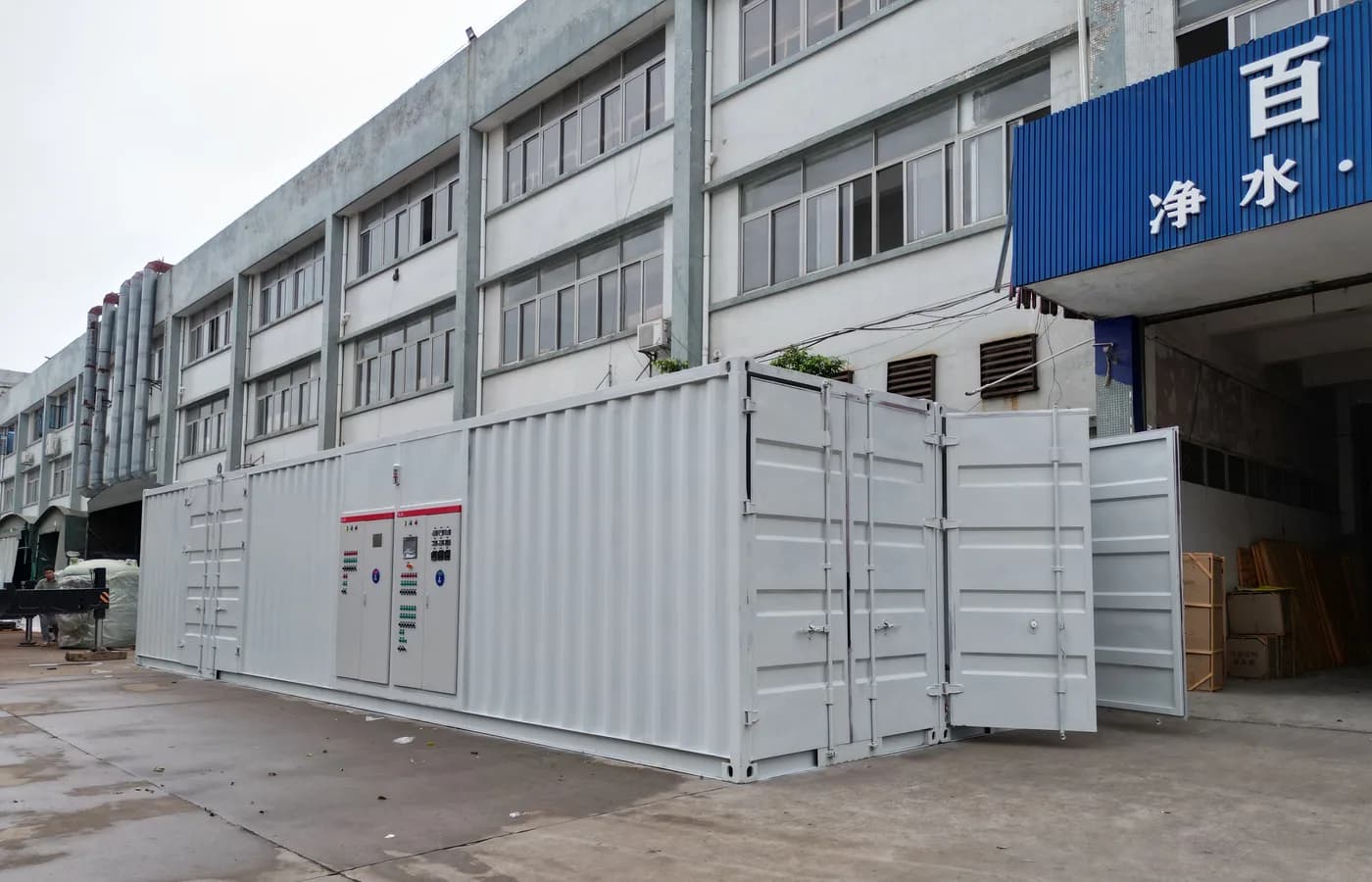
Retain the selected design basis with the operating manual and review it when production changes. A revised cleaning chemical, different wastewater source or altered shift pattern can invalidate assumptions that were reasonable at purchase. Site-specific evidence should determine the next engineering action; this guide supplies a framework for that review and makes no universal performance or cost-saving promise. The featured photograph provides actual industrial water-treatment equipment context. It does not establish that the specialist component described here appears in the image, or demonstrate a customer result, certification or completed project.
Questions buyers commonly ask
Can sodium monitoring replace all conductivity measurements?+
No. Sodium is a specific analyte, whereas conductivity responds to ionic composition more broadly. Use each measurement for a defined plant decision and evaluate disagreements in the context of sample chemistry.
Why does a trace sodium analyzer need sample-system review?+
Transport materials, conditioning, contamination and stream switching can affect the installed result. The analyzer specification should include those interfaces and a procedure for demonstrating that the sample remains representative.
What evidence supports a breakthrough alarm?+
Require a valid calibrated measurement, documented sample response and a tested alarm sequence. Retain the operating threshold approved for the treatment process rather than selecting a universal limit from another installation.
Turn the guide into a project brief.
Final process selection and performance commitments should follow the complete feed-water analysis, application requirements, site utilities and approved technical agreement.