Wet air oxidation treats selected industrial liquids using oxygen at elevated temperature and pressure. Spent caustic procurement requires specialist assessment of sulfur compounds, organics and free hydrocarbons. The useful package boundary includes feed preparation, oxidation, offgas handling and the condition of liquid returned to downstream treatment.
Segregate spent-caustic sources before evaluating oxidation
Identify which manufacturing operations generate the spent caustic and whether the streams are consistently segregated. Provide the composition of each source rather than relying on pH as a description of treatment difficulty. Wet air oxidation uses oxygen in a heated, pressurized liquid-phase process; specialist selection depends on the substances present. Do not combine free hydrocarbon, solvent or unusual cleaning discharges into the feed without review. The enquiry should specify acceptable feed sources and how an off-spec batch is identified and held.
Translate this distinction into a purchase boundary for industrial spent caustic wet air oxidation. List the equipment that delivers the stated function and the upstream conditions supplied by the owner. Ask bidders to explain exclusions in the same schedule as included items. A technically complete offer should identify what remains uncertain and which additional observation would resolve it. Keep those open items visible when comparing prices, because a smaller scope can otherwise appear to offer the same duty.
Measure sulfur species and the organic loading envelope
Provide flow, alkalinity, relevant sulfur species, COD or other agreed organic measures, salts and suspended solids. Include production shutdowns and tank-bottom material that may differ from normal transfers. Ask the analytical team how samples are preserved so volatile or reactive constituents remain representative. Define both expected and credible difficult feed conditions. Correlate measurements with their source campaign, allowing the reactor specialist to assess oxidation demand and materials compatibility without mistaking a diluted grab sample for the full operating duty.
Use the production schedule to choose the sampling campaign for industrial spent caustic wet air oxidation. Include normal manufacture, cleaning transitions and relevant changes of raw material. Label historical measurements with their dates and methods. If a difficult condition has never been measured, identify it as a design assumption rather than averaging it into an apparently precise specification. Agree how a later change in the feed envelope will be reviewed before extending an equipment guarantee to that new condition.
Send the feed-water analysis, target quality, required capacity and operating profile. We will help structure the next engineering questions.
Send your project inputsDefine reactor materials and thermal protection together
Request a process design basis covering pressure, temperature, oxidant supply and the actual corrosive species. Material selection must address the relevant chemical and thermal conditions throughout the package, including heat exchangers and cooled outlet sections. Require the specialist to identify operating limits, inspection locations and protective systems. Avoid selecting reactor conditions from general descriptions. Review how startup heat, reaction heat and heat recovery interact, and have the supplier establish the engineered response to abnormal feed or utility conditions for the offered configuration.
Place the proposed arrangement on the actual site drawing before releasing the order. Trace every inlet, outlet and utility from an identified source to an identified destination. Include space for isolation and maintenance, with ownership of each connection written beside the package boundary. The drawing review for industrial spent caustic wet air oxidation should resolve conflicts while changes are still straightforward, rather than leaving the installation contractor to interpret several separate vendor drawings during commissioning.
Include gas handling and separated-liquid duties
Identify every gas and liquid outlet on the process drawing. Define the route for reactor offgas, displaced storage vapors and any upstream stripping duty after specialist review of the feed. Include liquid cooling, pressure reduction and solids or hydrocarbon separation where required. A reactor discharge is an intermediate stream until the downstream owner accepts its composition and delivery condition. Keep oxygen supply, ventilation and gas-treatment interfaces inside the responsibility schedule so installation contractors are not left to invent connections during commissioning.
Write a cause-and-effect schedule that operators can use during a shift. Distinguish a valid result, a held value and a failed measurement. Identify who may change settings and what evidence permits a return to service. Demonstrate the important states using approved simulations where direct fault creation would be inappropriate. A control display for industrial spent caustic wet air oxidation should preserve the reason for a stop instead of clearing all evidence as soon as the operator presses reset.
Demonstrate compatibility with the biological receiver
Measure the oxidized liquid for residual contaminants, salts, pH and the organic fractions relevant to downstream biology. A lower COD result does not automatically establish biological compatibility or complete destruction. Test representative treated samples under an agreed receiving-process assessment and define allowable loading and temperature at the interface. Identify equalization and controlled transfer requirements. State whether additional neutralization or polishing is included, with startup and off-spec liquid held separately until the conditions for downstream release have been demonstrated and authorized by the process owner.
Request a maintenance demonstration using the delivered configuration. The team should be able to identify the exact replacement part, reach it with the intended tools and verify the restored condition. Record the observations that trigger inspection and keep the manufacturer's operating restrictions with the work instruction. For industrial spent caustic wet air oxidation, spare availability and access can be as important to continuity as the nominal equipment rating, particularly when the plant has limited staffed maintenance windows.
Accept the complete treatment and utility boundary
Use a trial and commissioning protocol approved for the actual feed and specialist equipment. Record inlet and outlet analyses, liquid and gas flows, utility consumption and inventory changes. Separate mechanical completion and protective-function tests from the demonstrated process result. Acceptance should address the final liquid receiver, offgas destination and normal restart sequence, with the tested feed envelope written into handover. Compare proposals using the same feed-preparation and discharge boundaries rather than treating reactor capacity alone as a complete spent-caustic treatment offer.
Convert acceptance into a witnessed record with agreed instruments, sample locations and operating conditions. Separate functional checks from process results and state which deviations require another trial. Retain raw observations alongside calculated conclusions so later troubleshooting can reproduce the decision. The handover for industrial spent caustic wet air oxidation should include configuration revisions and unresolved restrictions, allowing a new engineer to understand the proven operating boundary without relying on recollections from the original commissioning team.
Build the quotation and handover around a measured duty
Prepare the enquiry for industrial spent caustic wet air oxidation with the available analysis, operating schedule, utility conditions and a marked layout. State whether Baihuipu is reviewing a new package, an equipment replacement or integration into an existing treatment train. Ask the proposal to address spent-caustic characterization, pressurized oxidation scope and biological receiving conditions and to identify any specialist supply or additional testing needed. Compare the same included scope across bids, including commissioning, recurring supplies and the owner responsibilities needed to support the proposed duty. Technical exceptions should have an accountable owner and a planned resolution before the supply agreement is finalized.
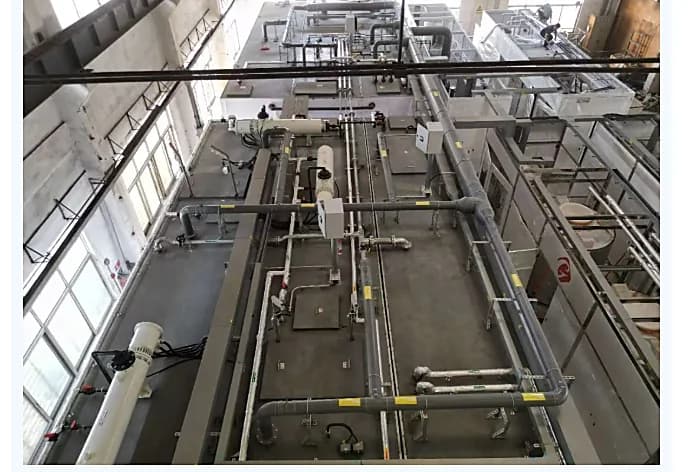
Retain the selected design basis with the operating manual and review it when production changes. A revised cleaning chemical, different wastewater source or altered shift pattern can invalidate assumptions that were reasonable at purchase. Site-specific evidence should determine the next engineering action; this guide supplies a framework for that review and makes no universal performance or cost-saving promise. The featured photograph provides actual industrial water-treatment equipment context. It does not establish that the specialist component described here appears in the image, or demonstrate a customer result, certification or completed project.
Questions buyers commonly ask
Can all spent-caustic streams be mixed before oxidation?+
Only after specialist review of their chemistry and operating variability. Segregated source analyses help identify unsuitable mixtures and the feed-preparation duties required.
Does oxidation remove the need for biological treatment?+
Not necessarily. Some applications use wet oxidation as pretreatment. Define and test the actual outlet quality and downstream receiving requirements.
What should the quotation include beyond the reactor?+
Specify feed handling, heat exchange, oxidant supply, controls, pressure reduction, offgas management and final liquid conditioning, with clear responsibility for every connection.
Turn the guide into a project brief.
Final process selection and performance commitments should follow the complete feed-water analysis, application requirements, site utilities and approved technical agreement.