A belt filter press combines gravity drainage with progressive mechanical dewatering between belts. Industrial procurement should connect sludge conditioning to wedge loading, belt behaviour and wash-water supply. The useful capacity is the duty achieved with the actual sludge and complete operating arrangement, including filtrate and cake destinations.
Define the duty after conditioning and drainage
A belt filter press typically moves conditioned sludge through drainage and progressively loaded dewatering zones. The feed entering the wedge must behave suitably for the selected belt and roller arrangement. State the actual sludge source and the conditioning boundary instead of sizing only from wastewater flow. Biological solids, chemical precipitates and mineral mixtures can respond differently. Ask for trials that relate feed preparation, cake handling and filtrate quality to the offered machine, rather than transferring a rating from an unrelated sludge.
Translate this distinction into a purchase boundary for industrial sludge belt filter press. List the equipment that delivers the stated function and the upstream conditions supplied by the owner. Ask bidders to explain exclusions in the same schedule as included items. A technically complete offer should identify what remains uncertain and which additional observation would resolve it. Keep those open items visible when comparing prices, because a smaller scope can otherwise appear to offer the same duty.
Evaluate volume and solids loading together
Provide sludge flow, density and measured dry-solids fraction across the intended operating schedule. Calculate the solids load on a consistent basis and keep hydraulic peaks visible. Identify holding-tank mixing and the condition after a long stoppage, when settling or changes in sludge structure may affect feed. Conditioning trials should record polymer preparation and mixing energy as well as dose. A visually strong floc can still release water poorly or fail under the shear present between the laboratory vessel and the full-scale machine.
Use the production schedule to choose the sampling campaign for industrial sludge belt filter press. Include normal manufacture, cleaning transitions and relevant changes of raw material. Label historical measurements with their dates and methods. If a difficult condition has never been measured, identify it as a design assumption rather than averaging it into an apparently precise specification. Agree how a later change in the feed envelope will be reviewed before extending an equipment guarantee to that new condition.
Send the feed-water analysis, target quality, required capacity and operating profile. We will help structure the next engineering questions.
Send your project inputsUse wedge behaviour to review the proposed settings
Observe drainage, distribution across the working width and the point at which the sludge enters compression. Excess liquid or a poorly formed sludge mat can affect containment and cake formation. Require the supplier to connect belt speed, tension and feed settings to trial evidence. Do not assume that increasing pressure alone will correct poor conditioning. Record the accepted operating window and the observations that indicate the feed should be reduced or diverted while the underlying sludge or polymer problem is investigated.
Place the proposed arrangement on the actual site drawing before releasing the order. Trace every inlet, outlet and utility from an identified source to an identified destination. Include space for isolation and maintenance, with ownership of each connection written beside the package boundary. The drawing review for industrial sludge belt filter press should resolve conflicts while changes are still straightforward, rather than leaving the installation contractor to interpret several separate vendor drawings during commissioning.
Verify tracking and interruption responses
Review belt tracking, tensioning and the response to loss of wash water, air or another required utility. Position indication and protective stops should reflect the actual machine design. A tracking fault needs a defined inspection sequence rather than repeated automatic restart into the same misalignment. Exercise permissives with approved simulations and confirm that upstream sludge and polymer feeds respond appropriately. Include downstream cake transport in that sequence so the press does not continue discharging into a stopped conveyor or an unavailable receiving container.
Write a cause-and-effect schedule that operators can use during a shift. Distinguish a valid result, a held value and a failed measurement. Identify who may change settings and what evidence permits a return to service. Demonstrate the important states using approved simulations where direct fault creation would be inappropriate. A control display for industrial sludge belt filter press should preserve the reason for a stop instead of clearing all evidence as soon as the operator presses reset.
Include belt washing and service access
Specify wash-water pressure, quality and flow for the delivered nozzles and the complete wash cycle. Identify nozzle strainers, access and the route of contaminated wash water. Filtrate, wash water and spills may have different instantaneous loads even when they eventually return to the same treatment plant. Show the belt removal route, roller access and guarding arrangements on the layout. Compare spare belts by exact specification and retain the supplier cleaning limits so an aggressive maintenance treatment does not damage the media.
Request a maintenance demonstration using the delivered configuration. The team should be able to identify the exact replacement part, reach it with the intended tools and verify the restored condition. Record the observations that trigger inspection and keep the manufacturer's operating restrictions with the work instruction. For industrial sludge belt filter press, spare availability and access can be as important to continuity as the nominal equipment rating, particularly when the plant has limited staffed maintenance windows.
Accept net throughput under the agreed shift pattern
Measure feed conditions, polymer use, cake properties, filtrate quality and wash-water observations together during the agreed trial. Include interruptions and cleaning in the available operating time. A favorable cake-solids sample does not establish practical daily capacity if throughput or solids capture is unacceptable. Distinguish factory mechanical runs from process trials with representative sludge. The acceptance record should contain the installed settings and test conditions needed to explain later differences, while keeping waste classification and final disposal acceptance as separate owner decisions.
Convert acceptance into a witnessed record with agreed instruments, sample locations and operating conditions. Separate functional checks from process results and state which deviations require another trial. Retain raw observations alongside calculated conclusions so later troubleshooting can reproduce the decision. The handover for industrial sludge belt filter press should include configuration revisions and unresolved restrictions, allowing a new engineer to understand the proven operating boundary without relying on recollections from the original commissioning team.
Build the quotation and handover around a measured duty
Prepare the enquiry for industrial sludge belt filter press with the available analysis, operating schedule, utility conditions and a marked layout. State whether Baihuipu is reviewing a new package, an equipment replacement or integration into an existing treatment train. Ask the proposal to address wedge loading, belt tracking and wash-water demand and to identify any specialist supply or additional testing needed. Compare the same included scope across bids, including commissioning, recurring supplies and the owner responsibilities needed to support the proposed duty. Technical exceptions should have an accountable owner and a planned resolution before the supply agreement is finalized.
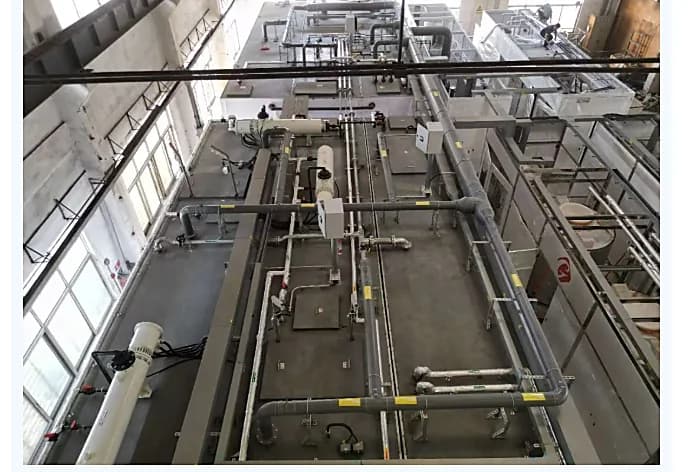
Retain the selected design basis with the operating manual and review it when production changes. A revised cleaning chemical, different wastewater source or altered shift pattern can invalidate assumptions that were reasonable at purchase. Site-specific evidence should determine the next engineering action; this guide supplies a framework for that review and makes no universal performance or cost-saving promise. The featured photograph provides actual industrial water-treatment equipment context. It does not establish that the specialist component described here appears in the image, or demonstrate a customer result, certification or completed project.
Questions buyers commonly ask
How does a belt press differ from a gravity belt thickener?+
A press adds progressive mechanical dewatering to drainage, commonly using a wedge and roller arrangement. Its intended cake duty and control requirements differ from a thickener delivering pumpable sludge.
Can belt width alone establish sludge capacity?+
No. Hydraulic and dry-solids loading, conditioning, belt speed and sludge behaviour must be evaluated together using representative trials and the proposed machine arrangement.
Why include wash water in the RFQ?+
Belt cleaning supports continued operation and creates a return stream. Quote its supply requirements, nozzle service, drainage capacity and effect on net plant operation with the press.
Turn the guide into a project brief.
Final process selection and performance commitments should follow the complete feed-water analysis, application requirements, site utilities and approved technical agreement.