Industrial pure-water storage and distribution should preserve the quality produced by the treatment plant while supplying the real demand profile. Specify usable tank volume, turnover, compatible materials, vent protection, loop hydraulics and monitoring at representative use points. Treat sanitization and maintenance access as design inputs, because skid-outlet quality alone cannot establish reliable water quality throughout a factory.
Define the water requirement at the actual use point
A pure-water generator can meet its outlet specification while the factory receives different water at a remote use point. Storage, air contact, pipe materials, stagnation and local connections all influence delivered quality. Start the distribution design by listing the consuming processes and their individual requirements. Distinguish parameters that matter to the process, such as conductivity, particles, organic contamination or microbiological condition. The most demanding requirement should not automatically be imposed on every unrelated utility user if separate networks are more appropriate. Map the supply boundary before selecting tanks or pumps.
For each consumer, record the required pressure, normal flow, peak flow, operating schedule and allowable interruptions. Identify whether the process draws continuously, in batches or only during cleaning and maintenance. Also define the measurement method and sample point associated with each quality limit. A single laboratory sample from the generator is not enough to demonstrate the distribution system. The acceptance plan should show how representative locations, distant branches and high-risk connections will be assessed. This makes the water-quality commitment relevant to the production process rather than to an isolated piece of equipment.
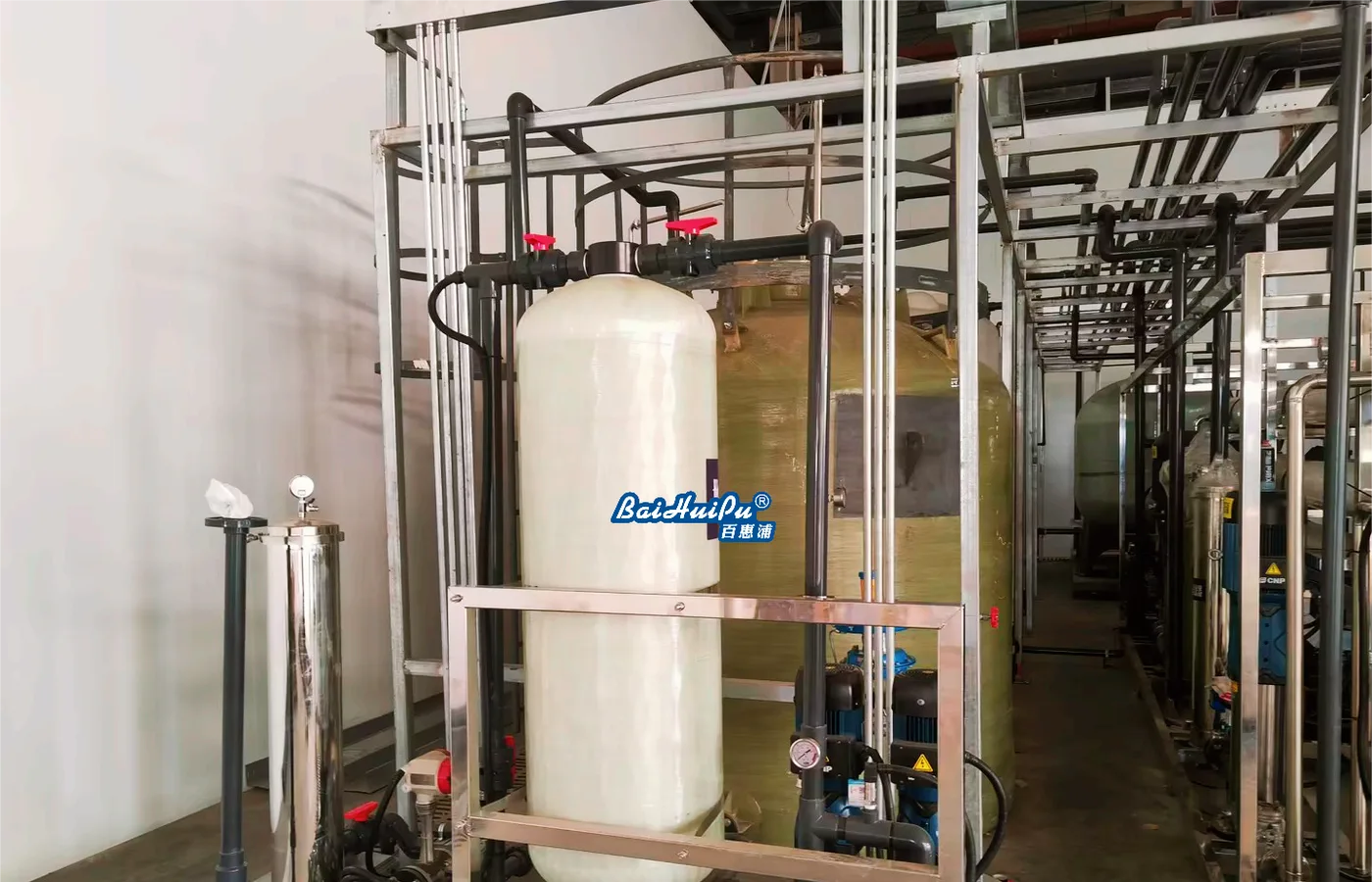
Size usable storage from the demand profile and refill strategy
Storage sizing begins with a time-based balance between treatment production and process consumption. Evaluate the maximum cumulative demand deficit over the actual operating schedule, including simultaneous batch draws and planned treatment interruptions. Add the agreed operating reserve, then distinguish usable volume from the tank's gross dimensions. Pump suction level, high-level protection, freeboard and unusable residual volume affect the water available to production. Request a level-volume relationship and clearly identified normal, minimum and maximum working levels. A nominal tank capacity alone does not explain how long the factory can operate.
Larger storage is not always a better choice. Extra inventory can extend water residence time and complicate contamination control, particularly when actual production demand is low. Consider staged tanks, variable working levels or separate standby capacity where justified by the process. Review how the treatment generator restarts and refills after a peak draw without excessive cycling. Define the behavior during weekends, shutdowns and seasonal production changes. The final reserve should come from an agreed availability strategy and quality-control plan, rather than from an arbitrary number of hours applied to every industrial installation.
Send the feed-water analysis, target quality, required capacity and operating profile. We will help structure the next engineering questions.
Send your project inputsReview the tank body, vent and liquid connections together
Tank material selection depends on the required water quality, cleaning method, temperature and site environment. Review the shell, internal surfaces, seals, nozzles, instruments and repair methods as one wetted-material system. Plastic and stainless-steel arrangements can each be appropriate in selected duties, but neither material name by itself guarantees suitability. Ask for the material specification and the required fabrication or joining records. Make the tank accessible for inspection and maintenance, and examine whether its geometry supports the intended drain and sanitization procedures without leaving difficult-to-manage pockets.
The vent is an active interface with the surrounding atmosphere. Tank filling, withdrawal and temperature change affect the air exchange or gas supply needed to protect the vessel. Where filtered venting is required, review filter suitability, moisture exposure, replacement access and restriction monitoring. The tank must remain protected against excessive pressure or vacuum within its approved design. An overflow, sample connection or poorly protected access hatch can bypass the intended contamination barrier. Show every connection on the drawing and agree how it will be cleaned, inspected and isolated. Vent protection should be reviewed with the tank designer, not added casually after installation.
Calculate distribution hydraulics across real operating modes
A recirculating loop needs enough hydraulic capacity to serve its users while maintaining the agreed return condition. Calculate pipe losses, fittings, elevation changes, equipment restrictions and branch demands for the relevant operating cases. Review the minimum-demand condition as well as simultaneous peak demand. The pump curve, speed-control range and pressure-control location should correspond to these cases. A pump that delivers the required pressure at one point can still leave a distant user under-supplied or expose another component to excessive pressure when several outlets close.
Design branches and user connections deliberately. Long unused branches can retain water that is poorly exchanged even when the main loop is circulating. Place isolation, sampling and flushing provisions where the operating team can reach them, and include rarely used outlets in the maintenance plan. If duty and standby pumps are provided, define the changeover sequence and how the idle pump's wetted path is managed. Review the effect of return restrictions and local valves before commissioning. Avoid universal velocity claims: hydraulic targets must be reconciled with the selected materials, process requirements and approved contamination-control strategy.
Make sanitization compatible with every wetted component
Choose the intended sanitization approach early enough to influence material and equipment selection. Hot-water, chemical and other arrangements have different compatibility and operating requirements. The tank, pumps, seals, instruments, filters and user connections must all tolerate the selected method within their approved conditions. Define which sections of the network are included and which require a separate procedure. A main-loop treatment cannot be assumed to reach an isolated branch or a local machine connection. Review the ability to drain, rinse and sample each part of the defined sanitary boundary.
The procedure should identify preparation, isolation from production, treatment conditions, recovery and release to service. Include protection against unintended delivery of sanitizing agents or unacceptable temperature to users. If a UV device is part of the system, clarify its intended duty and monitoring; it does not remove every contamination mechanism elsewhere in the network. Record maintenance and replacement responsibilities for filters and other barriers. The site's quality team should approve the release evidence appropriate to the application. A general industrial pure-water guide does not establish pharmaceutical compliance or qualification for a particular process.
Place monitoring where it can diagnose a distribution problem
Instrument placement should help separate generation quality from storage and distribution effects. Consider readings at the generator outlet, tank or supply header, loop return and selected critical use points. Pair quality measurements with operating information such as temperature, flow, pressure and tank level. Review instrument materials, calibration access and sample-line arrangements, especially when measuring very low conductivity water. Establish a baseline after commissioning under documented conditions. Trend changes against operating mode and production activity so that a temporary startup condition is not confused with a persistent contamination source.
A quality alarm needs a defined response. The controls may stop supply, divert water, trigger a confirmation sample or require operator review, depending on the process risk. Decide whether tank inventory can continue feeding users after the generator trips and how that inventory will be released. Include power failure, sensor failure, low tank level and loss of recirculation in the cause-and-effect review. Log relevant events and state changes so troubleshooting has useful evidence. An alarm without an agreed action can create repeated uncertainty about whether the process may continue using the water.
Specify drawings, site tests and the final handover
The quotation package should include the demand schedule, point-of-use quality limits, site layout, available utilities, sanitization method and required availability. Ask for a tank working-volume calculation, hydraulic duty matrix, material schedule, instrument list and marked connection drawing. Distinguish generation equipment from the storage and distribution scope so that interface work is not omitted. Review maintenance clearances, filter replacement, pump removal and access to drains before approving the layout. The project should identify who installs and checks the final branches, because these often extend beyond the packaged equipment supplier's factory boundary.
At site acceptance, verify delivery pressure and flow in the agreed demand cases, tank level controls, pump changeover, alarms, drainage and representative water-quality results. Assess the network after the relevant cleaning or sanitization procedure and record how it was released to production. Compare results with the approved technical agreement, rather than a generic statement that the loop is complete. Send Baihuipu the consumer list, factory layout and quality targets to develop a coordinated storage and distribution brief. These inputs help ensure that equipment sizing, contamination control and practical maintenance address the same operating requirement.
Questions buyers commonly ask
How should a pure-water storage tank be sized?+
Use the time-based difference between generation and consumption, plus an agreed reserve. Account for usable volume, refill controls and residence time rather than relying on nominal capacity alone.
Does continuous recirculation eliminate every stagnant location?+
No. Unused branches, isolated components and local machine connections may exchange little water. Review their geometry, use frequency and flushing or sanitization arrangements.
Is stainless steel always required for industrial pure-water piping?+
No. Material suitability depends on water-quality targets, temperature, cleaning method and fabrication quality. Evaluate the full wetted system against the approved application requirements.
Can skid-outlet testing establish point-of-use water quality?+
It establishes generation performance at that location. Distribution acceptance also needs representative use-point and return measurements under defined operating and recovery conditions.
Turn the guide into a project brief.
Final process selection and performance commitments should follow the complete feed-water analysis, application requirements, site utilities and approved technical agreement.