A filter press for industrial wastewater sludge should be selected from measured solids loading and representative dewatering tests. Sludge volume, chamber volume and advertised cake dryness are different quantities. A useful procurement specification connects them through the complete operating cycle, conditioning requirements, filtrate route and the site's practical cake-handling arrangement.
Establish the actual sludge boundary
List the processes that generate sludge and identify whether their outputs will be combined. Precipitated metal hydroxides, biological solids, mineral fines and oily residues can have different filtration behaviour. Record production variation, treatment chemicals, temperature and the solids-storage arrangement. Define what enters the press rather than describing the entire wastewater flow as the dewatering duty. A supplier needs the conditioned or unconditioned sludge at the proposed feed boundary, including any thickening step that changes concentration before the press.
Provide representative total-solids measurements and relevant handling information for the sludge. Document the sampling method and the plant conditions under which samples were collected. A settled sample taken after a long storage period may not represent the material pumped during routine operation. Include credible difficult cases and identify known chemical or physical variations. The RFQ should state which characteristics are measured and which are estimated. This helps the vendor plan trials and prevents a convenient sample from becoming an unsupported guarantee for every future production stream.
Size from dry-solids mass as well as slurry volume
Calculate the dry-solids load using sludge quantity and measured solids fraction in consistent mass units. If a volumetric flow is used, include slurry density rather than silently assuming it is identical to water when that difference matters. State daily, peak and batch loading separately. A dilute sludge stream can create a high liquid-handling requirement even when its dry-solids mass is modest. Conversely, a concentrated stream may fill the chambers quickly. Both mass and volume belong in the design basis, with the measurement uncertainty made visible.
Ask the supplier to relate chamber volume to expected cake volume using trial evidence and stated assumptions. Do not equate a chamber-volume rating directly with kilograms of dry solids per day. The result depends on cake properties and the number of completed cycles available. Include conditioning additions when they affect the final solids mass. If the plant schedule allows only limited staffing or restricted cake removal, use that available operating time in the capacity review rather than assuming the press can complete uninterrupted cycles throughout the entire calendar day.
Send the feed-water analysis, target quality, required capacity and operating profile. We will help structure the next engineering questions.
Send your project inputsUse representative dewatering trials before accepting claims
Request a trial plan that identifies the sludge source, sample handling, conditioning method and proposed filtration conditions. Ask what measurements will be recorded, including cake solids, filtrate quantity and quality, filtration time and cake release behaviour. Where conditioning is needed, test its suitability for the actual material rather than treating one polymer or reagent as universally applicable. Laboratory results can support selection, but their interpretation at production scale should be documented by the supplier and reviewed against the proposed press configuration.
Define how uncertainty will be handled if sludge changes between the trial and delivery. Consider repeat trials for materially different streams or a site demonstration where the available evidence is insufficient. Request guarantees only within a clearly specified tested envelope and agreed acceptance procedure. Published data for municipal sludge or an unrelated industrial residue should not be presented as the plant's expected performance. A high cake-solids value alone can also conceal long filtration time or poor release, so compare the operational result as a complete duty.
Specify the full batch cycle and supporting equipment
Map filling, filtration, any approved squeeze or blow step, pressure release, opening, cake discharge and cloth cleaning. Identify which steps belong to the selected press type; a recessed-chamber press and a membrane-squeeze press do not have identical equipment requirements. Calculate available cycles from the complete sequence rather than filtration time alone. Include realistic interruptions for inspection, cloth service and cake handling. Ask the supplier to show the operating sequence with the same assumptions used in its daily throughput calculation.
Specify the feed pump at the changing flow and pressure conditions required during filling and filtration. Confirm compatibility with the solids, chemical conditioning and any abrasive or corrosive constituents. Request the utilities needed for the selected options, including wash water, air or squeeze service where applicable. Show the sludge supply tank and its agitation arrangement if they form part of the quoted package. The press cannot achieve the proposed cycle if the upstream tank settles excessively, the feed pump is unsuitable or a required utility is unavailable.
Select cloths, plates and service access for the sludge
Obtain the proposed cloth material and construction, plate material and compatible operating conditions. Ask the supplier to explain the selection against trial filtration, cake release and cleaning requirements. Review seal arrangements and filtrate collection details. A cloth that produces acceptable filtrate during a short trial may still need a defined cleaning and replacement plan for continuous plant use. Include the chemicals and temperatures used in any proposed wash procedure when checking the full material schedule, rather than assessing only the sludge-feed condition.
Request the maintenance clearance, plate-removal method and safe working access around the press. Review the cake conveyor, bin or collection arrangement before finalizing the equipment elevation and footprint. Include lifting and cloth-change tasks in the layout discussion. Guarding and operating procedures should follow the selected machine and the site's equipment review. A fully automated plate-shifting feature does not eliminate the need to plan inspection and maintenance. Compare spare cloths, plate components and critical feed-pump parts using exact model references in the handover documents.
Define cake and filtrate destinations together
Identify the cake receiving arrangement and the characteristics needed for handling, transport or the owner's approved downstream route. Avoid turning a waste destination into a machine performance promise. Cake acceptability can depend on composition and classification as well as moisture, and it belongs to the site's waste-management review. Confirm that the receiving bin, conveyor and removal schedule can support the proposed batch sequence. A press that completes filtration while waiting indefinitely for an available container does not meet the practical production duty.
Show where filtrate, first flushes and cloth-wash water return. Assess their instantaneous volume and composition with the upstream treatment designer rather than assuming they can all enter the same tank at any time. Define any segregation or holding required by the actual process. Record filtrate quality during acceptance using the agreed method, and confirm the receiving system has capacity. Dewatering redistributes solids and water within the treatment plant; it does not automatically remove dissolved contaminants from the filtrate or make that stream suitable for direct reuse.
Build an RFQ and acceptance protocol around evidence
Give bidders the sludge profile, dry-solids mass range, sample results, available shifts, required cake handling and receiving routes. Require chamber and plate data, the trial report, complete-cycle assumptions, feed-pump duty and utility schedule. State which conditioning and automation equipment is included. Compare net throughput within the same operating schedule, alongside consumables, maintenance access and staffing tasks. Identify any performance condition that depends on a later site trial, so the commercial agreement does not obscure unresolved material behaviour behind a single advertised capacity figure.
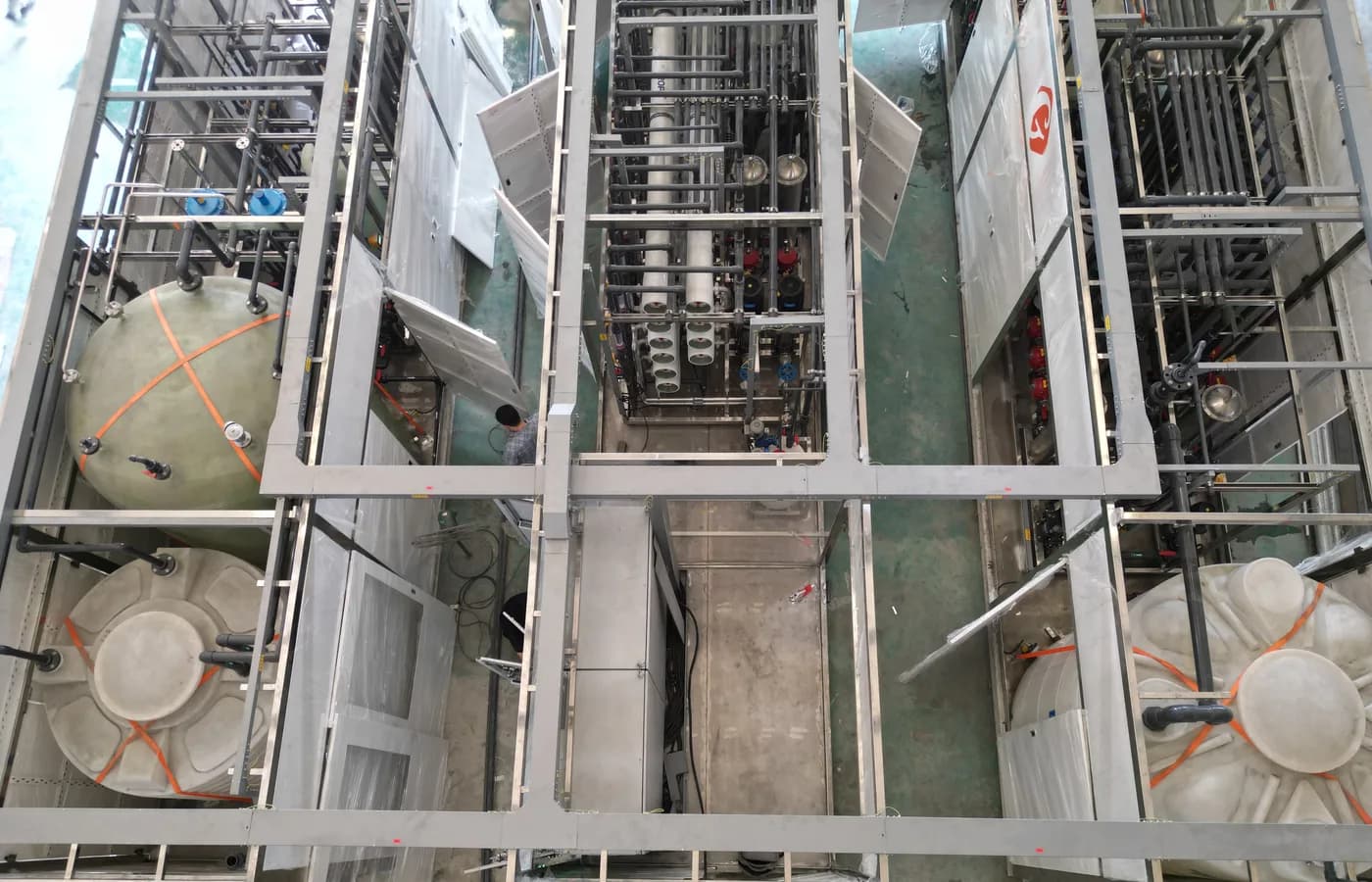
Separate factory mechanical and controls checks from the final sludge dewatering trial. At site acceptance, record feed condition, conditioning additions, each cycle stage, cake measurement and filtrate outcome using an agreed protocol. Keep enough information to identify why later operation differs from the baseline. The featured equipment-layout image illustrates treatment-plant integration rather than a filter-press performance demonstration. Send Baihuipu the sludge analysis, solids loading, representative samples and intended handling arrangement for an engineering scope review that identifies the required dewatering trials and equipment interfaces before procurement commitments are finalized.
Questions buyers commonly ask
Can filter-press capacity be specified only in cubic metres per day?+
No. Include measured dry-solids loading, slurry concentration, chamber and cake assumptions, and the complete number of cycles available within the site's operating schedule.
Can a vendor's cake-solids result be applied to any industrial sludge?+
It needs representative trial support and an agreed operating envelope. Sludge composition, conditioning, cloth selection and cycle conditions can change the result.
Does an automatic press require no operator attention?+
Automation can reduce selected tasks, but inspection, cloth maintenance, cake handling and fault response still need a defined operating and staffing plan.
What information should accompany a sludge filter-press inquiry?+
Provide sludge source and analyses, dry-solids mass, flow and concentration ranges, representative samples, operating shifts, utilities, cake destination and filtrate return requirements.
Turn the guide into a project brief.
Final process selection and performance commitments should follow the complete feed-water analysis, application requirements, site utilities and approved technical agreement.