An activated-alumina proposal for industrial fluoride needs evidence from the actual water chemistry. Treat adsorption, pH adjustment, breakthrough monitoring and waste handling as one procurement scope, and distinguish a polishing application from bulk fluoride removal or a drinking-water design copied without validation.
Define whether the duty is bulk removal or polishing
State the fluoride concentration range entering the proposed adsorption stage and the required outlet limit at its actual release point. Include peak and routine flow, operating hours and the consequences of a failed result. A polishing package receiving pretreated water has a different loading and maintenance duty from a unit expected to handle an untreated process stream. Define that boundary before comparing vessel prices or requesting a nominal media capacity.
Identify the industrial process generating the fluoride and any upstream chemical treatment. Record whether fluoride reporting refers to the analytical fraction relevant to the application, and confirm suitable sample preparation with the laboratory. Do not infer an enforceable discharge requirement from a generic website value. Use the project's approved quality specification and locally applicable permit conditions as supplied by the responsible owner. The equipment enquiry should reference those documents without inventing a universal industrial limit.
Characterize the water surrounding the fluoride
Provide pH, alkalinity, major ions, suspended solids and relevant metals or organics alongside fluoride. Include the chemicals used in upstream neutralization or precipitation, because their carryover can change the adsorption duty. Describe source variability and distinguish raw, settled and filtered samples. A fluoride result without its surrounding chemistry is insufficient for a reliable media assessment, particularly where the process alternates between batches with different acids, salts or cleaning residues.
Ask potential suppliers to identify competing constituents and fouling risks for the proposed grade of activated alumina. Require a written feed requirement and any needed upstream barrier. Do not assume that a dry-gas adsorbent marketed as activated alumina is suitable for aqueous fluoride service. Confirm the product's intended application and supporting water-treatment documentation. Material naming alone does not establish adsorption performance, hydraulic suitability or compatibility with the proposed conditioning and regeneration procedures.
Send the feed-water analysis, target quality, required capacity and operating profile. We will help structure the next engineering questions.
Send your project inputsUse published technology context appropriately
EPA research documents describe activated alumina investigations for industrial fluoride removal, while separate design manuals address drinking-water applications. These sources support considering adsorption as a candidate process and highlight the need for chemistry-dependent evaluation. Historical study conditions are not current project guarantees, and drinking-water design assumptions should not be transferred automatically to industrial wastewater. The purchase specification should state which results come from the actual project water and which are only background references.
Request the proposed media supplier's current technical information and a clear explanation of its application limits. If a bidder quotes a capacity, ask for the feed composition, test method, endpoint and operating conditions behind it. Distinguish an equilibrium laboratory observation from usable column performance. The buyer needs a capacity basis that can support a replacement or regeneration schedule, with uncertainty visible, rather than a favourable number selected from unrelated literature.
Design column trials around breakthrough
Agree a representative column trial where source chemistry or expected loading creates material uncertainty. Define feed preparation, media grade, bed arrangement, flow conditions and sampling plan before testing starts. Collect inlet and outlet results over time, including periods around the proposed quality endpoint. A one-time beaker test can help screening, but it does not establish the hydraulic behaviour or practical run length of the full operating bed.
Track actual treated volume and fluoride loading with the analytical results. Record pH changes, pressure loss, adjustments and interruptions. If regeneration will be part of the proposed service, evaluate subsequent operation rather than reporting only unused-media performance. Set the endpoint using the required outlet condition and an agreed monitoring margin. The trial report should identify demonstrated conditions and explain what further evidence is needed for scale-up, instead of presenting an unsupported treatment interval.
Specify pH control as a complete interface
Ask the supplier to justify the proposed pH conditions using the selected medium and actual feed chemistry. Define chemical addition, mixing, sensor location and any downstream readjustment required for reuse or discharge. Evaluate the effect on the full ionic balance and the upstream treatment system. A pH setpoint alone is insufficient scope: the design must show how variable flow, alkalinity and chemical strength are handled in routine operation.
Include low-chemical, no-flow and invalid-sensor responses in the control narrative. Specify where off-specification water is held or diverted until its condition is confirmed. Review chemical compatibility, containment and access with the site team using current supplier instructions. Avoid publishing a generic acid or alkali recipe as if it applied to every fluoride stream. Project testing and the selected product's requirements should establish the approved conditions and operating procedure.
Compare regeneration and media replacement
Request separate descriptions of single-use media replacement and regeneration where both are candidates. Compare the practical service sequence, downtime, chemicals, rinse water, labour and waste handling. A regeneration option can shift the fluoride into a smaller but more concentrated liquid stream, which still needs an approved destination. Include initial conditioning and return-to-service rinsing in the balance. Do not describe adsorption as fluoride destruction or assume that a concentrated waste can enter an existing drain.
For regeneration, require the vendor's validated sequence and compatibility limits for the particular medium. Identify waste segregation, storage and treatment responsibilities before equipment selection. For replacement, specify media removal access, lifting or transfer arrangements and disposal characterization. Evaluate the usable operating capacity with those service obligations included. The commercial comparison should make consumables and external waste costs visible, so a lower initial vessel price does not conceal an unacceptable long-term operating arrangement.
Provide continuity and credible quality monitoring
A lead-and-lag arrangement may provide an intermediate monitoring point and operational flexibility, but it still needs a defined switching rule. Show valve positions, sampling locations and isolation boundaries on the diagram. Clarify what happens when the lead bed reaches its agreed endpoint or when the downstream result is unavailable. Installed spare capacity should be described in terms of actual operable treatment duty rather than simply counting vessels on the skid.
Select a fluoride analytical method and reporting limit suitable for the project requirement. Coordinate sample conditioning and potential interferences with the laboratory or instrument supplier. A conductivity trend is not a fluoride-specific release measurement. Agree sample frequency, laboratory turnaround and the volume that may be produced before a result becomes available. Where those delays are incompatible with release risk, design holding or other approved protection into the operating plan before commissioning.
Define acceptance and prepare the enquiry
Write acceptance around a specified feed envelope, agreed operating conditions and measured outlet fluoride at the contractual boundary. Include start-up, bed switching and return from service. Require records for media identity, loading, control settings, sample times and laboratory results. A factory demonstration can prove valve sequences and assembly, while site-water evidence establishes adsorption performance. Keep these acceptance purposes separate and identify how a changed feed or invalid sample affects the test decision.
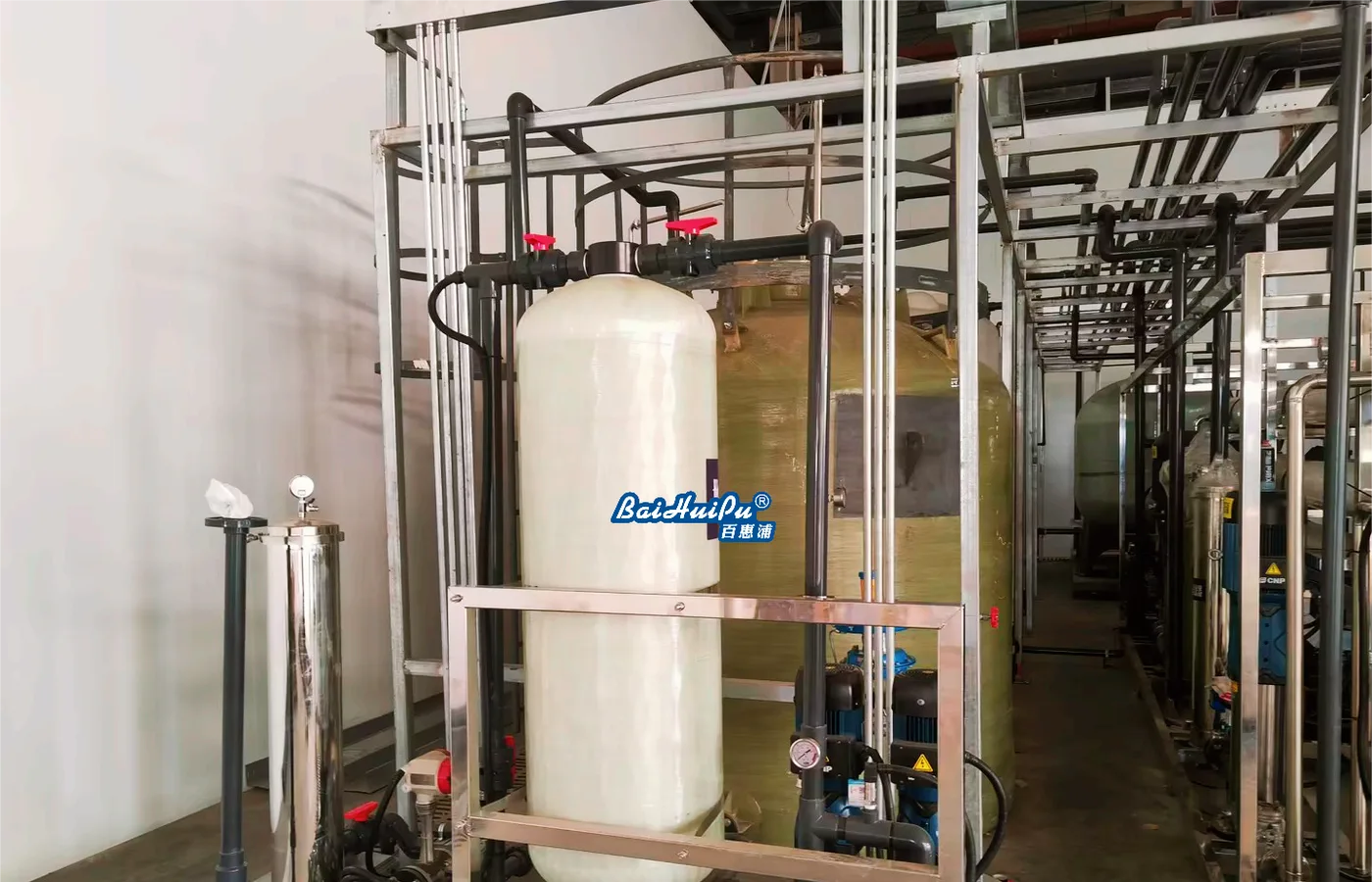
Send Baihuipu the process origin, water analyses, fluoride target, flow schedule and waste constraints for an adsorption feasibility review. Request explicit assumptions, trial needs, scope exclusions and downstream pH responsibilities. The featured photograph provides industrial-vessel and tank context; it does not identify activated alumina or verify fluoride removal. A well-defined proposal connects demonstrated column behaviour with monitoring, service and waste handling, giving the buyer a basis for comparison without invented performance or regulatory claims.
Questions buyers commonly ask
Can any activated alumina product be used for fluoride?+
No. Confirm the grade is intended and documented for aqueous fluoride service, then evaluate it with the actual feed.
Does a batch adsorption test establish full-scale run length?+
No. Column behaviour, breakthrough and service conditions require appropriate testing and engineering.
Is fluoride destroyed by adsorption?+
No. It is transferred to the medium and, where regeneration is used, into fluoride-bearing service wastes.
Can conductivity confirm fluoride compliance?+
No. Use an approved fluoride-specific analytical method and a sampling plan suited to the required outlet limit.
Turn the guide into a project brief.
Final process selection and performance commitments should follow the complete feed-water analysis, application requirements, site utilities and approved technical agreement.