Chemically enhanced backwash is an operating subsystem with chemical, hydraulic and control requirements. Buy the complete sequence around the selected UF membrane, including approved recipes, distribution evidence, waste separation and return-to-service criteria, rather than specifying only dosing pumps and a timer.
Define the cleaning mode being purchased
Identify the membrane manufacturer, model, rack configuration and the cleaning modes supported by its operating instructions. Distinguish ordinary hydraulic backwash, chemically enhanced backwash and a separate cleaning-in-place operation. Their sequence, chemical exposure and production interruption can differ. The procurement scope should name the intended mode and its boundaries before suppliers size pumps or tanks. Otherwise a proposal may provide hardware for one operation while the project assumes that it supports all three.
State the duty that CEB is expected to address and the evidence behind the proposed schedule. Include feed-water variability, pretreatment chemicals and the history of permeability or pressure loss where available. Do not assume a universal cleaning frequency for every industrial UF system. Require the supplier to show how the operating sequence can be adjusted within approved limits as site evidence develops, with change authority assigned to trained personnel and the responsible membrane specialist.
Obtain membrane-specific chemical approval
The approved recipe needs chemical identity, operating concentration, temperature, exposure conditions and relevant material limits for the selected module. Use current manufacturer instructions and written clarification where the proposed conditions are outside published guidance. A cleaning agent acceptable for one membrane family may be inappropriate for another. Include housings, seals, instruments and piping in the compatibility review rather than treating membrane compatibility as the only chemical constraint in the assembled package.
DuPont's Inge process manual discusses CEB selection and operation for its own UF products. It emphasizes chemical compatibility and distribution, and identifies hazards associated with mixing incompatible cleaning wastes. Use this as technology context, then require the exact module's approved procedure. Do not transfer its settings into a different membrane system or present a generic chemical recipe as a project recommendation. The purchase needs a controlled recipe document linked to the equipment actually supplied.
Send the feed-water analysis, target quality, required capacity and operating profile. We will help structure the next engineering questions.
Send your project inputsVerify chemical delivery at the rack
Size delivery around the intended concentration at the membrane boundary, with actual backwash flow and chemical strength identified. State whether stock dilution, inline dosing or a prepared solution is proposed. Include injection location, mixing, suction conditions and priming or calibration facilities. A metering pump's maximum flow does not establish that all modules receive the required solution, particularly during transitions or when the operating rack arrangement changes.
Ask how the vendor will demonstrate arrival and distribution of the cleaning solution through the rack. The test method should suit the chemical and equipment without compromising membrane compatibility. Review paths that can trap untreated water or concentrate chemical locally. Identify which valves, drains and sample points support the demonstration. Where distribution depends on a specific flow sequence, retain that sequence in the control narrative and test it during commissioning rather than leaving it as an undocumented operator technique.
Check backwash-water quality and storage
Specify the source and quality of water used to prepare or deliver the CEB. Confirm the selected membrane manufacturer's requirements and evaluate contamination risks from the tank and supply piping. Storage that introduces particles, corrosion products or unsuitable carryover can undermine cleaning and membrane operation. Define level management, tank replenishment and isolation from incompatible streams. Include the water preparation and supply boundary even when the tank is provided by another contractor.
Calculate usable storage against the complete sequence, including preparation, washing, rinse and any simultaneous demand. Identify which volumes are genuinely available above pump-protection levels. Review the consequence of low tank level during chemical exposure or rinsing. The controller needs an approved response to an interrupted supply, not simply a low-level alarm that leaves the plant in an uncertain mode. Include restart decisions and restrictions in the operating procedure before commissioning trials begin.
Make chemical and waste routes explicit
Show every chemical connection and CEB discharge on the piping diagram. Review how incompatible chemicals are prevented from mixing in the process and in the receiving waste system. For example, acid and chlorine-containing wastes require an engineered segregation and handling assessment; the same drain label is not evidence of compatibility. Use the site's approved chemical procedures and the suppliers' current safety information to establish the actual arrangement and responsibilities.
Include waste volume, chemical character and timing in the utility review. Identify whether waste is collected, segregated, neutralized or sent to another treatment stage, and who provides that equipment. A low CEB frequency does not make an unsuitable drain acceptable. Check receiving-tank capacity during other plant cleaning events. Equipment quotations should state these interfaces clearly, because downstream waste handling can affect sequence availability and the ability to return a rack to service.
Specify sequence visibility and interlocks
Require an operating narrative that identifies each step, permissive, valve position, timer, flow condition and completion criterion. The operator display should show the active mode and any condition preventing progression. Define access controls for recipe changes and retain a change record. Avoid burying essential limits in a controller programme that the plant cannot inspect or maintain. The supplier should deliver an approved sequence document and software backup with the equipment handover.
Test missing valve confirmation, loss of dosing, interrupted backwash flow and loss of power where these events are relevant. Agree whether the system pauses, drains, rinses or requires manual review under each condition. The response must reflect the approved membrane and chemical requirements. Simply restarting a timer after a fault may repeat an exposure or release inadequately rinsed water. Capture the intended recovery steps in commissioning tests and operator training.
Define rinse release and performance review
Agree how the rack is declared ready for filtration after CEB. Identify the monitoring or testing used to establish that the required rinse and return-to-service conditions have been met. The method must suit the cleaning chemicals, feed and downstream application; a clear-looking sample is not a complete release criterion. State where initial filtrate goes and how the system protects downstream RO or reuse equipment if release conditions are not satisfied.
Review cleaning effectiveness using consistent operating data and an appropriate baseline. Distinguish temporary temperature or flow changes from a meaningful change in membrane condition. Record chemicals, actual sequence, water quality and interrupted events with the performance trend. An integrity-test result addresses a different question from permeability recovery, so keep both records where applicable. Do not use successful CEB operation as evidence that damaged membranes have been restored or that every type of fouling has been removed.
Request a complete CEB supply scope
Send Baihuipu the module details, rack diagram, feed history, current sequence, available utilities and downstream release requirement. Request approved recipes, distribution verification, tanks and dosing boundaries, control documentation, waste interfaces and acceptance tests. Compare suppliers on net usable filtration duty with CEB interruptions and losses included. Ask them to identify uncertainty and site tests rather than guaranteeing a universal operating interval or chemical saving without representative evidence.
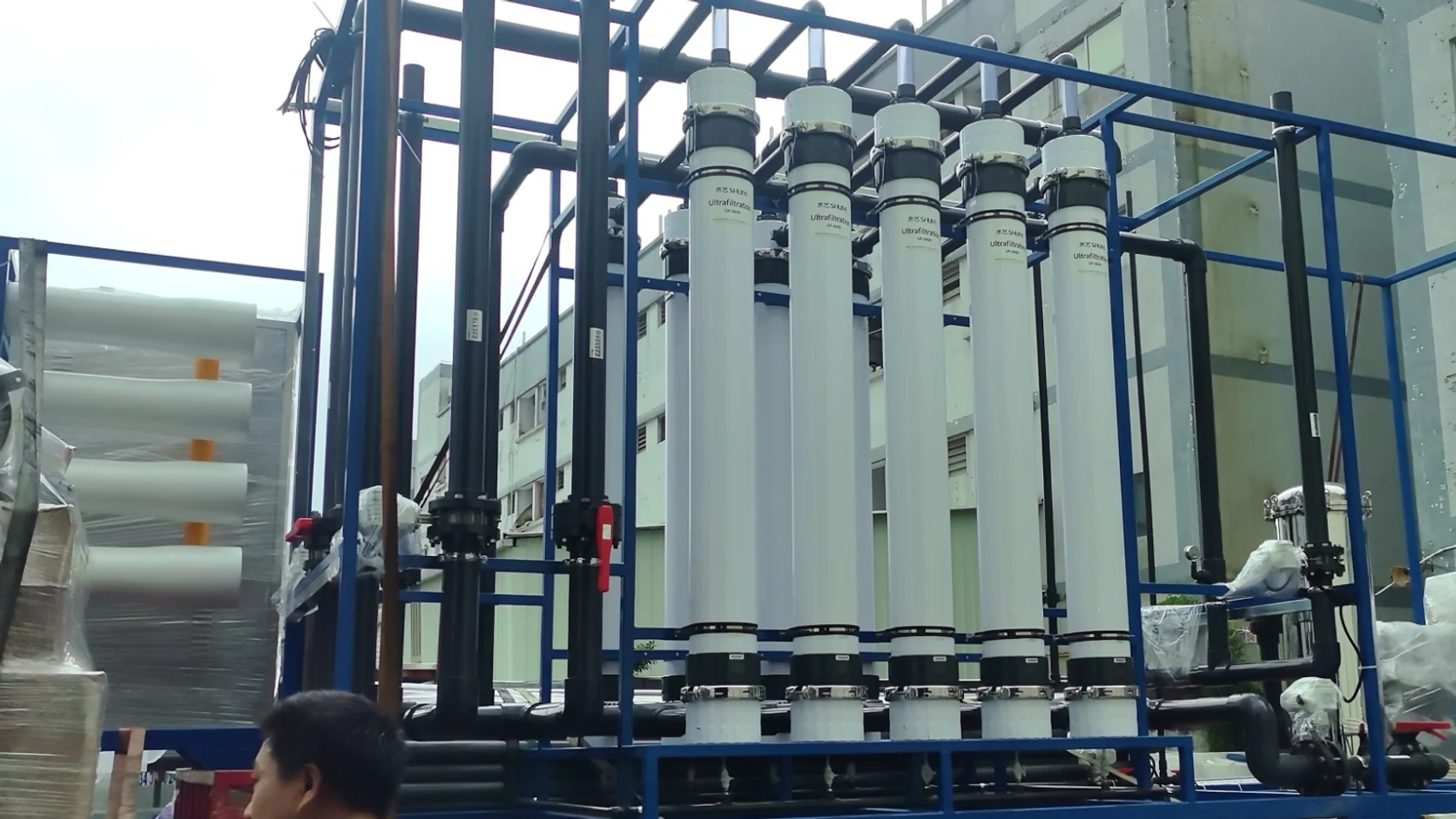
The featured image shows UF modules and stainless process piping as a genuine equipment reference; it does not document the CEB recipe or its performance. Use the linked UF and integrity-testing guides to coordinate adjacent functions while keeping their acceptance purposes clear. A maintainable CEB package gives operators an approved sequence, visible faults and a defensible release decision. Those deliverables are more useful than an unverified claim that stronger chemicals or longer soaking will solve every operating problem.
Questions buyers commonly ask
Is CEB identical to ordinary backwash?+
No. CEB includes an approved chemical cleaning sequence and may require different exposure, waste handling and release controls.
Can one UF cleaning recipe be used for all membranes?+
No. Obtain approval for the exact module, chemicals, temperature and exposure conditions, including other wetted materials.
Why verify chemical distribution?+
A correct dosing-pump setting does not establish that every module receives the intended solution during the actual sequence.
Does improved permeability prove membrane integrity?+
No. Cleaning performance and membrane integrity are different acceptance questions and should be evaluated separately.
Turn the guide into a project brief.
Final process selection and performance commitments should follow the complete feed-water analysis, application requirements, site utilities and approved technical agreement.