An ammonia stripping enquiry must cover the water and the gas leaving the process. Specify representative chemistry, temperature, transfer evidence and a controlled off-gas destination before comparing a tower package with biological or other nitrogen-treatment options.
Define the nitrogen stream and treatment boundary
Identify the source of the ammonia-bearing wastewater and whether it can remain segregated from other factory drains. Record flow variation, production timing and the required liquid outlet condition. Distinguish total ammonia nitrogen from free ammonia and from other nitrogen compounds. The analytical reporting basis must remain consistent in the design and acceptance documents. A reduction in ammonia concentration does not by itself establish a reduction in every form of nitrogen present in an industrial mixture.
Describe the downstream destination before selecting the package. A stream returned to biological treatment, sent to reuse pretreatment or discharged through an approved route may have different constraints. Include residual pH, salts, temperature and remaining organics in that review. Ask suppliers to identify which contaminants their offer addresses and which remain outside its scope. This prevents an ammonia-specific process from being evaluated as though it were a complete wastewater treatment plant.
Characterize speciation and seasonal conditions
Ammonia transfer depends on the relationship between dissolved ammonia species, pH and temperature. The EPA technology fact sheet describes stripping as a physical transfer process and discusses these operating influences. Use that mechanism as context, while requiring a project-specific assessment for the actual stream. Avoid prescribing a universal chemical setting from a generic guide. The operating basis must also account for materials, scaling tendency and the downstream consequences of changing the water chemistry.
Collect alkalinity, hardness, suspended solids, relevant dissolved salts and any volatile organics that could affect the process. Include the coldest and warmest plausible feed conditions and explain whether heating is available. A proposal supported only by a warm sample may not establish winter operation. Ask the supplier to identify how its assessment treats changing chemistry and temperature, and which conditions require diversion or reduced duty rather than continuing to claim the nominal removal performance.
Send the feed-water analysis, target quality, required capacity and operating profile. We will help structure the next engineering questions.
Send your project inputsTrial mass transfer on representative water
Agree a trial protocol that records inlet and outlet ammonia on the same reporting basis, actual liquid flow, gas conditions and temperature. Specify sample handling with the laboratory so losses during collection do not become apparent treatment performance. Determine which analytical observations distinguish transfer from dilution. If chemical addition changes volume, include that addition in the account. The test report should show the operating conditions and raw observations behind any scale-up recommendation.
Evaluate the trial over enough time to observe fouling and operational stability relevant to the decision. Short clean-water demonstrations can check hydraulics but do not establish transfer performance on a scaling or solids-bearing stream. Ask how proposed tower dimensions and packing relate to the evidence, including assumptions about distribution and gas contact. Where the evidence is insufficient, define a further pilot scope instead of turning an uncertain extrapolation into an unconditional procurement requirement.
Specify the tower and liquid distribution
Request packing type, support arrangement, liquid distributor access and the proposed gas and liquid operating envelope. Include pressure drop, flooding assessment and the means of recognizing poor distribution. Review how suspended solids or precipitates can reach the packing and whether pretreatment is required. A tower shell and blower list are incomplete without an explanation of how representative wastewater will wet the contact surface under both normal and reduced-flow conditions.
Coordinate tower elevations, recirculation, drainage and pump suction conditions with the installed layout. Identify where chemicals are mixed before the liquid enters the distributor. Provide sample points that represent the actual inlet and outlet rather than stagnant branches. Ask how operators inspect or clean the internals and what access is required for replacement. The specification should include the physical space needed to perform those tasks after nearby piping and other equipment have been installed.
Treat off-gas capture as essential scope
Identify the expected gas composition and the contaminants that may transfer with ammonia. The gas stream needs an engineered destination and assessment under the site's applicable requirements. Do not accept an assumption that transfer to air completes treatment. Where scrubbing or recovery is proposed, request its process basis, chemical demand, monitoring and residual-liquid account. Include demisting and the handling of entrained droplets where the actual design requires them.
Define the response when off-gas treatment is unavailable. Coordinate blower operation, liquid feed, chemical conditioning and any isolation devices so the package cannot continue an uncontrolled operating state. Agree who evaluates emissions and who accepts the final gas and liquid routes. Test the relevant signals and shutdown sequence during commissioning. A quotation that omits the scrubber or assigns an undefined vent to the owner cannot be compared directly with a complete contained treatment proposal.
Manage chemical addition and deposit formation
Review the chemicals needed for conditioning and any subsequent pH restoration with a qualified process assessment. Specify storage, preparation, dosing interfaces and representative measurements. Include the salt load introduced by the selected chemistry in downstream treatment evaluations. Concentrated chemicals and changing wastewater composition require an approved operating procedure; this article is a procurement framework and does not supply a site recipe. Ask for documented limits rather than assuming one fixed adjustment covers all production campaigns.
Assess deposits on packing, distributors and associated pipework. Request a cleaning philosophy that addresses the identified deposit and all contacted materials. Determine where cleaning waste goes and how the system is verified before return to duty. Provide practical inspection points and pressure measurements to recognize developing restriction. If the design depends on an upstream hardness or solids limit, make that dependency explicit in the supply boundary and include the necessary monitoring responsibility.
Compare complete utilities and acceptance evidence
Request electrical, air, heating, water and chemical requirements over the stated operating range. Compare these at the same feed temperature and ammonia load rather than using isolated nameplate values. Include liquid waste, scrubber purge and any cooling or heating side streams. A reduction in tower capital can move cost into another utility or residual stream. Ask the supplier to provide a transparent balance and state where its estimate relies on unverified site conditions.
Separate fabrication acceptance from process demonstration. Inspect materials, internals, instruments and controls before shipment, then verify installed flow paths and protection functions at site. Demonstrate liquid quality and gas management under agreed representative conditions with documented sampling methods. Include a reduced-load condition and a meaningful upset response. Retain the evidence supporting acceptance so later process changes can be reviewed against the original envelope rather than an unexplained commissioning statement.
Prepare an ammonia-treatment enquiry
Send Baihuipu stream analyses, nitrogen reporting conventions, seasonal temperature data, production flow records and the required destinations of treated water and off-gas. Include utility availability, maintenance access and any existing treatment that receives the residuals. Request a route assessment with trial requirements, transfer assumptions, complete gas treatment and defined acceptance responsibilities. Use the related equalization guide to review how intermittent discharges can be presented consistently to the proposed package.
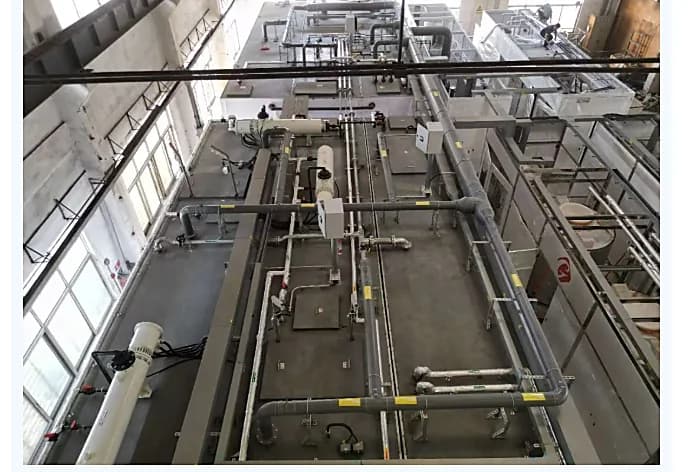
The photograph shows industrial wastewater equipment as manufacturing context; it does not depict an ammonia stripping tower or establish a nitrogen-removal result. Confirm the actual configuration through drawings, trial records and the gas-treatment specification. A complete purchase follows the contaminant beyond the liquid outlet and accounts for every residual route. That approach helps the owner compare stripping with alternatives on a common practical boundary before authorizing detailed equipment fabrication.
Questions buyers commonly ask
Does ammonia stripping destroy nitrogen?+
No. It transfers ammonia from water into a gas stream that needs an engineered treatment or recovery destination.
Can total nitrogen be inferred from ammonia alone?+
No. Other nitrogen species may remain and need separate measurement or treatment.
Why does feed temperature belong in the RFQ?+
Temperature affects transfer conditions and utility requirements. Assess the full seasonal feed envelope.
Should the stripper run when gas treatment is unavailable?+
Define and test an approved protection sequence that prevents uncontrolled operation when an essential gas-treatment function fails.
Turn the guide into a project brief.
Final process selection and performance commitments should follow the complete feed-water analysis, application requirements, site utilities and approved technical agreement.