An industrial MBR combines a biological process with membrane solids separation. Buying one requires evidence that the wastewater can be biologically treated, plus a membrane operating basis that delivers the required net water after downtime, cleaning and sludge management.
Confirm the role of biology in the treatment train
Define the contaminants that the biological stage is expected to transform and the quality required after membrane separation. An MBR is a combined process, not a universal filter for industrial chemistry. Dissolved salts and some persistent compounds may remain in the permeate. Establish whether further polishing, desalination or another barrier is required at the reuse point. Keep discharge and reuse requirements separate when they belong to different outlet branches or operating conditions.
Prepare an inventory of production chemicals and cleaning streams. Include solvents, biocides, metals and other constituents that may inhibit biological activity or affect the membranes. Ask which streams should be segregated and which can be blended under controlled conditions. A broad COD result cannot identify every biological risk. The owner and supplier should agree the permitted feed envelope before selecting tank volume or accepting a capacity claim based on a different industry's wastewater.
Investigate biodegradability and inhibition
Request a treatability programme matched to the proposed process. Biological oxygen-demand observations, respirometry or other appropriate tests can answer different questions, so the laboratory should explain its method and limitations. Include actual wastewater variation and suspected inhibitory events. A single fresh sample may support initial screening but not establish stable long-term operation. Record any nutrients, dilution or conditioning added during a test so the result is not attributed to the untreated stream alone.
Where uncertainty remains, use a pilot or staged demonstration to assess sustained conversion and recovery from realistic changes. Identify the seed biomass, acclimation period and operating conditions behind the data. Ask how the proposed design relates to those observations and where scale-up assumptions remain. The trial objective should include biological stability and membrane operation rather than measuring a clear permeate sample while overlooking accumulated soluble contaminants or a declining biomass condition.
Send the feed-water analysis, target quality, required capacity and operating profile. We will help structure the next engineering questions.
Send your project inputsSpecify the biological operating basis
Request the proposed reactor arrangement, loading basis, oxygen demand and sludge management philosophy. Review solids retention and hydraulic residence as distinct design variables. State temperature conditions and any nutrient or alkalinity dependencies. If nitrogen treatment is required, identify the actual conversion and removal stages and their supporting conditions. Do not assume that adding membrane separation supplies every biological zone or chemical input needed to meet a final nitrogen requirement.
Assess aeration, mixing and standby capability over the expected production schedule. A factory shutdown changes the feed available to the biomass, while a sudden restart can produce a concentrated load. Ask for an operating plan covering reduced production and interruption. Include how operators recognize biological distress and what storage or diversion is available. A design that works only with an uninterrupted average feed may leave the site's real campaign operation unresolved.
Treat screening as a defined protection system
Specify screening against the selected membrane manufacturer's requirements and actual debris in the wastewater. Include screen openings, hydraulic range, bypass prevention and screenings handling. Fibres and other troublesome materials may require particular attention even when total suspended solids appear modest. Ask how the screen is cleaned and what happens when it is unavailable. The membrane package cannot be assessed independently of a protection stage that it relies on for routine operability.
Review equalization, oil separation or other pretreatment identified by the feed assessment. Distinguish a membrane-compatible biological mixed liquor from an untreated stream that merely has the same bulk COD. Mark sampling boundaries and chemical addition points on the process drawing. Include returned drains and cleaning waste that could circumvent the intended pretreatment. Walk through those connections with the site team before fabrication so an overlooked recycle does not become a recurring membrane problem after startup.
Compare net permeate production consistently
Ask suppliers to state installed membrane area, proposed operating envelope and how net production is calculated. Gross instantaneous filtration flow is different from water delivered after relaxation, backwashing, cleaning and availability allowances. Compare the same temperature and mixed-liquor conditions. Identify the output expected when one membrane group is isolated, and distinguish an equipment allowance from a guarantee that depends on feed assumptions still awaiting confirmation.
Request the membrane operating sequence and the measurements used to recognize changing hydraulic condition. Include pressure measurement locations, flow records and temperature observations. Ask how the selected membrane is cleaned, which utilities are required and where cleaning residuals are routed. A nominal membrane material does not establish compatibility for every chemical used elsewhere at the site. Obtain manufacturer-supported limits and keep the approved cleaning procedure under document control with the package.
Account for sludge and residual streams
Specify how biological solids are wasted and transferred, including storage, pumping and dewatering interfaces. State the dry-solids basis separately from wet sludge volume. Review the receiving system's ability to accept variable production and intermittent maintenance events. Biological treatment generates a solids-management obligation; clear permeate is not evidence that the entire waste load has disappeared. Include screen waste and chemical-cleaning liquids in the same project residuals schedule.
Prepare a water balance around the complete package. Count maintenance drains, rejected startup water, wash water and any externally supplied cleaning water. If waste streams return upstream, identify the effect on loading and operating time rather than counting them as harmless internal circulation. Compare proposals on net acceptable water and all residual destinations. This prevents an apparently high-capacity package from relying on undefined water consumption or a sludge outlet that the owner cannot operate.
Demonstrate controls and process acceptance
Review the control narrative for aeration, levels, membrane suction, cleaning and quality diversion. Test instrument failure, unavailable screens, loss of a blower and interrupted sequences before authorizing automatic operation. Identify manual controls and permissions that could defeat a necessary protection. Provide meaningful alarm messages and process records so operators can distinguish a membrane restriction from a biological conversion problem without relying on one general fault indication.
Agree process acceptance after the system has reached a defined representative biological condition. Specify sample locations, methods, duration and the feed envelope used to judge results. Demonstrate both net production and required water quality, with operating and sludge records retained. Mechanical completion is a separate milestone. If the feed cannot yet represent the design conditions, document the limitation and agreed follow-up rather than treating an early commissioning sample as final proof of industrial performance.
Prepare a complete MBR enquiry
Send Baihuipu flow profiles, chemical inventories, treatability evidence, outlet requirements and the production calendar. Include available utilities, tank constraints, sludge destinations and the intended downstream reuse train. Ask for a proposal that explains screening, biological design, membrane output and residuals on one consistent boundary. The related reuse guide helps define the destination of permeate, while the UF guide explains the separate role of physical pretreatment elsewhere in the plant.
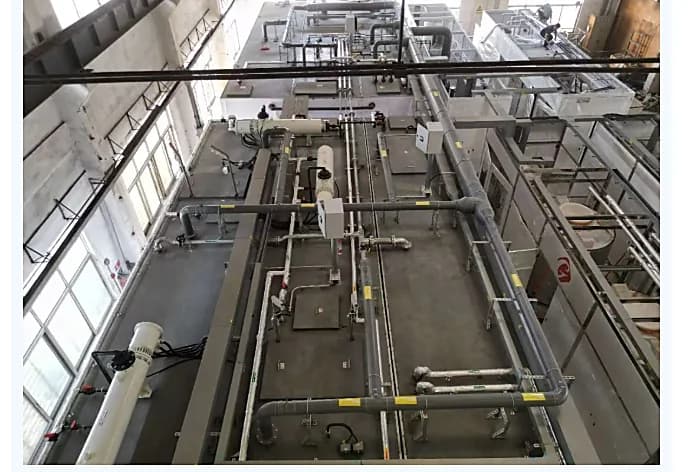
The featured photograph shows industrial wastewater equipment; it does not identify an MBR installation or establish a biological treatment result. Confirm the offered process using design documents and representative trials. A credible package enquiry makes the biological assumptions and net output calculation reviewable before commercial comparison. This allows the buyer to understand what the plant can demonstrate, what it depends on and which operating responsibilities remain with the factory after handover.
Questions buyers commonly ask
Does an MBR remove all dissolved salts?+
No. Membrane solids separation does not provide universal dissolved-ion removal; evaluate downstream treatment for the use point.
Is gross membrane flow the delivered water capacity?+
No. Include relaxation, backwashing, cleaning and availability when defining net acceptable permeate.
Can membrane separation compensate for inhibited biology?+
No. Assess feed compatibility and biological conversion separately from the ability to retain suspended biomass.
Why specify a production shutdown plan?+
Reduced feed and restart loads can change biological conditions. Define the operating and recovery strategy before commissioning.
Turn the guide into a project brief.
Final process selection and performance commitments should follow the complete feed-water analysis, application requirements, site utilities and approved technical agreement.