Nitrate-selective ion exchange can be evaluated when a factory needs a defined nitrate concentration in a makeup-water branch. The purchase must account for competing anions, service-cycle monitoring and nitrate-bearing regenerant, rather than treating a resin name as a complete process design.
Define the nitrate requirement at the branch
Identify why nitrate matters to the industrial use point and write a measurable outlet requirement with its analytical basis. Distinguish nitrate reported as the ion from nitrate reported as nitrogen; a quotation and laboratory result must use the same convention. Record nitrite and ammonia separately where relevant because a nitrate-removal duty does not automatically cover other nitrogen species. The requirement should come from the process owner and approved project basis rather than a limit borrowed from another application.
Confirm whether the entire makeup-water supply needs treatment or only a selected branch. Identify blending, storage and downstream treatment that affect the final composition. A selective process may be worth evaluating when other dissolved constituents can remain, whereas a broader demineralization target may justify another route. Ask suppliers to compare options on the required water delivered to the user, including regeneration losses and interruptions, rather than on the nominal flow through a single resin vessel.
Obtain a complete anion and feed profile
Provide nitrate, sulfate, chloride, alkalinity and the other constituents needed for the proposed resin assessment. Include source changes, temperature, suspended material and organic contamination. An isolated nitrate result cannot establish competition for exchange sites or explain a service-cycle pattern. If the source is seasonal groundwater or a blended supply, document the anticipated combinations. Request additional analysis where the supplier cannot explain its capacity basis from the information already available.
Review pretreatment and its chemical residuals with the resin manufacturer. State oxidants, metals or fouling materials that might contact the bed, including those introduced by upstream treatment. Ask which exclusions apply to the proposed media and how operators will recognize an unsuitable feed. The purpose is to define the usable envelope, not to assign an unsupported universal tolerance to all anion resins. Keep that envelope with the procurement specification and the eventual operating instructions.
Send the feed-water analysis, target quality, required capacity and operating profile. We will help structure the next engineering questions.
Send your project inputsSelect resin using competition evidence
DuPont's nitrogen guidance distinguishes conventional anion selectivity from nitrate-selective media and notes the importance of sulfate relative to nitrate. This establishes why the full water analysis matters; it does not establish the service life of a new industrial installation. Request the proposed resin grade, its intended application and manufacturer-supported assessment. Compare alternatives using the same feed composition, treated-water requirement and regeneration assumptions, with any industrial-water suitability qualifications made explicit.
Ask how displacement and breakthrough will be evaluated over a complete run. A bed can exhibit different outlet behaviour near exhaustion than it does during its first operating hours. Avoid accepting an initial low nitrate sample as proof of safe service throughout the cycle. The supplier should explain the measurement and switching strategy that prevents unacceptable water reaching the branch, including any risk associated with competing ions and changes in inlet composition.
Trial service cycles and regeneration together
Use representative column evidence or a justified application model to establish a preliminary operating cycle. Define sample points and collect inlet and outlet nitrate results throughout the run, with companion anion data where needed for interpretation. Record actual flow and bed conditions. If a trial uses a simplified synthetic solution, state its limitations and identify how the proposal will be checked against actual water before a final capacity commitment is accepted.
Evaluate regenerated operation as well as fresh-resin performance. Include regenerant preparation, contact sequence, displacement and rinse requirements in the demonstration plan. Document the point at which the bed is returned to service and how nitrate and other relevant outlet conditions are verified. A project should not rely on a best first cycle while leaving later capacity, chemical use or rinse losses undefined. Require enough repeat-cycle evidence to support the confidence claimed in the quotation.
Provide continuity and reliable switching
Choose a duty arrangement that matches the consequence of nitrate breakthrough and the available storage. Duplex service, lead-lag protection and treated-water buffering serve different purposes. Draw the actual valve states and flow paths during regeneration, rinse, standby and changeover. Identify whether any untreated or partially rinsed water can enter the outlet during a transition. The specification should define the acceptable response when one vessel is unavailable and regeneration cannot proceed as scheduled.
Use measurements appropriate to nitrate control. Conductivity is useful in many water systems, but it does not provide a nitrate-specific release decision on its own. Specify laboratory or online analysis with suitable method range, sampling and reporting. Set switching logic around the approved cycle basis and confirmed quality. If an instrument fails or a result is delayed, define the conservative operating state and who may authorize continued service under the project operating procedures.
Design the brine and rinse boundary
Request a mass and volume account for regenerant and rinse streams, including nitrate and competing ions transferred from the water. Determine whether the site's receiving treatment or disposal route accepts that composition and timing. A resin system transfers contaminants; it does not make the nitrogen load disappear. Include holding capacity where regeneration occurs as a batch event, and coordinate the receiving facility's ability to manage a concentrated intermittent discharge.
Specify salt storage, brine preparation, dilution water, level control and transfer connections. Review materials for the actual chemical concentrations and temperatures. Ask the supplier to identify maintenance tasks, cleaning needs and consumables beyond the resin itself. Compare quotations using consistent chemical and waste assumptions so apparent savings are not created by omitting a rinse stage or assigning an unpriced effluent stream to the owner without a feasible destination.
Write acceptance around verified cycles
Inspect vessel construction, resin identity, distribution components, instruments and valve sequencing against approved documents. At site, test regeneration isolation and the return-to-service path before allowing water into the production branch. Then verify nitrate quality during a representative service run and after regeneration. Agree the sampling method, analytical reporting basis and treatment of out-of-envelope feed conditions in advance. Retain raw results with valve and flow records rather than accepting a single summary certificate.
Include unexpected interruptions in the functional demonstration. Test loss of brine supply, a failed valve indication, unavailable analysis and an interrupted rinse. The owner should be able to determine which stage was completed and whether a bed is eligible for service. Require as-built drawings and a clear cycle description with the package. These records make future resin replacement or control-system changes reviewable without reconstructing the process from a controller screen alone.
Send a branch-specific nitrate enquiry
Provide Baihuipu the full source-water analysis, nitrate reporting convention, use-point limit, flow profile and available storage. Include intended waste routes and the operating continuity requirement. Request a selective-removal assessment that states resin assumptions, cycle evidence, monitoring and regeneration scope. The linked pure-water design guide can help place the branch in the overall plant, while the nanofiltration guide addresses a different dissolved-ion separation objective.
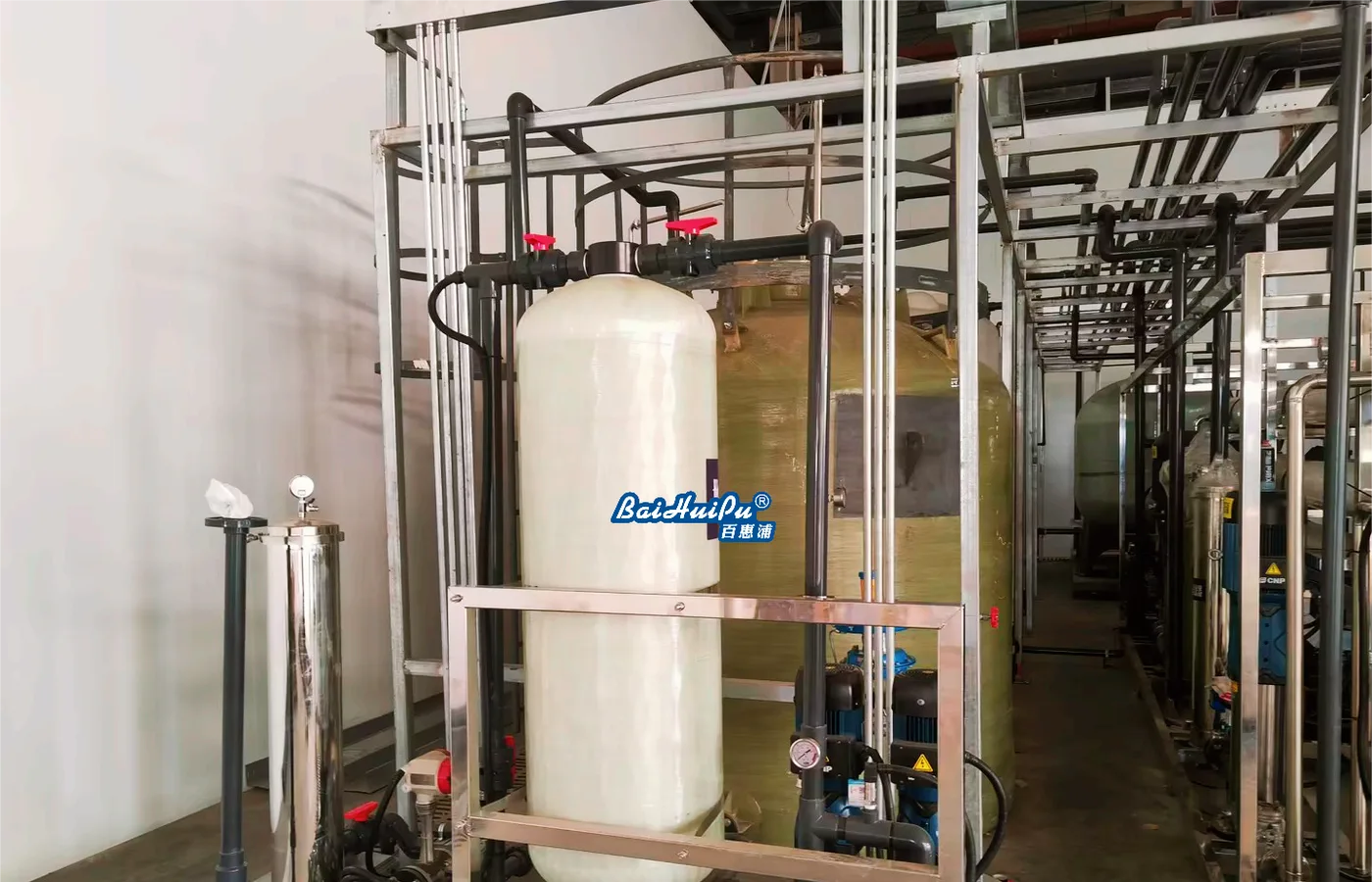
The featured photograph illustrates industrial vessels and storage as equipment context; it does not identify a nitrate resin or document a nitrate result. Confirm suitability through the proposed media specification and actual water evidence. A complete purchase describes both the acceptable water and the concentrated waste created to obtain it. That boundary gives the owner a realistic basis for deciding whether selective exchange meets the process need better than a broader treatment route.
Questions buyers commonly ask
Is nitrate as nitrogen the same reporting basis as nitrate ion?+
No. Specify the reporting convention consistently in analyses, design calculations and acceptance documents.
Can conductivity alone release nitrate-treated water?+
No. A nitrate-specific requirement needs appropriate nitrate analysis and an approved operating release strategy.
Does nitrate-selective resin destroy nitrogen?+
No. Regeneration transfers the removed load into brine and associated rinse streams that require an accepted destination.
Why test regenerated cycles?+
Fresh-media performance alone does not establish recurring capacity, rinse requirements or reliable return to service.
Turn the guide into a project brief.
Final process selection and performance commitments should follow the complete feed-water analysis, application requirements, site utilities and approved technical agreement.