Boron removal needs its own design basis when an industrial process specifies a boron limit. Conductivity alone cannot demonstrate that this requirement has been met. Compare a membrane route and a boron-selective resin stage using representative feed samples, documented operating conditions and a laboratory acceptance plan before committing to equipment.
Establish the boron requirement at the correct boundary
Begin with the production process that requires treated water. State the boron concentration limit, units, sampling location and whether the requirement applies continuously or to a released batch. Distinguish a product-water requirement from an effluent discharge condition. These boundaries can lead to different treatment and sampling arrangements, so a quotation should not silently substitute one for the other. Ask the process owner to approve the written requirement before the supplier selects equipment.
Specify boron as an explicitly measured constituent rather than deriving it from conductivity or total dissolved solids. Agree the laboratory method and reporting limit with a competent laboratory. Clarify whether results are reported as elemental boron and how uncertainty is handled near the acceptance boundary. Collect the complete source-water chemistry as well, because selecting a boron barrier in isolation can leave scaling, organic fouling or residual chemical issues unresolved in the connected plant.
Characterize the feed and its operating variability
Build a sampling schedule that reflects changes in supply, production shifts and recycled-water contribution. Record temperature, pH, flow and source identity with each sample. A single bottle taken during a quiet operating period may not represent a future blend or seasonal source. If a new factory is still being designed, distinguish measured source data from assumed design cases and identify which assumptions must be confirmed before equipment fabrication is released.
Ask the supplier to assess the complete chemistry across the proposed operating envelope. Boron occurs as boric acid and borate species, and the balance depends on solution conditions. DuPont identifies boric acid as difficult to remove with ordinary anion exchange and describes boron-selective resins as a separate option. That technology distinction supports a route comparison; it does not establish performance for a particular feed, membrane element or resin vessel at the proposed factory.
Send the feed-water analysis, target quality, required capacity and operating profile. We will help structure the next engineering questions.
Send your project inputsEvaluate RO staging against a contaminant-specific projection
For a membrane proposal, request the exact element model, stage arrangement, feed analysis and calculation assumptions. Require a boron prediction for each relevant case instead of accepting a salt-rejection figure as a substitute. Review the effect of temperature, pH, recovery and membrane condition with the membrane supplier. Identify whether the proposed boron barrier is the primary desalination stage or a separate treatment stage receiving already conditioned permeate.
Where pH adjustment is proposed, ask for written confirmation of membrane compatibility and a scaling review at the actual dosing location. Define chemical storage, metering, mixing, pH monitoring and downstream correction where required. An adjustment that improves one separation objective may introduce a new constraint elsewhere. Request a process diagram showing the complete chemical and water path, including startup water and concentrate, rather than approving a dosing arrow without its connected equipment and operating sequence.
Specify selective resin as a complete operating system
For a resin proposal, identify a boron-selective grade and ask for evidence relevant to the intended industrial water. A conventional mixed-bed description is insufficient. Define service flow, expected feed variation, working capacity assumptions and the point at which a vessel is considered exhausted. Ask how the estimate was developed and whether representative testing is needed. Keep theoretical resin capacity separate from the working capacity used to schedule actual operation.
Resolve regeneration or replacement arrangements before comparing prices. The proposal should state who supplies chemicals, manages rinsing, verifies readiness and handles spent liquid or exhausted media. If uninterrupted production is needed, compare duty and standby or lead and lag arrangements with a documented changeover method. Include access for media handling, internal inspection and sampling. The vessel, distribution internals and valve sequence must support the selected resin rather than merely fit a nominal volume.
Close the residuals and chemical balance
Draw every outlet from the boron-removal boundary: product water, membrane concentrate, resin regeneration waste, rinse water and diverted off-specification water. Identify the destination and responsible operator for each stream. Calculate mass loading from the proposed flow and measured concentration on consistent units. Concentrating boron into a smaller stream changes its handling requirement; it does not eliminate the material from the factory or establish an acceptable disposal route.
Review how residuals interact with the rest of the wastewater system. A regeneration batch may differ substantially from normal wastewater in pH or dissolved-solids content. Ask whether separate collection, controlled transfer or an additional review is necessary before discharge to shared treatment. Compare competing proposals over the same operating schedule and residuals boundary. Otherwise a lower equipment price may simply exclude waste handling, chemical preparation or production interruption that another bidder has included.
Write a monitoring and release strategy
Define routine sampling frequency from the risk and operating pattern, with the process owner approving the release decision. Conductivity and pH can support diagnosis and control but should not be labelled as direct boron measurements. Specify appropriate sample containers, handling and laboratory instructions, including any restrictions on glass or other materials that could influence a low-level result. Obtain those details from the laboratory for the selected analytical method.
Decide what happens while a sample result is pending and when a limit is exceeded. The answer may involve holding a batch, diverting production or changing a resin vessel, depending on the application. Keep this response visible in the operating procedure and control narrative. Trend boron results against treated volume and feed conditions so operators can distinguish an exhausted barrier from a sampling problem, a changed feed source or an unexpected valve configuration.
Compare acceptance evidence and lifecycle obligations
Ask each bidder to submit an acceptance matrix linking the boron limit to sampling points, operating conditions and evidence. Agree the stabilization period, number of representative operating cases and responsibility for laboratory analysis. Factory tests with different water can demonstrate assembly and control functions, but they cannot automatically prove site boron performance. Retain that limitation explicitly in the record instead of converting a workshop test into an unsupported process guarantee.
The commercial comparison should include membranes or resin, chemicals, consumables, laboratory work, waste handling and service responsibilities. Request the assumptions behind replacement or regeneration estimates and a process for reviewing them after commissioning. Put exclusions and performance conditions beside the price rather than burying them in correspondence. A useful contract makes it clear which party investigates a failed sample and what evidence is required before modifying operation or replacing equipment.
Prepare a focused boron-removal enquiry
Send Baihuipu the boron requirement, feed analysis, source variability, flow schedule, target sampling point and residuals constraints. Request a route assessment that compares the proposed boron barrier at the same operating boundary. Include existing RO drawings where the new stage will connect to an installed plant, and identify available footprint and utilities. This gives the engineering team a basis for reviewing interfaces before preparing a project-specific supply scope.
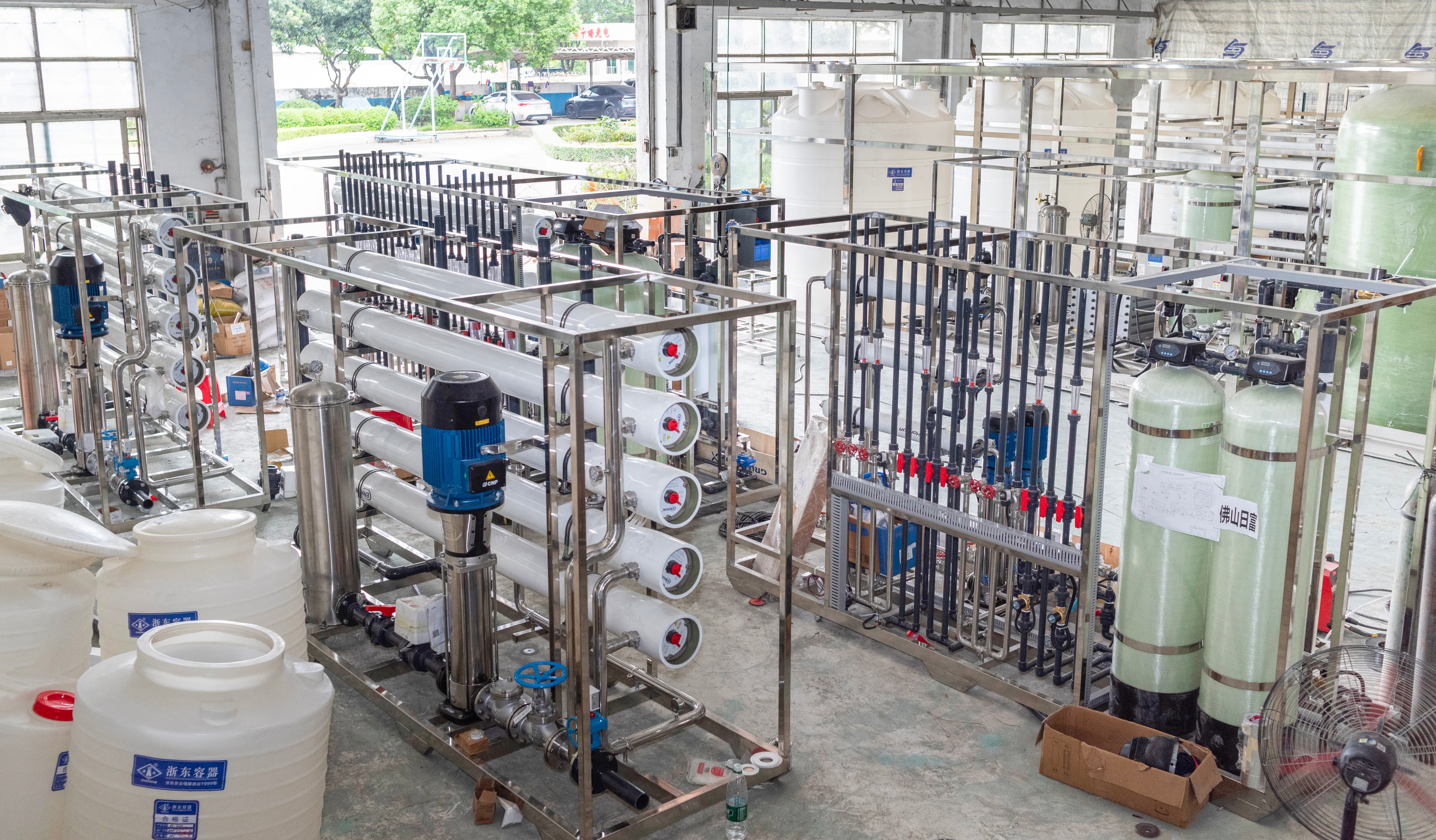
The featured photograph illustrates industrial RO equipment and does not identify a boron-selective installation or prove removal performance. Use the linked RO and desalination resources for wider system context, then keep boron as its own acceptance item in the enquiry. A defensible purchasing decision connects the chosen technology, operating envelope, measured boron result and waste route in one documented scope, without relying on a generic purity label or an assumed universal rejection value.
Questions buyers commonly ask
Can conductivity confirm that boron meets the process limit?+
No. Agree a boron-specific analytical method and reporting limit. Conductivity is useful operating information but cannot replace the required boron result.
Does every RO system remove boron to the same level?+
No. Require a model-specific assessment using the actual feed, temperature, pH, recovery and acceptance target. Generic salt rejection is insufficient evidence.
Is ordinary mixed-bed resin equivalent to boron-selective resin?+
No. Ask for a named selective grade and documented working-capacity assumptions for the actual water, together with regeneration or replacement scope.
What should be included in a boron-removal RFQ?+
Include the boron limit, analytical method, complete feed chemistry, flow and temperature range, treatment boundary, sampling plan, waste destinations and required acceptance evidence.
Turn the guide into a project brief.
Final process selection and performance commitments should follow the complete feed-water analysis, application requirements, site utilities and approved technical agreement.