Chelating resin can be considered for selected dissolved-metal removal or recovery duties, but the right grade depends on the actual solution. Total metal concentration alone does not define resin suitability. Buyers need to understand metal form, competing substances, breakthrough behaviour and the destination of the regenerated metal before ordering a package.
Define the metal-removal boundary
Identify each target metal, its required outlet limit and the intended destination of the treated water. State whether the duty is polishing after bulk treatment, recovering a valuable component or preparing water for reuse. These objectives can justify different vessel arrangements and regeneration choices. List the metals that must be monitored even when only one controls the design. A process selected around one constituent may also concentrate others into the regenerant.
Distinguish dissolved and total-metal requirements with the laboratory and process owner. Resin treatment is generally evaluated against the dissolved species available to its functional groups. Suspended metal-bearing solids can affect both the sample result and vessel operation. If the final acceptance limit concerns total metal, document the upstream solids barrier and the sampling method. Do not claim that a dissolved-metal result proves the complete requirement without checking the analytical boundary.
Identify solution chemistry before selecting resin
Provide pH, temperature, major ions, metal concentrations, suspended matter and the chemicals used in the production process. Include cleaning agents and potential complexing substances. The same total concentration can represent different dissolved species under different conditions. Changes in pH or ligand concentration may alter the availability of a metal for capture, so an analysis that lists only total metals is an incomplete basis for a selective-resin guarantee.
Ask the resin supplier to identify the proposed grade and functional chemistry, with written suitability for the actual solution. Ecolab's chelating-resin portfolio contains different functional groups for specific metal duties. That variety supports grade-specific review; it does not mean all chelating resins behave alike. Require the supplier to explain important limitations and additional tests. A product successfully used for one metal in a simple solution may perform differently in a mixed industrial wastewater.
Send the feed-water analysis, target quality, required capacity and operating profile. We will help structure the next engineering questions.
Send your project inputsSeparate pretreatment from selective capture
Locate the resin package after the necessary solids and feed-conditioning steps. Define allowable turbidity or solids using the selected resin and distributor design rather than a generic value. Check for oil, precipitates and biological growth that could obstruct flow or interfere with treatment. If pH conditioning is proposed, review whether it forms solids before the resin. The package scope must identify where those solids will be removed and how the feed condition is maintained.
Map bypasses and alternative streams that can reach the vessels. Intermittent production cleaning can introduce chemistry outside the normal feed envelope. Specify diversion or holding arrangements for those batches where necessary. Do not assume an equalization tank makes every chemical condition acceptable. Equalization can smooth variation, but the resulting mixed solution still needs a compatibility and treatability assessment against the selected resin and required metal-removal duty.
Use representative breakthrough trials
Request a column test or other justified programme using representative water and a clearly identified resin. Record bed volume, flow, contact conditions, feed analysis and outlet concentrations over treated volume. Ask how the test captures changes in competing metals and process chemicals. A simple batch-contact demonstration may show affinity but does not by itself establish full-scale breakthrough, hydraulic performance or a defensible replacement interval.
Set the breakthrough criterion from the required outlet limit and analytical reporting capability. Examine each relevant metal rather than relying on one aggregate removal value. Require a mass balance and an explanation of unusual results. If a supplier offers a capacity estimate, ask whether it is total capacity, equilibrium loading or working capacity at the specified breakthrough. Those quantities answer different questions and should not be substituted for one another in a purchase comparison.
Specify vessel sequencing and monitoring
Compare single-vessel and lead-lag arrangements against the consequence of breakthrough and the available sample turnaround. A lag vessel can provide an additional treatment stage, but its usefulness depends on sampling, correct valve positions and timely changeover. Identify sample points before, between and after vessels where appropriate. Include the method for confirming that a regenerated or replacement bed is ready before returning it to production.
Define the signals used for operating control and the laboratory evidence used for metal release. Conductivity and pressure measurements can help identify some process changes, but they do not replace target-metal analysis. Establish a sampling frequency that reflects feed variability, expected loading and the consequence of an exceedance. Assign responsibility for reviewing results, switching vessels and holding water when data are pending. A sampling point without a response procedure provides limited protection.
Close the regeneration and residuals scope
Ask the supplier to describe regeneration or elution for the named resin and application, including chemicals, rinse stages and the expected residual streams. Obtain compatibility guidance for all materials and equipment. Keep chemical strengths and operating conditions tied to approved product instructions and project review. Do not adopt a regeneration recipe from a different resin grade or assume that any spent resin can be restored by the same acid treatment.
Prepare a metal balance covering treated water, loaded resin, regenerant and rinse liquids. Decide where each stream will be collected and who is responsible for its subsequent treatment or recovery. A concentrated metal solution is not automatically a saleable product, and a potential recovery route needs its own acceptance specification. Review segregated storage, transfers and interface responsibilities before comparing operating costs. Selective capture moves material into another stream; it does not remove the need to manage it.
Compare lifecycle commitments and acceptance evidence
Request estimates of resin inventory, chemicals, water consumption, analytical work and labour over the same operating schedule. Identify assumptions behind cycle length and replacement frequency. Where no representative trial exists, label the estimate accordingly. Compare the arrangements for off-site service or on-site regeneration, including transport and turnaround where relevant. Supplier support should include an investigation process for changed feed chemistry rather than only a nominal resin-capacity figure.
For site acceptance, agree feed cases, sample locations, reporting limits and the required duration or treated volume. Factory tests can check vessel assembly, valve sequencing, pressure integrity and instrument signals. They cannot automatically prove metal capture on water that is absent from the test. Keep those obligations separate and document what remains for commissioning. Retain initial resin identification, test records and operating chemistry as the baseline for diagnosing later breakthrough.
Prepare a focused metal-resin enquiry
Send Baihuipu the complete wastewater analysis, process-chemical list, target-metal limits, flow schedule and current treatment diagram. Include known chelants, source variation and the intended regenerant destination. Request a grade-specific assessment, a representative trial plan and a defined package boundary. Use the linked neutralization and reuse guides for upstream context while treating dissolved-metal selectivity as a separate design and acceptance question.
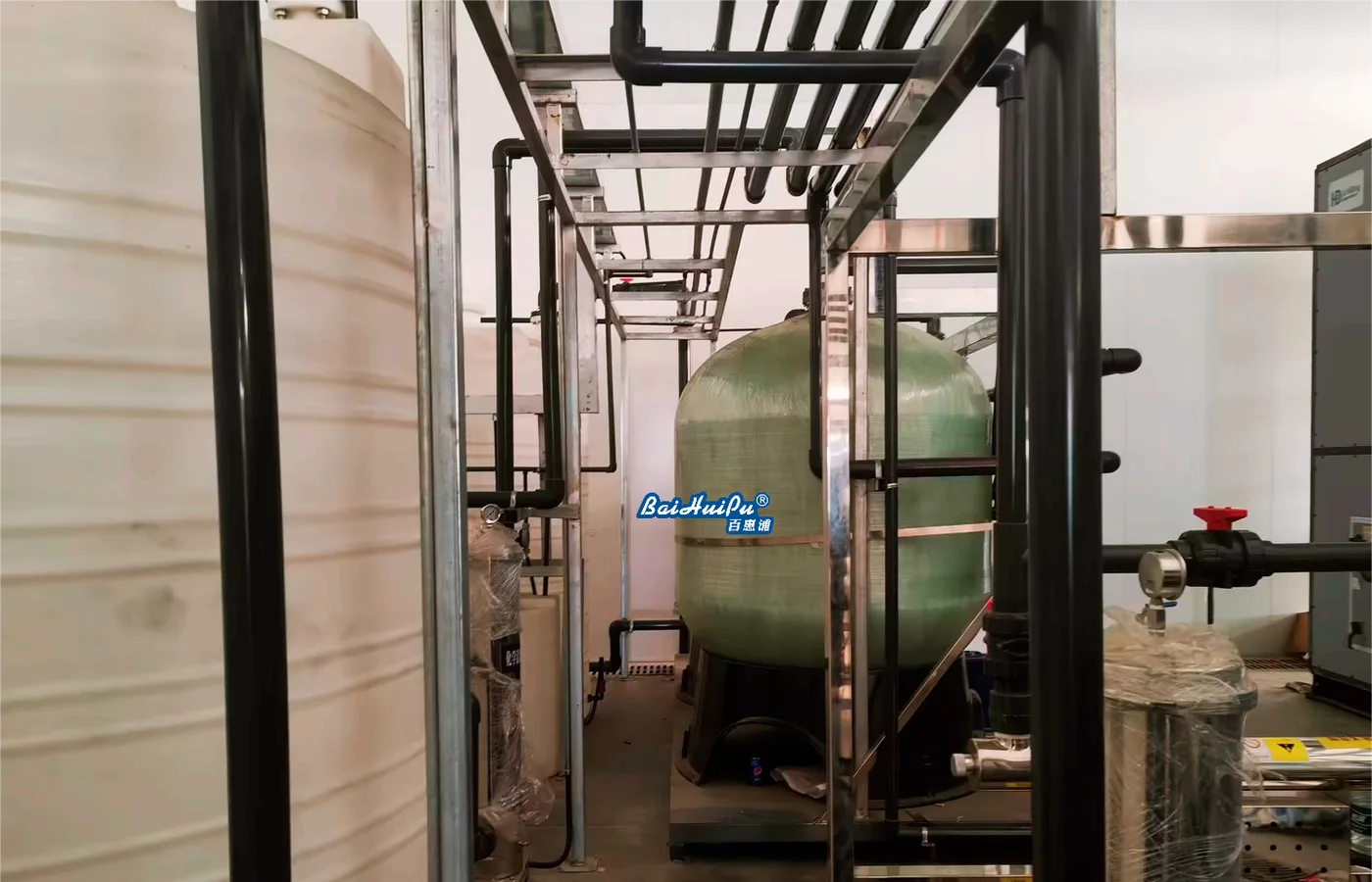
The featured photograph shows industrial treatment vessels and piping; it does not identify a chelating-resin installation or demonstrate metal-removal performance. A defensible proposal connects solution chemistry to trial evidence, working capacity and residual handling. That chain helps the purchaser distinguish a plausible candidate from a proven duty and prevents an attractive resin label from becoming an unsupported guarantee for every industrial metal mixture.
Questions buyers commonly ask
Can total metal concentration alone determine the resin grade?+
No. Review dissolved-metal form, pH, competing ions and complexing substances with the resin supplier.
Does a batch-contact test prove full-scale resin service life?+
No. It can support screening, but working capacity and breakthrough need a justified test and scale-up basis for the intended duty.
Can conductivity confirm metal breakthrough?+
It is not a target-metal analysis. Specify suitable laboratory or validated online metal measurements and a response procedure.
Does metal capture eliminate the wastewater residual?+
No. Loaded resin, regenerant and rinses retain the captured material and need defined handling, treatment or recovery routes.
Turn the guide into a project brief.
Final process selection and performance commitments should follow the complete feed-water analysis, application requirements, site utilities and approved technical agreement.