An industrial bag filter package should be selected from the solids it will encounter and the way operators will replace loaded bags. A nominal connection size and micron label do not establish service life or downstream protection. Representative trials, a verified bag seal and a workable changeout arrangement make the specification more useful.
Define the solids-capture duty
Identify the location of the package in the reuse-water train and the equipment it is intended to protect. Record the expected water flow and the consequence of solids passing downstream. A filter protecting a pump may have a different acceptance duty from one preceding a sensitive polishing stage. State whether the package treats the full process flow or a separate stream so suppliers do not size different boundaries under the same description.
Separate suspended-solids removal from dissolved-contaminant treatment. A conventional bag filter is a physical solids barrier and should not be credited with removing dissolved salts merely because the outlet looks clearer. Describe oils, fibres, gelatinous material and abrasive particles that may affect the media or seal. Include upstream treatment changes and intermittent cleaning batches. These details are more useful than a single turbidity reading without information about the material causing it.
Collect representative loading evidence
Obtain samples across meaningful production conditions and document how they were collected. Record suspended-solids concentration, particle characteristics and variability where available. A sample left to settle before a demonstration may no longer represent the flowing feed. Ask bidders to explain how their proposed test preserves the relevant solids and how the result relates to the intended flow and service arrangement.
Use a trial to compare filtrate quality, pressure increase and captured-solids behaviour over treated volume. Record bag grade, size, flow, feed conditions and observations during removal. A bench demonstration can support screening but should not become an unconditional prediction of plant changeout frequency. Require the supplier to identify remaining uncertainty and, where necessary, propose a site trial. Keep estimated operating costs conditional on the loading evidence used to calculate them.
Send the feed-water analysis, target quality, required capacity and operating profile. We will help structure the next engineering questions.
Send your project inputsSpecify retention performance and media compatibility
Ask what the proposed micron rating means for the particular bag product. Require the manufacturer's stated efficiency or test basis where the downstream duty depends on it. Different products with the same nominal label may not provide equivalent capture. Define the acceptable filtrate result in terms relevant to the protected equipment, using a consistent sampling and measurement method. Avoid selecting a finer grade automatically without reviewing loading and pressure effects.
Check media, seams, rings and seals against the full fluid and temperature envelope, including cleaning chemicals. Material compatibility is a property of the complete assembly, not just the housing shell. Identify whether the bag construction may release fibres or extractables relevant to the reuse point. If the supplier proposes staged filtration, request evidence for the arrangement rather than assuming that an extra vessel always improves lifecycle cost or final water quality.
Treat sealing and support as critical components
Require a drawing of the bag seat, closure and support basket. Eaton's bag-filtration guidance explains the importance of supporting filter bags with a basket. That detail should be reviewed alongside how the bag seals to the housing. A correctly selected media cannot perform its intended duty if water bypasses an incorrectly seated ring or a damaged sealing surface. Specify how operators confirm installation after each change.
Check that replacement bags match the approved seating arrangement and dimensions. Request unambiguous part numbers and identify acceptable alternatives before purchasing spares. Include inspection of basket condition, sharp edges and seal surfaces in the maintenance procedure. If the process can impose reverse flow or rapid pressure changes, ask the manufacturer to approve the arrangement and identify any additional support needed. Do not rely on an accessory photograph as proof of compatibility.
Size around clean and loaded pressure conditions
Request clean pressure-loss information at the intended flow and fluid conditions, then define the changeout criterion using the selected bag and housing limits. Distinguish differential pressure across the bag from total pressure loss through valves and piping. The pump must operate acceptably as the filter loads, without exceeding allowable conditions. Provide pressure indication points that operators can read and interpret consistently.
Do not set a universal changeout pressure from an unrelated product brochure. Agree the operating limit, alarm and protective action with the supplier. At low or intermittent flow, a modest differential pressure does not necessarily establish that the bag is undamaged or properly seated. Pair pressure trends with filtrate checks where downstream protection matters. The test plan should cover both a loading condition and a failure or bypass condition that pressure alone may not reveal.
Plan continuous service and safe changeout
Decide whether the process can stop during bag replacement. If continuity is required, compare properly sized duty and standby or duplex arrangements with clearly identified isolation paths. Confirm that the remaining vessel can carry the agreed flow during maintenance. A bypass that sends unfiltered water to protected equipment changes the treatment boundary and requires explicit process approval; it must not become the default solution to frequent bag changes.
Show venting, draining, isolation and access around each housing. Require a procedure to confirm depressurization before opening, with equipment-specific instructions and the site's isolation practice. Review wet-bag handling, removal height, spill collection and waste containers. Operators need room to withdraw a loaded bag without contaminating nearby equipment or damaging the basket. Include these tasks in the layout review because a maintainable package is determined partly by the surrounding space.
Compare the complete operating scope
For cost comparison, include bags, seals, operator time, production interruption and captured-solids handling. State the assumptions behind predicted bag consumption. A lower housing price can be outweighed by a service arrangement that requires unnecessary shutdowns or difficult lifting. Ask how supply continuity for replacement media will be maintained and whether local spares are part of the delivery. Avoid assigning a disposal classification without a site-specific assessment of the captured material.
Acceptance should verify pressure boundaries, seating, changeover sequence and the agreed filtrate criterion under representative conditions. Identify which tests occur at the factory and which require site water. Record the initial operating baseline and inspect the first loaded bags for uneven capture or damage. Retain observations as evidence for later optimization. A pressure test of an empty housing confirms neither bag efficiency nor useful service life on the real reuse stream.
Prepare the bag-filter package enquiry
Send Baihuipu the water balance, representative solids information, flow cases, downstream equipment requirements and expected continuity duty. Include cleaning chemicals, available footprint, drain arrangements and the intended waste route. Request a complete package with identified bag products, seat and basket details, changeout limits and an acceptance plan. Use the linked reuse and equalization guides to understand feed variation before selecting a filter from a nominal flow table.
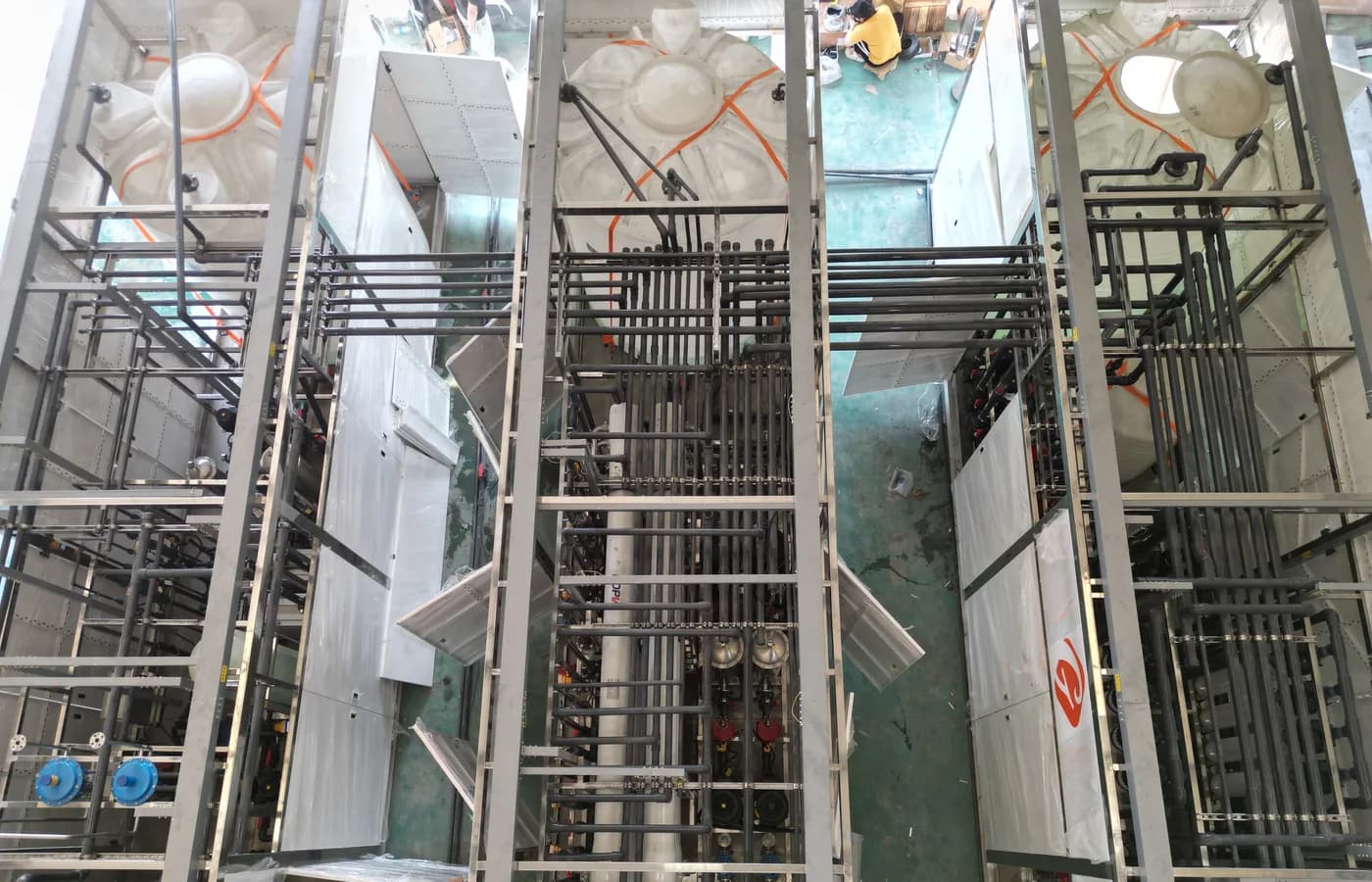
The featured image shows industrial piping and process equipment; it does not document a bag-filter trial or a solids-removal result. Review proposals using the same feed cases and treatment boundary. A sound purchase connects solids characteristics, demonstrated retention, loading behaviour and a realistic replacement procedure. That connection gives the factory a way to investigate high bag consumption without assuming that finer media or a larger housing will resolve every feed problem.
Questions buyers commonly ask
Can a bag filter remove dissolved salts from reuse water?+
Conventional bag filtration targets suspended solids. Dissolved-salt treatment requires a suitable additional process.
Does the same micron label mean two filter bags perform equally?+
No. Compare the manufacturer-defined retention or efficiency basis, media construction and test conditions.
How should bag changeout frequency be estimated?+
Use representative loading trials or documented operating evidence with the actual solids, flow and media. Treat unsupported calendar estimates as provisional.
When is a duplex bag-filter arrangement useful?+
It can support changeout without stopping treatment if the duty, isolation arrangement and remaining capacity are properly specified.
Turn the guide into a project brief.
Final process selection and performance commitments should follow the complete feed-water analysis, application requirements, site utilities and approved technical agreement.