An online silica analyzer can support treatment monitoring only when its analytical scope and sampling system match the decision. Specify what form of silica is measured, where the sample comes from and how old the reported value may be. A low conductivity reading or an attractive analyzer range cannot answer those questions.
Define the silica result the process needs
Begin with the application owner's water-quality requirement and the analytical method used to establish it. Distinguish a requirement for reactive silica from a requirement for total silica. Hach states that its silica methods determine molybdate-reactive silica. This illustrates why the word silica on an instrument label does not automatically mean that every silica fraction is measured. Ask the selected manufacturer to describe its method and limitations explicitly.
Specify reporting units and basis. A concentration reported as silicon is different from the same numerical concentration reported as silicon dioxide. Require the supplier and laboratory to use a consistent basis or document the conversion. State the required reporting limit, useful working range and decision threshold. An instrument that displays extra decimal places has not necessarily demonstrated that it can resolve the change on which the operating decision depends.
Assign each sample point a clear purpose
Map the proposed channels to the treatment train. A feed-water channel supports a different investigation from a polishing outlet or a final use-point sample. Explain whether the result will initiate maintenance, trigger diversion or provide a diagnostic trend. Avoid assuming that a result upstream of storage also describes water after a tank and distribution system. Label the physical sample connection and the channel name consistently on drawings and screens.
Where one analyzer handles several channels, identify the full sequence and revisit interval. Ask how channel switching, flushing and analysis time affect the age of each result. A shared analyzer may be appropriate for trend monitoring yet require additional measures for a release decision that cannot tolerate the same delay. Let the process owner approve that timing with evidence, rather than deciding solely from the number of available sample inlets.
Send the feed-water analysis, target quality, required capacity and operating profile. We will help structure the next engineering questions.
Send your project inputsDesign transport and conditioning as part of measurement
Request a sample-panel drawing showing tubing length, materials, fittings, pressure control, flow indication and drains. Establish sample temperature and pressure limits from the selected analyzer documentation. If the sample needs cooling, define the conditioning duty and utility interface. An analyzer cannot compensate for a sample line that is isolated, stagnant, blocked or receiving a different stream from the one named on the display.
Estimate transport delay using the sample-line volume and actual flow, then add the analyzer's measurement cycle and channel schedule. For simple steady flow, line residence time is volume divided by volumetric flow on consistent units. Real switching and flushing may increase the effective delay. Check the estimate during commissioning, and include the consequence in the controls narrative. Protecting a downstream process may require a hold or diversion arrangement beyond the analyzer itself.
Protect low-level samples from contamination
Agree the sampling containers, rinsing procedure and reference-water requirements with the analytical supplier and laboratory. Hach's low-level silica guidance recommends appropriate plastic containers because glass can introduce silica into the sample. Follow the selected method rather than adopting a universal container practice for every analysis. Record the sampling procedure so later comparisons do not mix clean samples with contaminated bottles or an unsuitable blank.
Decide how filtration or other conditioning changes the reported fraction. Removing particles before analysis may be appropriate for one reactive-silica duty but may exclude material relevant to a total-silica requirement. Document that boundary instead of calling every conditioned sample representative without qualification. During troubleshooting, inspect the sample train as well as the analyzer: deposits, leaks, poor rinsing and changed tubing can produce an apparent process problem that originates in sampling.
Define signal validity and alarm behaviour
Specify separate handling of a high reading, a missing sample and an invalid analysis. The control system should receive an instrument-health indication along with the numerical result where supported. Define stale-data timing and what happens during calibration, channel switching, maintenance or reagent replacement. Keeping the last good value on a screen can be useful, but its age and invalid status must remain visible to the person making the release decision.
State alarm delay, acknowledgement and recovery conditions in the control narrative. Require the engineering team to justify any averaging or confirmation that postpones a protective action. Correlate the value with the correct sample timestamp and channel identity in the historian. If the result controls a valve or production hold, test the complete cause-and-effect path. Observing a number at the analyzer display is insufficient evidence that the plant will respond correctly.
Include reagents and service in the purchase scope
Request a consumables list covering reagents, standards, sample tubing and scheduled service parts. Confirm storage conditions, shelf life, supply arrangements and disposal requirements using the current product documentation. Compare consumption over the same channel schedule and operating hours. Do not convert a marketing maintenance interval into a site guarantee without accounting for sample quality, duty cycle and the supplier's stated conditions.
Provide space for safe reagent changes, inspections and removal of service parts. Show drain destinations and confirm that the receiving system can handle analyzer effluent and maintenance liquids. Include utilities and enclosure requirements for the installation environment. Require a practical plan for keeping the measurement available during service, whether through laboratory checks, another channel or an agreed operating restriction. The right arrangement depends on the consequence of losing the silica result.
Verify the complete measurement chain
Develop acceptance tests using suitable standards and paired samples within the intended range. Define how reference results will be obtained and how method differences will be treated. Compare samples with aligned collection times and equivalent analytical scope. A reactive-silica analyzer and a laboratory total-silica result may legitimately differ; an unexplained comparison should not immediately be labelled instrument error or process failure.
Test sample interruption, channel identification, invalid-result signalling and the actual alarm response. Check that recorded timestamps, units and channel names remain correct after a power interruption or maintenance event. Retain calibration records, method references and sample-panel drawings with the commissioning baseline. Factory demonstrations can confirm electronics and sequences, while site tests establish the installed sampling conditions and process interfaces that a workshop cannot reproduce.
Prepare a focused silica analyzer enquiry
Send Baihuipu the treatment diagram, water-quality requirement, analytical fraction, reporting basis and proposed sample locations. Include the flow schedule, maximum acceptable decision delay and available drains and utilities. Request the complete analyzer and sample-system scope, with an instrument supplier's method limitations and a project-specific acceptance plan. Review the linked conductivity and TOC guides for complementary monitoring without treating those measurements as substitutes for silica analysis.
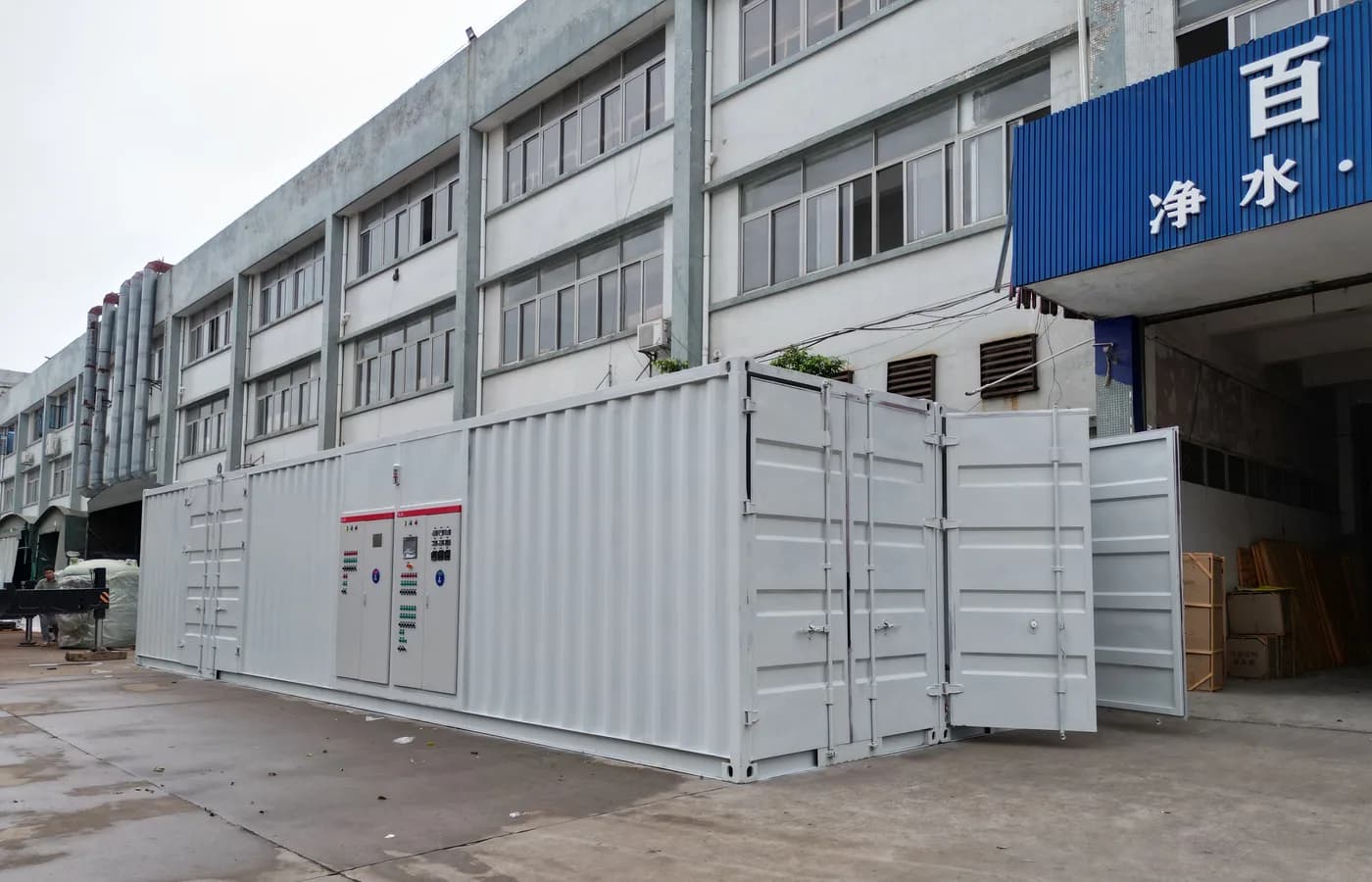
The featured photograph illustrates high-purity water equipment and does not identify a silica analyzer or verify a silica concentration. Use it as treatment-train context only. A useful buying decision connects method, sample integrity, result age and operator action. Once those are defined, hardware range, channel count and service options can be compared on a common basis that reflects the factory's actual water-quality decision.
Questions buyers commonly ask
Does an online silica analyzer always measure total silica?+
No. Confirm the analytical fraction and method. Molybdate-reactive silica and total silica are different measurement scopes.
Can conductivity replace silica analysis?+
No. Conductivity does not provide a silica-specific concentration and cannot establish compliance with a silica limit.
Why does sample tubing matter for an online analyzer?+
Its volume, flow, materials and condition affect transport delay and sample integrity. Include the sample train in the measurement scope.
Can one analyzer protect several sample points?+
Evaluate channel revisit times, analysis cycles, sample flushing and the acceptable decision delay. Channel count alone does not establish suitability.
Turn the guide into a project brief.
Final process selection and performance commitments should follow the complete feed-water analysis, application requirements, site utilities and approved technical agreement.