A dissolved air flotation package should be selected from wastewater behaviour and a complete separation duty. A catalogue flow rating does not establish whether industrial solids, oils or emulsions will form a removable float. Use representative trials, clear loading cases and defined sludge interfaces to make DAF quotations technically comparable.
Set the separation objective and downstream boundary
Describe the source streams entering the proposed DAF system and what the clarified water must support next. That next step might be biological treatment, further physicochemical treatment or a membrane pretreatment train. Identify the relevant suspended solids, oil and grease, and any other measured attributes. Keep dissolved constituents separate from material that can be collected into a float. A flotation package cannot be credited with meeting a downstream reuse specification simply because its outlet appears clearer.
DAF uses fine air bubbles to assist the upward separation of suitable particles or conditioned flocs, followed by removal of the surface float. Veolia describes applications in industrial wastewater as well as other water-treatment duties. Whether it is appropriate for a particular factory stream needs assessment. Do not assume a removal percentage from another site or a brochure example; define the intended outlet condition and ask for evidence based on the actual source-water range.
Build a representative sampling and trial programme
Collect time-based flow and composition information across production, washdown, product changes and known upset events. Identify whether streams contain free oil, stable emulsions or finely dispersed material, because visually similar samples can behave differently. Agree sample handling and storage with the testing provider so the trial represents the intended feed. Record sample origin, timing, temperature and any prior treatment. A single convenient sample may miss the condition that governs equipment selection or chemical consumption.
Use bench screening to compare candidate conditioning approaches, followed by a flotation trial or pilot where required to assess separation behaviour. An ordinary settling jar test alone does not demonstrate flotation performance. Keep the trial method and observations with the reported results, including float character, clarified-water measurements and sensitivity to dosing or pH. Ask the supplier to explain which trial findings support design and which uncertainties remain for larger-scale operation under variable industrial feed conditions.
Send the feed-water analysis, target quality, required capacity and operating profile. We will help structure the next engineering questions.
Send your project inputsSeparate chemical conditioning from the flotation vessel
Determine whether coagulation, emulsion destabilization or polymer-assisted flocculation is needed from the trial evidence. Specify the selected reagents, preparation arrangements and controlled operating windows only after review of compatibility and site requirements. The DAF quotation should identify rapid mixing, flocculation and chemical-contact equipment as separate functions where they are required. A flotation tank supplied without the conditioning duties assumed during trials may fail to reproduce the evidence used to justify its purchase.
Review how the proposed flocs reach the separator without unnecessary disturbance. Ask the vendor to explain mixing intensity, retention and transfer arrangements for the tested chemistry. Define dose control, sample points and the procedure for responding to feed changes. Include chemical preparation water, storage, containment and waste interfaces in the scope. If pH adjustment is part of conditioning, coordinate it with any existing neutralization package so two control loops do not independently fight over the same wastewater condition.
Evaluate hydraulic loading and solids mass together
Give the supplier normal and maximum incoming flows with their corresponding solids concentrations. Include returns and recycles that actually enter the separator. Solids mass load follows flow multiplied by concentration with consistent units; liquid flow alone does not describe the separation burden. Ask for the vendor's design basis, effective area definition and treatment of peak cases. Avoid comparing surface-loading numbers unless both bidders use the same hydraulic boundary and explain how recycle contributes to their calculation.
Review high-flow and high-solids cases separately, including whether they can occur at the same time. Ask how the unit behaves when the feed is intermittent or below its preferred operating range. Define the role of upstream equalization rather than silently assuming a perfectly steady feed. A larger flotation vessel is not necessarily an adequate substitute for source-stream management, and an equalization tank is not proof that industrial chemistry remains within the envelope demonstrated by the flotation trials.
Specify recycle, air and pressure-system interfaces
Request a process schematic for the recycle pump, air supply, saturation arrangement, pressure control and release devices. Identify the recycle-water source and the vendor's required operating range. Define flow and pressure indication and the maintenance access needed for the selected release arrangement. The buyer needs to understand how the package establishes its separation conditions, which utilities it consumes and what evidence operators can use when float formation changes during normal production.
Ask the supplier to address loss of recycle flow, inadequate air, instrument failure and excessive pressure within the approved equipment design. Specify the applicable equipment documentation and responsible party for pressure protection. Compressed-air quality and capacity should match the package requirement. Include the effects of startup, shutdown and extended idle periods in the operating narrative. A pump motor rating or compressor catalogue capacity does not on its own establish the available recycle and air duty at the installed conditions.
Close the float-sludge and settled-solids balance
Define how surface float is collected, discharged and transferred to storage or dewatering. Request trial observations or justified assumptions for the expected float consistency, and make uncertainty visible. Sludge volume can govern downstream pumping and storage even when dry-solids mass appears modest. Coordinate the DAF interface with the site's actual dewatering method rather than assuming that a separator outlet connection represents a complete solids-handling system ready for unattended operation.
Review any bottom-solids removal provision and how cleaning drains are managed. Include return liquors from later sludge treatment in the overall plant balance if they come back upstream. Materials, access and skimmer maintenance should reflect the wastewater and working environment. Require the supplier to identify wear items and tasks that require shutdown. The float-removal mechanism deserves the same procurement attention as the tank body because loss of sludge transfer can quickly compromise the separation function.
Agree controls and acceptance under stated feed conditions
Define operating modes, level control, chemical permissions, recycle readiness and the response to each important fault. Identify the instruments that support routine adjustments and specify an operator sampling plan. A turbidity trend can be useful where appropriate, but the acceptance attributes should match the downstream process concern. Keep laboratory or field-test methods explicit so results from different sampling points or analytical procedures are not treated as directly comparable without review.
Base the performance acceptance plan on a documented feed envelope and a jointly agreed sampling period. Record flow, chemistry, chemical doses, recycle conditions, clarified-water results and sludge observations together. Use written rules for atypical feed, interrupted operation and retesting. Factory checks can verify equipment and control functions, while site trials establish behaviour with the actual industrial water. Separate these kinds of evidence and do not present a factory clean-water run as proof of wastewater removal performance.
Prepare an RFQ that exposes package assumptions
Supply the flow profiles, analytical results, trial records, downstream requirements, footprint, utility data and residuals destinations. Request a complete boundary diagram, equipment schedule, materials, chemical systems, recycle scope, sludge-transfer scope and acceptance plan. Ask bidders to distinguish included equipment from owner-supplied utilities and works. Compare expected chemical and utility duties under the same feed cases, while retaining any uncertainty that requires further trials rather than assigning an unsupported annual operating-cost saving.
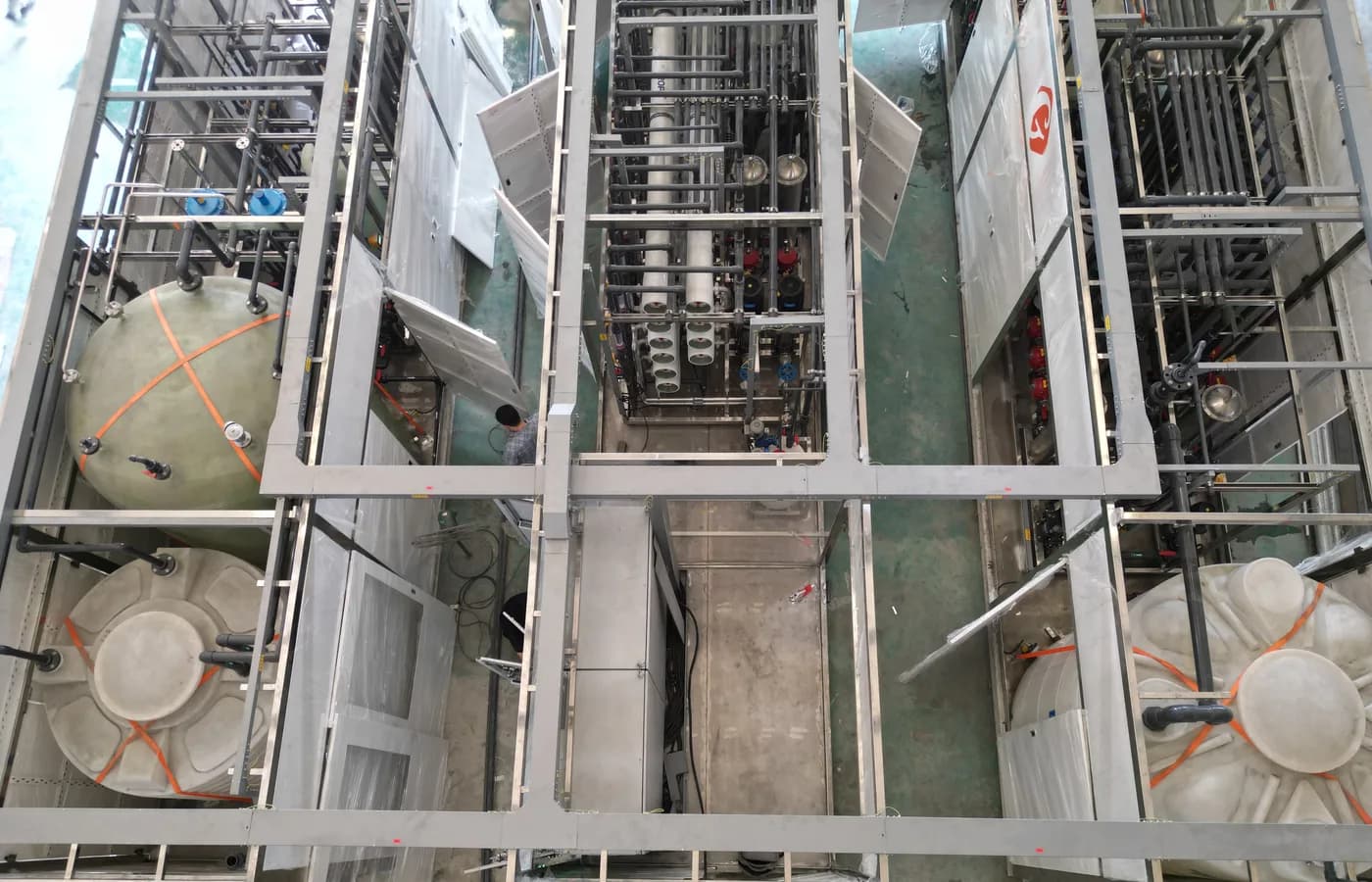
The featured layout image illustrates industrial treatment equipment and access planning; it does not show or prove a DAF installation. Send Baihuipu your wastewater source description, representative laboratory results, production schedule and existing flotation-test evidence for a process review. The next engineering decision should establish whether a DAF route is supported and what further testing is needed before equipment selection. A responsible proposal connects the separator to conditioning, utilities, sludge handling and downstream treatment as one defined scope.
Questions buyers commonly ask
Does DAF remove dissolved salts from industrial wastewater?+
Flotation primarily separates suitable suspended or conditioned material. Dissolved salts require other treatment where the downstream use demands their removal. Define the complete water-quality requirement before selecting the treatment train.
Can a settling jar test size a DAF unit?+
It can help screen chemical conditioning, but it does not by itself establish flotation behaviour. Agree representative flotation or pilot testing and the evidence needed for scale-up.
Why does a DAF quotation need solids concentration as well as flow?+
Both hydraulic duty and solids mass loading affect the separator and sludge-removal system. Specify corresponding flow and concentration cases rather than an isolated maximum liquid-flow figure.
What should industrial DAF acceptance record?+
Retain the agreed feed conditions, flow, chemical dosing, recycle operation, sampling methods, clarified-water measurements and sludge behaviour. Interpret results against that documented operating envelope.
Turn the guide into a project brief.
Final process selection and performance commitments should follow the complete feed-water analysis, application requirements, site utilities and approved technical agreement.