A PLC and HMI purchase needs a functional specification that explains what the plant does when data, utilities or equipment are unavailable. Define package interfaces, quality decisions and sequence recovery before choosing a screen layout or accepting a control-cabinet parts list.
Define functional ownership across the plant
Map the treatment stages, storage, utility connections and production interfaces before selecting the automation hardware. Identify which controller owns each pump, valve, measurement and permission. State whether a signal is informational or required for operation. A neat cabinet schedule does not resolve a missing responsibility between the skid and the factory control system. The purchase specification should make those boundaries clear enough for both vendors to implement without relying on commissioning assumptions.
Describe local, remote and manual operating modes with their intended authority. Decide how competing requests are resolved and which protections remain active in each mode. Include the party responsible for final process decisions such as water release and cleaning authorization. Standardized vendor control modules can support implementation, as illustrated by manufacturer automation documentation, but their availability does not supply the application-specific responsibility matrix. The owner still needs an approved functional basis for the actual plant.
Build an I/O and interface schedule
Create a schedule containing signal identity, source, destination, units, range, normal interpretation and failure behaviour. Include instrument quality and equipment confirmation rather than only measured values and start commands. Review contacts, analogue signals and network data according to the selected architecture. Identify who supplies power, isolation and field wiring at each boundary. This turns a general phrase such as plant connection included into a defined set of deliverables that can be inspected and tested.
For communication interfaces, state the agreed data structure, update expectation and response to missing or stale information. Include how both systems recognize connection health and data validity. Avoid assuming that a successful network connection proves the application data are correct. A value can be delivered with wrong units, scaling or interpretation. Request a joint interface review and a test schedule that verifies meaning as well as connectivity before either contractor declares its package complete.
Send the feed-water analysis, target quality, required capacity and operating profile. We will help structure the next engineering questions.
Send your project inputsWrite operating sequences before screen design
Describe startup, normal operation, controlled shutdown, cleaning and standby as process states with entry conditions and exit criteria. Identify timers, confirmations and quality checks that authorize each transition. Explain what happens when a required step cannot finish. A sequence description should be understandable to the process owner and operator before it is translated into code. The screen can then show the approved process rather than becoming the first place where operating decisions are invented.
Include interactions between treatment stages. An upstream unit becoming available does not automatically mean downstream storage has capacity or polishing equipment is ready. Define permissions across the actual process boundary and show how each is withdrawn. Review parallel trains and duty changeover where applicable. If an operation depends on a valve position, establish whether feedback or another justified confirmation is required. An output command alone is not evidence that the physical flow path has been achieved.
Treat water quality as a set of valid states
Define acceptable, unacceptable and unavailable quality information according to the process requirement. Include instrument calibration, maintenance, communication failure and stale results. Specify when water is held, diverted or released, and identify the destination and capacity of any diversion. The control system should preserve the difference between a recent acceptable measurement and an old number retained while the analyzer is unavailable. That distinction is essential when quality data govern automatic production decisions.
Agree the logic for returning to acceptable service after an upset. State which conditions must be stable, which evidence is required and who authorizes a manual release if one is permitted. Avoid using a generic delay as a substitute for the actual quality basis. Review how affected water in piping or storage is handled after a failed result. The functional specification should connect measurements to physical water movement rather than treating the diversion valve as the end of the quality problem.
Design interruption and recovery deliberately
Review loss of electrical power, control power, instrument air, essential water supply and communications. For each relevant sequence, determine the state that can be established from available feedback after recovery. Decide whether the plant resumes, repeats a defined step or waits for operator assessment. An interrupted cleaning or chemical-preparation cycle may leave a different physical condition from a normal production shutdown. The controller needs a reviewed recovery path for that condition rather than assuming every restart begins from an empty state.
Preserve the information required to identify completed steps and unresolved conditions according to the chosen architecture. Test how equipment confirmation is re-established after a restart and how contradictory indications are handled. Include recovery of networked devices and time synchronization where they affect records. Document any operator inspection needed before resuming. A recoverable system makes the current process condition visible and gives a practical next action, without relying on a programmer to reconstruct the interruption from memory.
Make the HMI useful for operations
Organize screens around the operating process and decisions the user must make. Display equipment status, active sequence, unmet permissions and quality state in clear terms. Explain why a start request is blocked and which condition requires attention. Avoid exposing internal implementation details that do not help the operator act. Units, labels and alarm messages should match the process documents, with appropriate access to trends and diagnostic information when an investigation is needed.
Define alarms with a reason, consequence and expected response. Distinguish an event record from an alarm that requires action. Review priorities and nuisance conditions with operations so important issues remain visible during an upset. Include acknowledgment and return-to-normal behaviour in the specification. Where the project requires an audit record for setting changes or bypasses, define its content and retention. These requirements make the interface reviewable as an operating tool rather than a collection of decorative equipment symbols.
Include maintainable handover and access
State the required editable project files, approved software versions, drawings, backups and restoration procedure. Identify licences or tools needed for the owner's maintenance approach. Define accounts and access roles without embedding shared secrets in documentation. Agree how authorized remote support is enabled, recorded and disabled using the site's arrangements. A package is difficult to maintain if the owner receives only a running controller and screenshots with no practical way to restore or review its configuration.
Keep configuration records aligned with the installed I/O and process narrative. Identify which settings can be changed by operators and which require an engineering review. Include backups after final acceptance and a method to verify they represent the installed state. Future maintenance should not depend on an undocumented laptop or unavailable supplier employee. Compare quotations on these delivery obligations alongside hardware, because the apparent price of a cabinet can omit much of the usable automation handover.
Verify interfaces and prepare the enquiry
Request test cases derived from the approved sequences and failure responses. Simulate relevant inputs at factory acceptance, then verify physical interfaces and application data at site. Demonstrate quality diversion, interrupted sequence recovery and local-remote ownership with the installed equipment. Retain evidence of the scenarios actually tested. Send Baihuipu the process narrative, instrument list, owner interface requirements and maintenance expectations so the quotation can define implementation and acceptance responsibilities together.
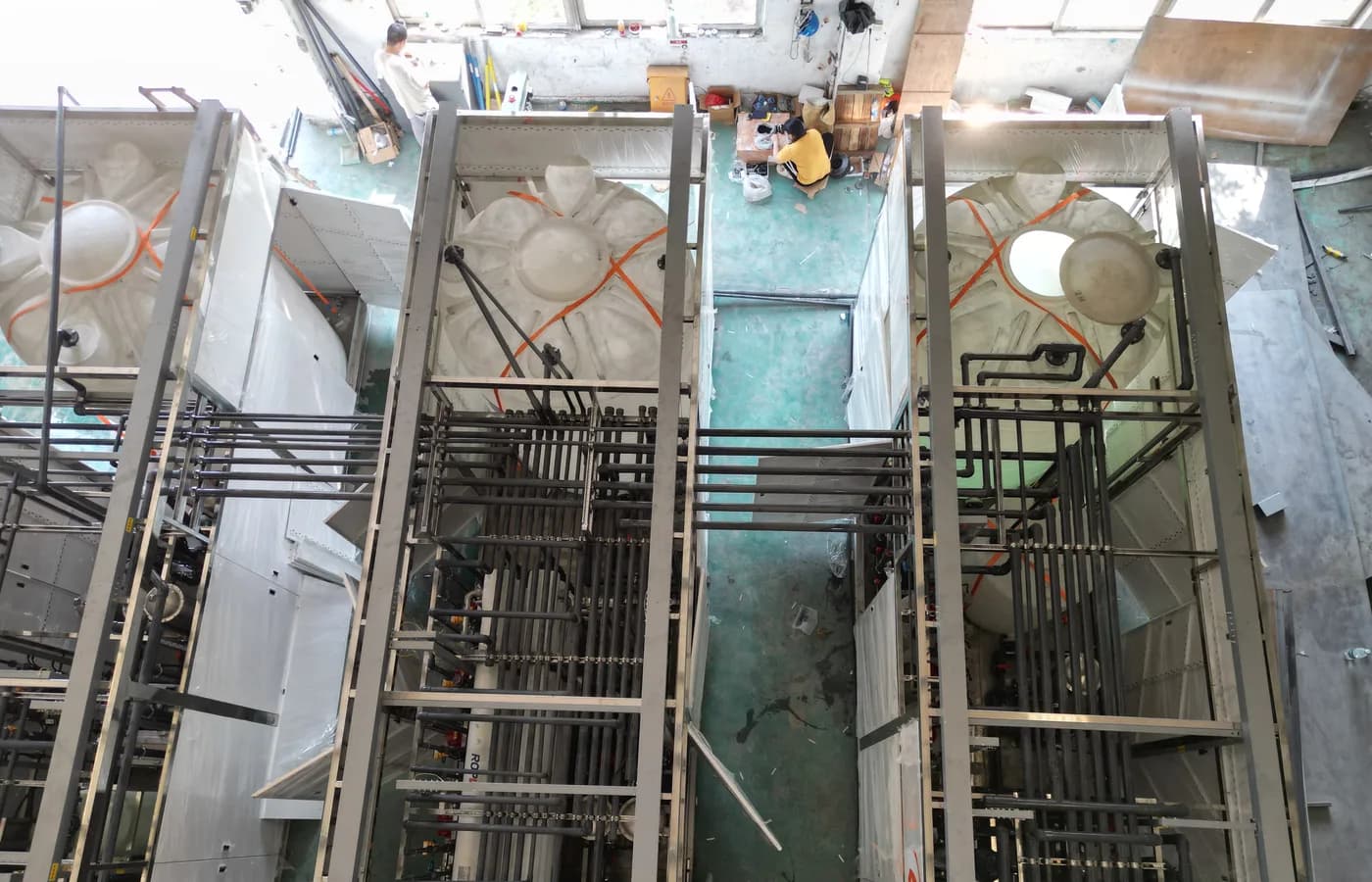
The photograph shows industrial pure-water equipment and process connections as context; it does not establish PLC functionality or completed control testing. Confirm the offered automation scope through approved documents, editable deliverables and witnessed scenarios. A complete purchase describes how the plant behaves when conditions change and how the owner can maintain that behaviour after handover. Those requirements provide a firmer commercial comparison than hardware brands or the visual polish of an HMI alone.
Questions buyers commonly ask
Does a start command confirm that equipment is operating?+
No. Define the feedback or other justified evidence needed for the actual function.
Should unavailable analysis be treated as acceptable quality?+
No. Define unavailable and stale measurements explicitly, with an approved process response.
Why test restart in the middle of a sequence?+
An interruption can leave equipment or water in a different condition from normal shutdown. Verify a recoverable path.
What belongs in automation handover?+
Include the agreed editable files, drawings, versions, backups, restoration instructions and access responsibilities.
Turn the guide into a project brief.
Final process selection and performance commitments should follow the complete feed-water analysis, application requirements, site utilities and approved technical agreement.