Groundwater containing iron or manganese needs a pretreatment decision based on chemical form and operating conditions. Specify oxidation, solids capture and backwash as a connected package, with measured outlet requirements and evidence from representative water rather than a vessel label alone.
Separate dissolved metals from existing solids
Ask the laboratory to report iron and manganese with a clear distinction between dissolved and total measurements where relevant. Record sample collection and preservation procedures so the results describe the intended water boundary. Water that looks clear at a wellhead can behave differently after aeration, storage or chemical addition. A single total-metal number does not establish whether the treatment duty is removing existing particles, converting dissolved material or managing both forms under changing operating conditions.
Include pH, alkalinity, temperature, dissolved oxygen and relevant competing constituents in the feed description. Note changes between wells, seasonal conditions and the plant's storage arrangements. Where organic complexes or unusual source chemistry are suspected, investigate their effect through analysis and trials. Specify the downstream membrane supplier's approved feed requirements separately for each constituent. Do not assume that a process suitable for iron will necessarily achieve the manganese requirement at the same conditions.
Define the oxidation and filtration boundary
An oxidation and filtration route seeks to convert removable constituents into forms that the selected treatment arrangement can retain. Catalytic media can participate in that process, but its behaviour depends on the particular product and operating mode. Request a written explanation of the selected media's role, upstream chemical requirements and outlet monitoring. The scope should describe what happens to the incoming metals, instead of simply naming a filter brand or tank diameter.
Inversand's GreensandPlus documentation is one manufacturer example of catalytic media used for iron and manganese removal. Its product conditions are not universal design settings for every medium or source water. Require each bidder to provide the current data sheet for the proposed product and identify departures from its recommendations. Evaluate the treatment package against the actual water analysis and project acceptance boundary, without transferring another supplier's published claims into a Baihuipu performance guarantee.
Send the feed-water analysis, target quality, required capacity and operating profile. We will help structure the next engineering questions.
Send your project inputsUse trials to establish a credible operating envelope
Plan representative tests where the chemistry or operating range creates uncertainty. Define feed sources, analytical methods, sampling locations and treatment conditions before the trial. Observe both dissolved and total outlet results where those distinctions matter. Short tests that show clear water are insufficient evidence for a full operating cycle. Include enough operation to evaluate changes associated with loading, backwash and return to service, and document any practical limits of the trial.
Compare iron and manganese results separately and track pressure loss, chemical demand and waste production. Record the reasons for adjusting treatment conditions. If the supplier proposes a contact vessel or mixing stage, ensure the test represents that arrangement rather than an unrelated laboratory preparation. The useful deliverable is a defined set of conditions supporting the design, with unresolved questions visible. It should not be a single removal percentage presented without feed composition or elapsed operating time.
Specify chemical addition and downstream protection
Identify the proposed oxidant, its purpose and the control variable used to manage addition. Size the dosing arrangement against actual minimum and maximum flow and the justified chemical demand. Include preparation, injection, mixing, containment and maintenance interfaces in the quotation. Confirm material compatibility with the chemical supplier. The operating narrative should address no-flow conditions, loss of chemical and instrument failure, because a metering pump nameplate cannot establish correct treatment at every plant demand.
Coordinate residual oxidant control with downstream membrane requirements. The point where oxidation is needed may be upstream of a membrane that requires protection from that oxidant. Show monitoring and any required dechlorination between these boundaries. Avoid treating an ORP reading as a complete measurement of iron conversion, manganese removal or membrane compatibility. Require the responsible engineer to approve the measurement combination and demonstrate that off-specification water cannot silently become normal RO feed.
Evaluate vessels and backwash together
Ask for the media arrangement, bed depth basis, service loading and clean-bed pressure-loss calculation. Show internal distributors, media-retention provisions and access for inspection or replacement. Confirm vessel and component ratings for the expected service and backwash conditions. Require drawings that explain how the bed is supported and how the design avoids losing media through the outlet. A suitable medium can underperform when its vessel internals or operating hydraulics are poorly matched.
Backwash capacity belongs in the utility and waste-water balance. Check the proposed expansion basis at the site's water temperatures and verify that the plant can provide the needed flow while maintaining other duties. Define the discharge route and its receiving capacity. Review whether backwash needs separate storage or pumps and how several filters are sequenced. The purchase scope should make these dependencies explicit before the team assumes that an existing process-water header can supply the complete demand.
Manage parallel duty and start-up transitions
Decide whether treatment must remain available during backwash or maintenance. A parallel arrangement needs enough operating capacity, appropriate valve sequencing and a plan for unequal flow distribution. Specify how the system identifies a vessel in service and prevents cross-connection with a vessel undergoing regeneration or washing where applicable. Review the effect of an unavailable vessel on downstream RO demand rather than describing all installed capacity as continuously usable capacity.
Define rinse and release criteria following media loading, backwash and prolonged standby. Start-up water may need diversion until the agreed quality and operating conditions are restored. Test those transitions during commissioning with representative sample timing. Identify who can authorize a bypass and what downstream restrictions apply. Maintenance flexibility should be designed into the operating arrangement; it should not rely on an undocumented assumption that untreated groundwater is acceptable for the membranes while a vessel is offline.
Write acceptance around measured outlet quality
Specify acceptance sampling at the agreed filter outlet and membrane-feed boundary, with analytical methods and reporting limits suitable for the required concentrations. Agree feed ranges, test duration and how changed source conditions will be handled. Include service, backwash and return-to-service periods in the test plan. Separate the performance responsibility of the oxidation/media package from upstream supply changes or downstream equipment so failed results can be investigated against a clear boundary.
Witness relevant flow, pressure and dosing instruments and verify their readings against the plant control system. Test low chemical, valve-position failure and loss of backwash supply where these functions exist. Record the media product, loading record, initial commissioning settings and laboratory results. A factory test can confirm assembly and sequences, while site tests establish water-specific performance. Keep both forms of evidence, and do not treat a successful dry sequence as proof of metal-removal capability.
Send a complete pretreatment enquiry
Provide Baihuipu with full feed analyses, dissolved and total metal results, source variability, downstream membrane requirements and available utility information. Include required production continuity, footprint, waste-water handling and operator access. Request an integrated proposal covering oxidation, media vessels, chemical systems, monitoring and backwash. Ask suppliers to state assumptions and trial requirements before pricing an unqualified outlet guarantee. Compare their offers on the same feed envelope and supply boundary rather than media quantity alone.
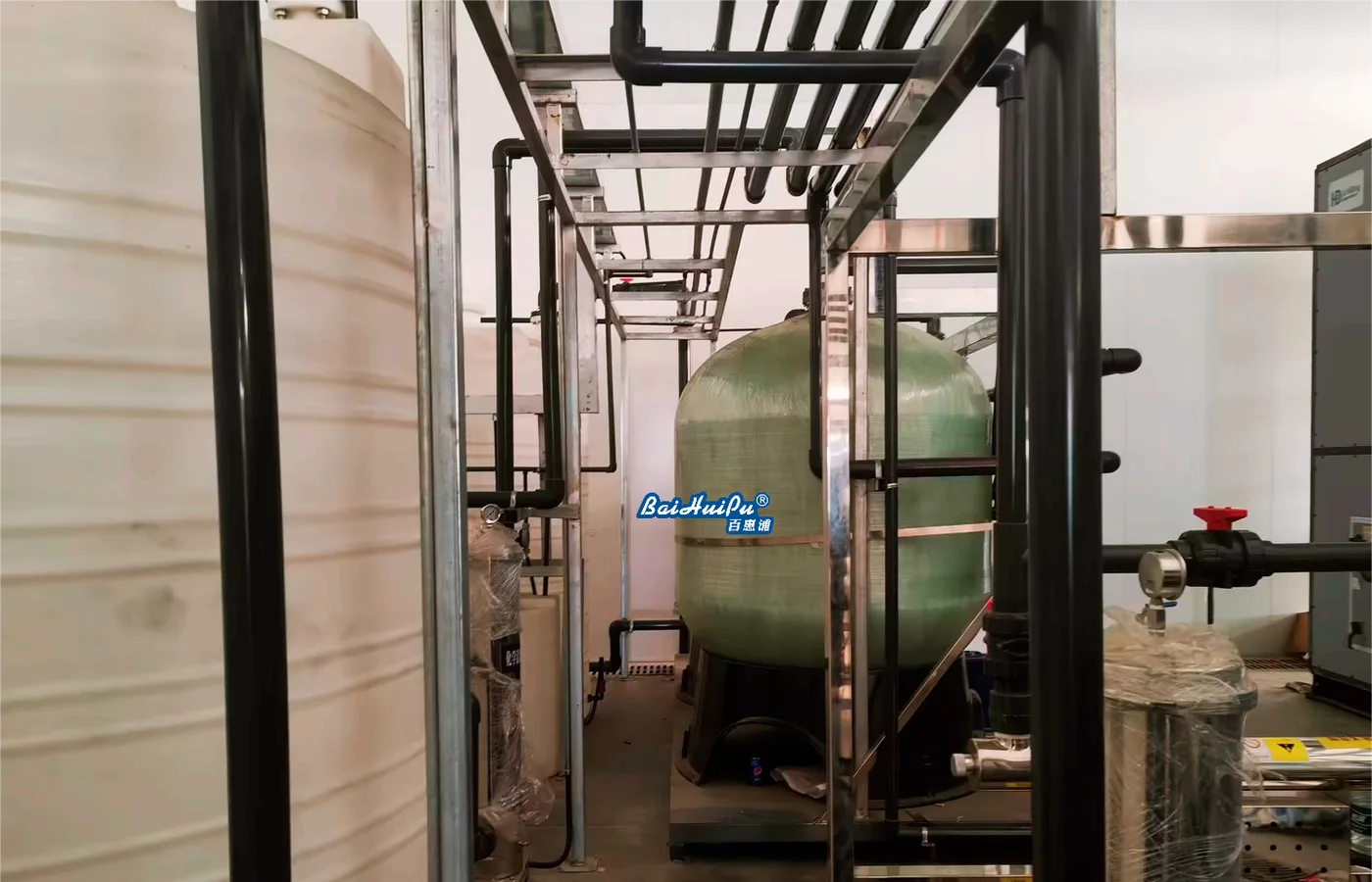
The featured photograph illustrates industrial vessels and process piping; it does not identify a particular catalytic medium or prove iron or manganese removal. Use it to discuss package layout and interfaces. A defensible procurement decision connects water chemistry with an achievable operating sequence and measurable acceptance conditions. That approach gives the project team evidence for pretreatment selection while leaving unsupported removal claims, certification assumptions and invented operating results out of the proposal.
Questions buyers commonly ask
Will a normal multimedia filter remove dissolved iron and manganese?+
Physical filtration alone does not establish dissolved-metal removal. Evaluate chemical form, oxidation and the selected media process.
Can iron and manganese use one common acceptance result?+
Specify and measure each separately. Their treatment response can differ under the same operating conditions.
Why check residual oxidant after the metal-removal stage?+
The oxidation process and downstream membranes may have different chemical requirements. Define the protection boundary and monitoring.
What information is needed to size backwash utilities?+
Use the selected media and vessel design, temperature range, washing sequence and simultaneous plant demand.
Turn the guide into a project brief.
Final process selection and performance commitments should follow the complete feed-water analysis, application requirements, site utilities and approved technical agreement.