An SDI result is useful only when the sample and test conditions are trustworthy. Industrial buyers should specify the sampling arrangement, method, consumables and operator records together, so the result supports a defined RO feed-water decision rather than becoming an isolated number.
Start with the decision the result will support
Define whether SDI testing is intended for routine RO feed surveillance, pretreatment commissioning or investigation of changing particulate fouling tendency. State the membrane supplier's applicable feed requirement and the project sampling boundary. Avoid inserting a familiar acceptance number without checking its basis. The requirement belongs to the selected membrane and operating envelope, and the purchase specification should identify who approves that requirement before the sampling kit is ordered.
SDI indicates plugging behaviour under a defined membrane-filter test; it does not identify every foulant or establish complete RO feed suitability. Separate it from turbidity, dissolved salts, biological activity and scaling assessment. A satisfactory result should sit alongside the water analysis and pretreatment operating record. If the plant will stop RO production after a failed test, specify the repeat-test and escalation process with the operations team rather than leaving the response to individual interpretation.
Select representative sampling locations
Locate the normal sample point where water represents the feed entering the membrane train after the relevant pretreatment stages. Mark its position on the piping diagram and identify any chemicals injected between sampling and the RO inlet. Where the purpose is diagnosing a filter, add clearly labelled upstream and downstream points. Samples from different process boundaries answer different questions, even when the plant regards all of them as RO feed water.
Review sample-line length, stagnant branches, flushing provision and available pressure. The arrangement must deliver a representative flowing sample without introducing corrosion debris or accumulated deposits. Show a suitable drain and safe operator access on the layout. A portable kit may serve several points, but every connection needs an agreed preparation sequence. Buying a precise filter holder cannot compensate for a sample taken from a dirty hose that is used only during commissioning.
Send the feed-water analysis, target quality, required capacity and operating profile. We will help structure the next engineering questions.
Send your project inputsSpecify the complete test assembly
Request the holder, pressure regulation, pressure indication, tubing, valves and collection equipment needed for the chosen method. Identify the specified test membrane and acceptable consumable sources. Ask the supplier to document materials, pressure capability, sealing arrangement and replacement parts. Treat the assembly as a measurement system: an unlisted substitution in the holder or membrane can prevent meaningful comparison with the commissioning baseline or another contractor's reported result.
Confirm how the operator checks pressure stability and removes trapped air without changing the method. Specify readable scales and a practical timing arrangement for the installation environment. The supplier should provide an assembly drawing showing the water path and instrument positions. If an automated tester is proposed, ask which method steps it controls, what raw observations it stores and which conditions invalidate a result. Automation should make the procedure traceable, with exceptions visible to the operator.
Control the method without inventing shortcuts
Use the current procedure accepted by the membrane supplier and project specification. The FilmTec technical manual describes a defined filter-based SDI test with controlled pressure, timed collection and temperature observations. Those details explain why results obtained using different conditions should not be treated as directly interchangeable. Keep the approved method revision with the kit, and reference it in training and commissioning documents so the procedure remains consistent when personnel change.
Record the actual test duration, initial and subsequent collection observations, pressure and water temperature required by that procedure. Identify the operator, sample point, time and pretreatment condition. A rapidly plugging sample may require special reporting under the approved method; it should not be converted into an invented full-duration value. Require the supplier to explain calculation and invalid-test handling, while reserving numerical method settings for the controlled procedure rather than an informal site checklist.
Make maintenance and consumables predictable
Include sufficient specified test membranes, holder seals and other wear parts for the planned commissioning and operating period. Define storage, handling and identification requirements from the consumable manufacturer's instructions. Operators need a clean place to prepare the test and protect unused membranes. Compare quotations on the same consumable list; a low equipment price can hide an impractical supply arrangement or a dependence on parts that are unavailable at the destination.
Require cleaning and inspection instructions for reusable components. A scratched support, damaged seal or contaminated holder can undermine repeatability without an obvious instrument alarm. Establish how pressure indication and timing equipment are checked under the site's quality system. Keep a maintenance log with the kit, including part substitutions and abnormal observations. Avoid promising a universal recalibration interval: the correct arrangement depends on the equipment, method and consequence of an unreliable RO feed decision.
Demonstrate repeatability during acceptance
Agree a practical acceptance demonstration using representative water and the approved method. Witness assembly, sample preparation, pressure stability, observation recording and result calculation. Where repeat tests are compared, define allowable variation with the responsible engineer before the demonstration. Do not demand identical results from samples taken at different times while pretreatment conditions are changing. The test should establish that the purchased arrangement can produce defensible records under its intended operating conditions.
Check how the kit handles leakage, unstable supply and an interrupted test. The operator should identify an invalid run and retain the reason, rather than record a plausible number without context. For automated instruments, verify timestamps, point identification, units and export files. Include a demonstration of the site's review workflow so a failed or missing result reaches the person responsible for release, investigation or maintenance. A working screen alone is insufficient acceptance evidence.
Connect SDI trends to pretreatment records
Trend results alongside filter backwash events, UF operating conditions, cartridge changes and source-water observations. Look for changes in the measurement conditions before assigning every increase to pretreatment failure. A useful investigation compares equivalent sample points and repeatable operating states. Where several trains share one intake, identify which train supplied each sample so an apparent plant-wide trend is not created by switching locations without recording the change.
Use other measurements to investigate the cause. Particle characterization or laboratory analysis may be needed when the SDI change cannot be explained by operating records. SDI alone does not prescribe a chemical dose, filter media change or membrane cleaning recipe. Define who decides the next diagnostic step and how production is protected while evidence is collected. This keeps the kit's commercial purpose focused on reliable feed assessment instead of attaching unsupported treatment guarantees to a single test.
Prepare an enquiry with clear responsibility
Send Baihuipu the RO feed diagram, membrane requirement, sampling locations, expected pressure conditions and planned test frequency. Request a complete kit and sampling-interface scope with the approved method, training, consumables and acceptance demonstration included. Identify whether the project owner, membrane supplier or system integrator will approve the result and decide the response. Use the linked pretreatment guides to review the equipment upstream of the sample point after the measurement boundary is clear.
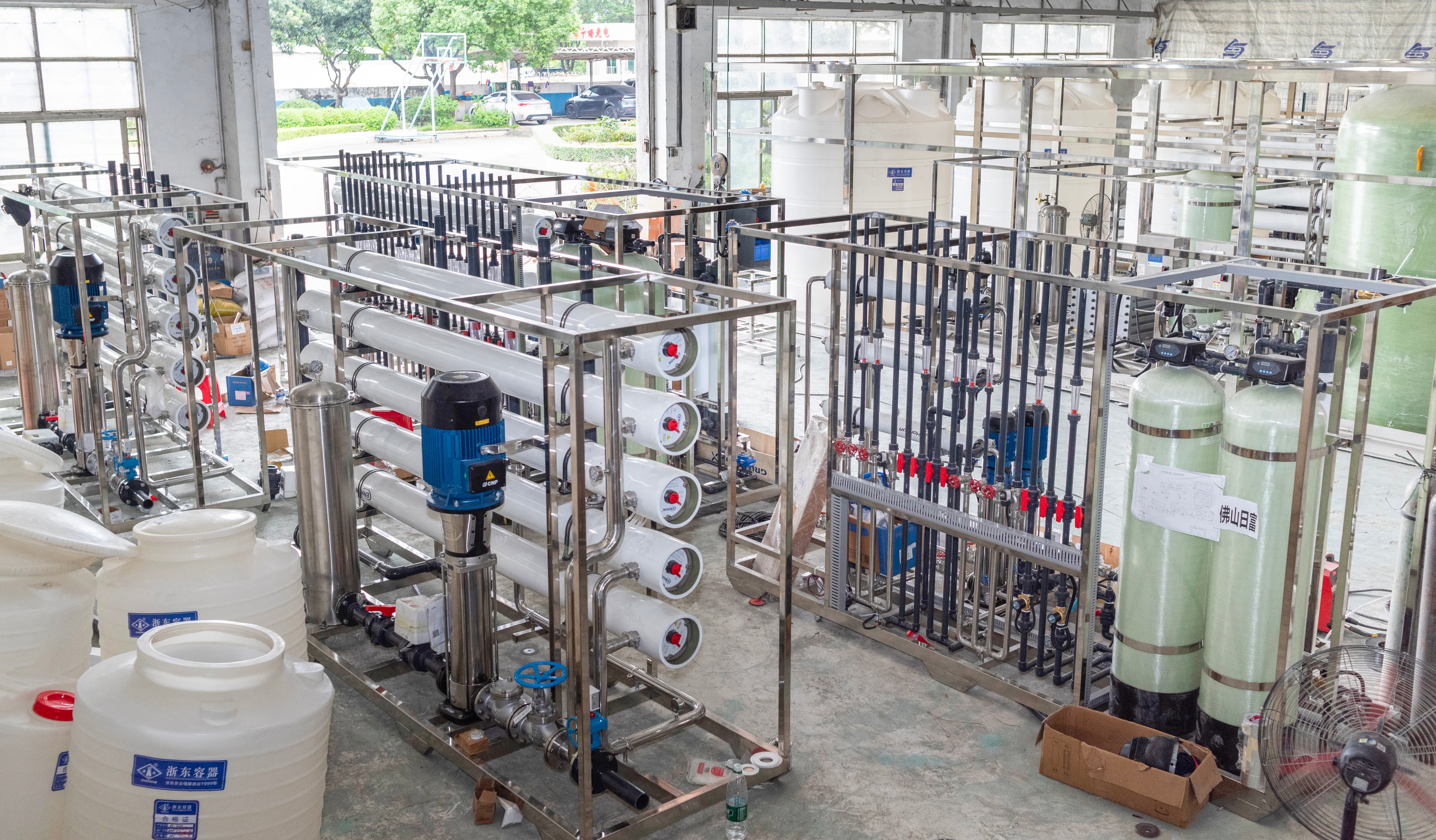
The featured photograph shows industrial RO equipment as process context; it does not depict an SDI instrument or demonstrate a test result. Keep that distinction in technical reviews and supplier comparisons. A complete SDI purchase provides a repeatable procedure, representative water and a usable record. Those deliverables help an operations team interpret a changing result, while the broader water-quality assessment remains responsible for deciding whether the membrane feed is acceptable.
Questions buyers commonly ask
Does SDI measure every type of RO fouling risk?+
No. It describes plugging behaviour in a specified filter test. Review scaling, dissolved contaminants and other risks separately.
Can turbidity be substituted for an SDI result?+
They measure different properties. Use the measurements required by the selected membrane and approved project specification.
What should accompany a reported SDI value?+
Include sample location, test method, time, relevant raw observations, temperature, pressure and pretreatment operating state.
Is an automated SDI tester automatically more reliable?+
Reliability depends on sampling, method control, consumables and invalid-result handling. Verify these functions during acceptance.
Turn the guide into a project brief.
Final process selection and performance commitments should follow the complete feed-water analysis, application requirements, site utilities and approved technical agreement.