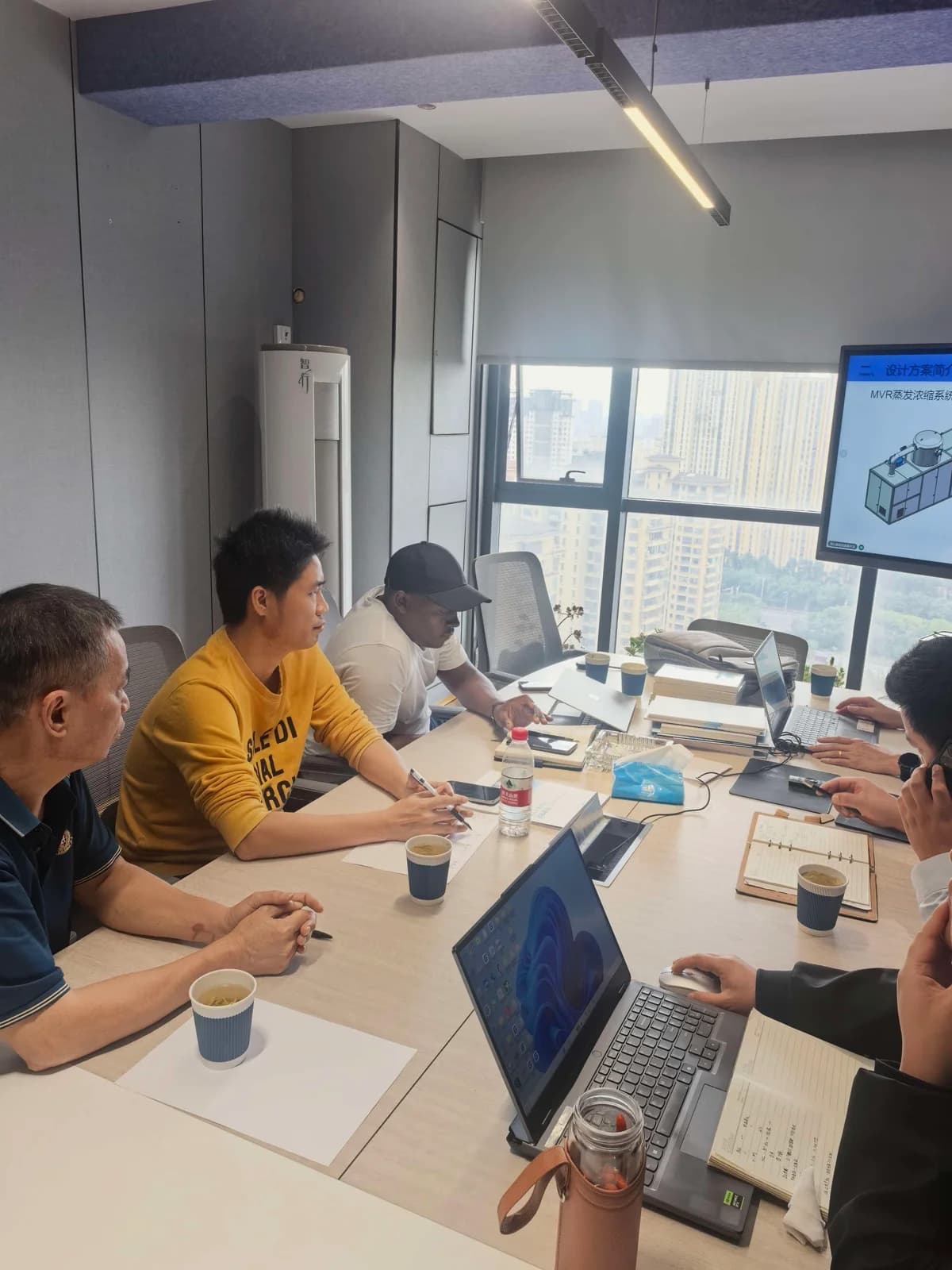
A customer from Kenya visited the Jiangsu branch of BHP Water Treatment to review MVR evaporator technology for water treatment projects. The session covered the MVR evaporation and concentration system design scheme, the equipment specification table and open technical discussion with the BHP engineering team. This page records the visit and sets out the engineering background behind the questions discussed.
Visit overview
A customer from Kenya visited the Jiangsu branch of BHP Water Treatment to review MVR evaporator technology for water treatment projects. The visit was hosted by the BHP engineering team and centred on one subject: how a mechanical vapor recompression evaporator is configured, what its specification table settles, and which inputs an overseas project has to confirm before equipment is fabricated.
The session followed a working format rather than a plant tour script. The engineering team presented the design scheme for an MVR evaporation and concentration system, walked through the equipment specification table line by line, and then moved into open technical discussion with the customer. Questions ran from feed composition and capacity profile to materials of construction, condensate quality and the control arrangement.
For industrial plants, that sequence is deliberate. Evaporation is usually the step that decides whether a high-salinity effluent project reaches its reuse target or its zero liquid discharge commitment, and the design inputs behind it are worth reviewing before an order is placed.
What the technical session covered
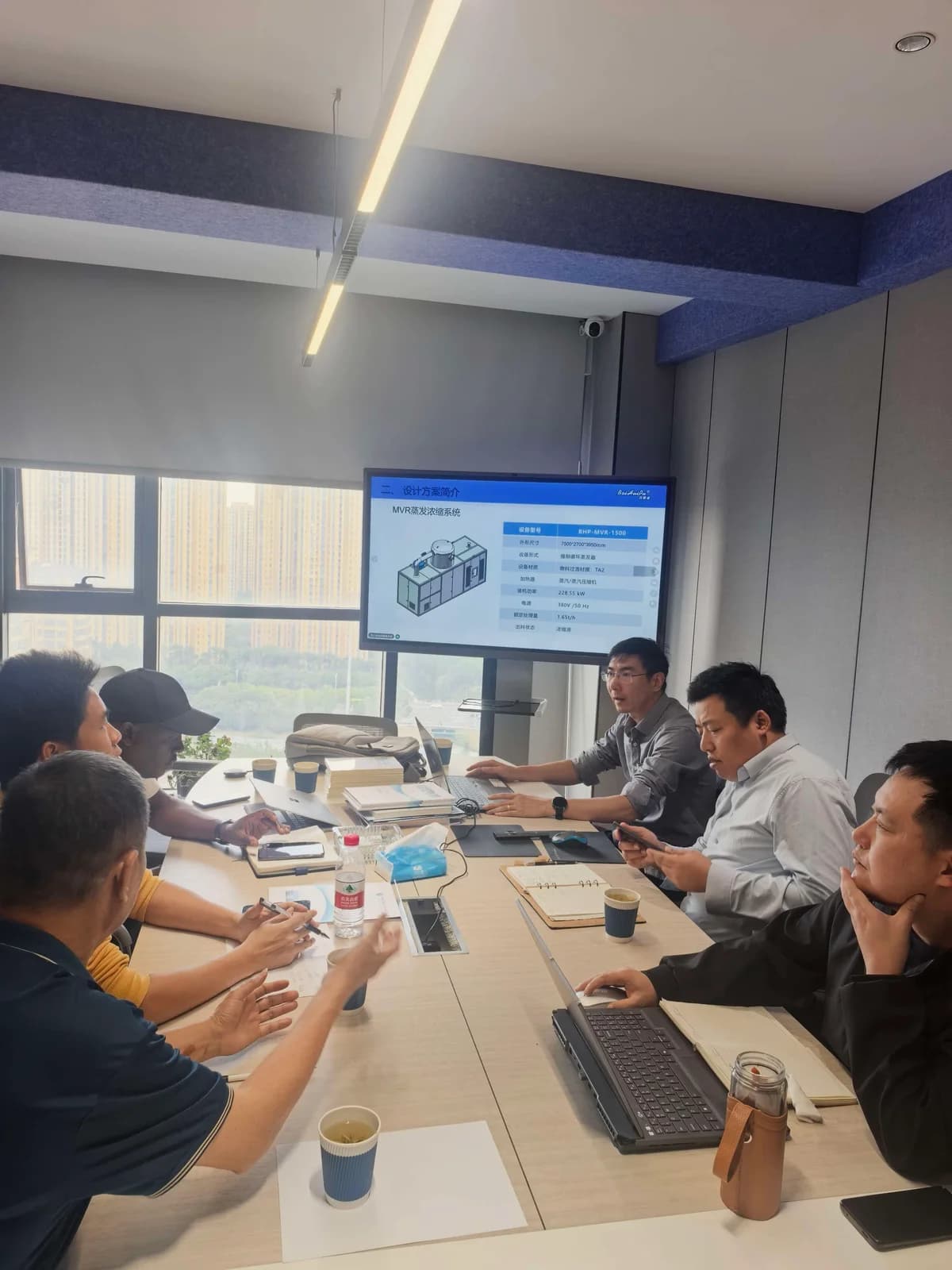
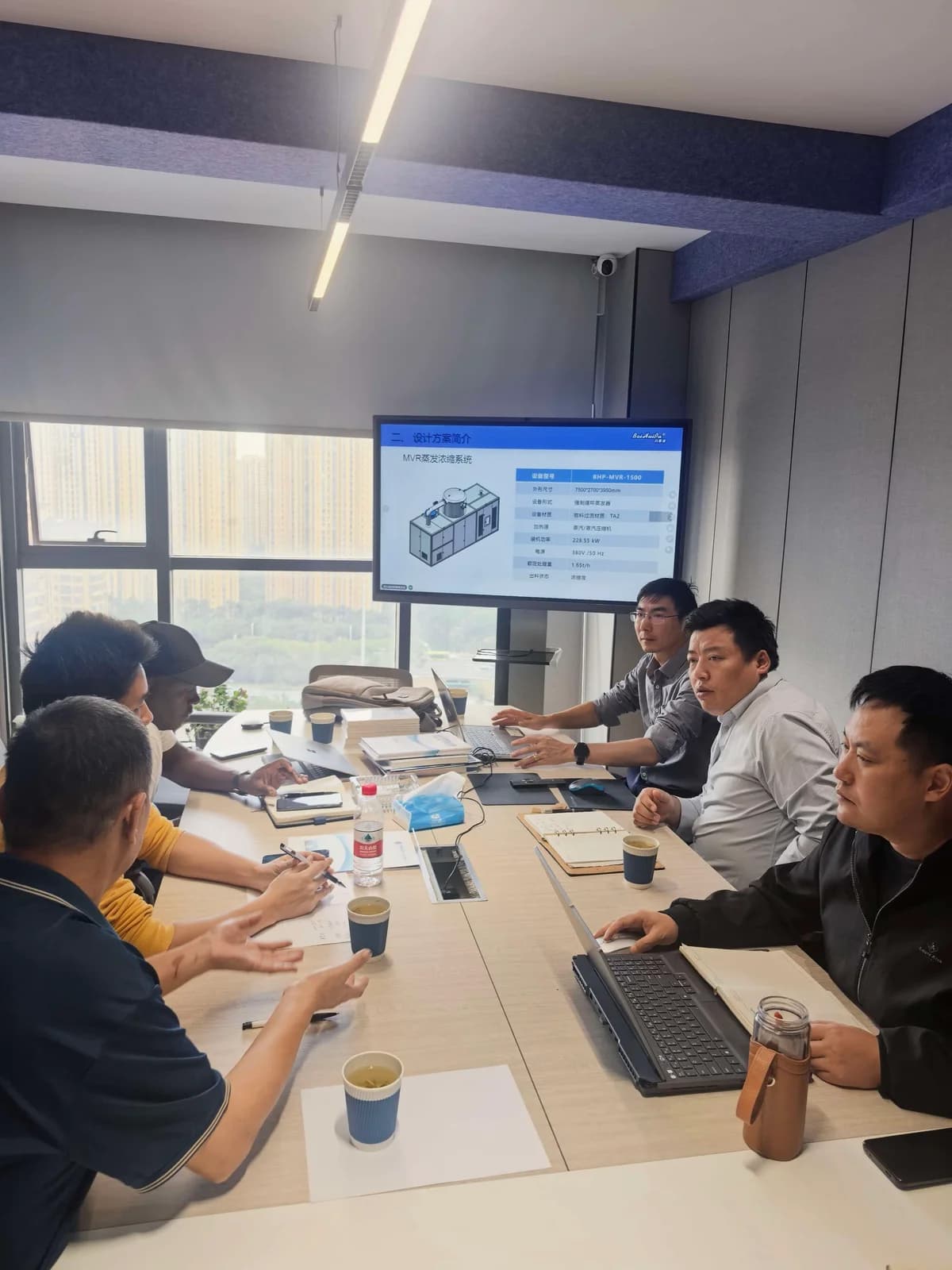
The visit was structured around three blocks: a design scheme presentation, a specification review, and an open discussion with the engineering team. The presentation screen carried the design scheme for the MVR evaporation and concentration system, including the system layout drawing and the specification table, and the discussion that followed was driven by the customer’s own project questions rather than a fixed catalogue walkthrough.
The session was held at the Jiangsu branch, which supports BHP customers in East China alongside the company’s export project work. The branch team was joined by colleagues covering process design and project engineering, so the questions that came up could be answered against real project experience rather than general product literature.
- Design scheme introduction for the MVR evaporation and concentration system, with the system layout and main equipment arrangement
- Specification table review covering capacity, evaporation temperature, installed power, supply arrangement, materials and control mode
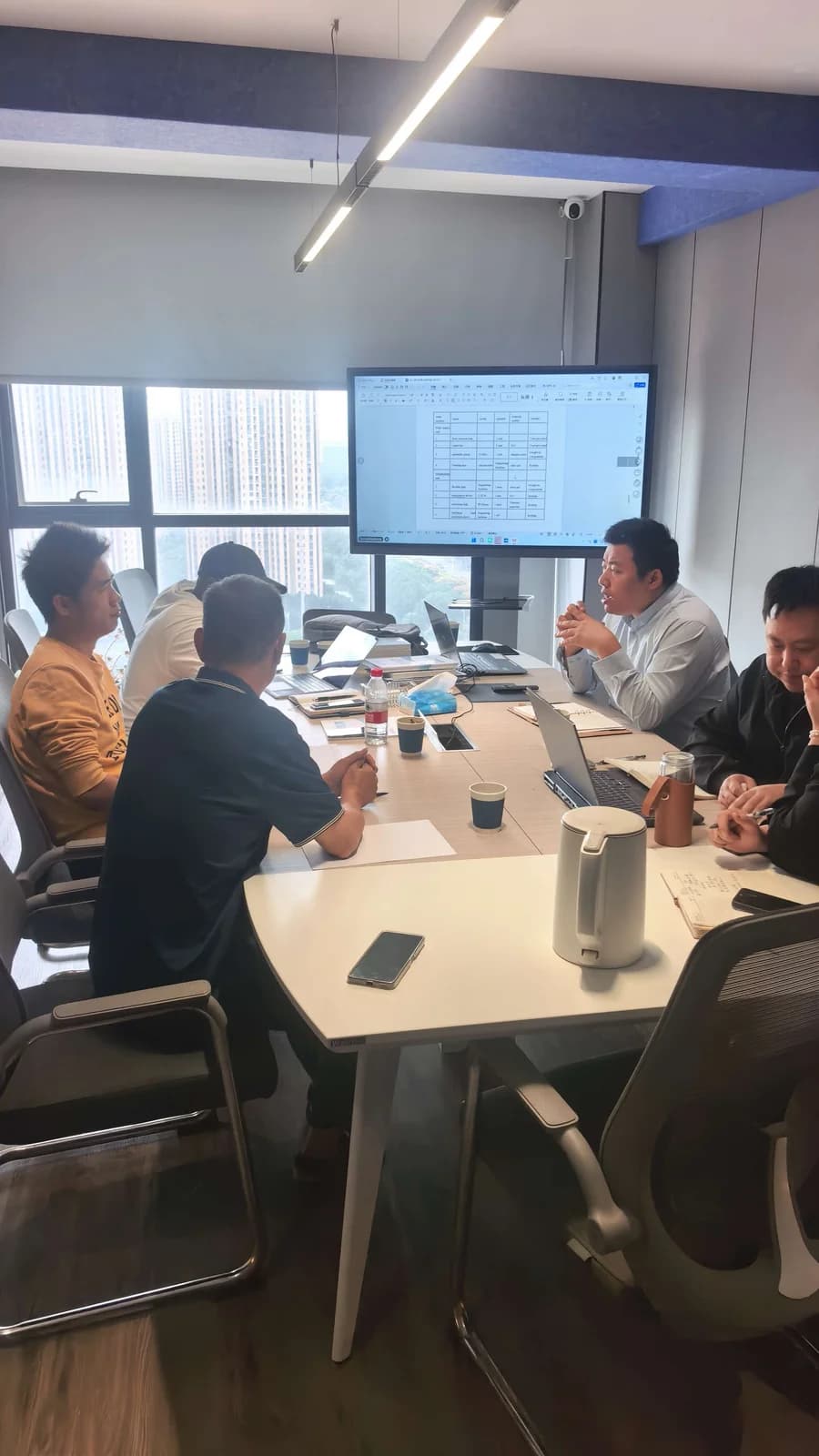
- Open technical discussion between the customer and the BHP engineering team
- Follow-up items for the customer to confirm on the project side
Send the feed-water analysis, target quality, required capacity and operating profile. We will help structure the next engineering questions.
Send your project inputsSpecification review: what each parameter settles
The presentation took the customer through the system as an engineering object rather than a product photograph. The specification table shown during the session is the same format BHP uses in project proposals, and each line exists to settle a decision that affects the rest of the plant.
The point of reviewing the table line by line is that none of these parameters is independent. Raising capacity changes installed power; tightening the condensate target changes what the upstream separation has to achieve; and the material choice follows the chemistry of the actual effluent, not a generic chloride figure. None of that is visible from a single equipment nameplate, which is why the session spent time on the table rather than on the unit photograph.
- Treatment capacity settles the feed flow the unit must hold across the operating profile, including campaigns and peak hours
- Evaporation temperature decides whether the stream tolerates the operating window, and what that implies for material selection
- Installed power and supply fix the electrical infrastructure the site has to provide and the running energy the plant will carry
- Materials of construction follow the effluent chemistry, including chloride content and pH range
- The control arrangement sets the automation scope and how the unit behaves during upsets
- The condensate quality target decides whether recovered condensate can realistically return to process duties as reuse water
How an MVR evaporator works
A mechanical vapor recompression evaporator treats salinity by boiling rather than by filtration. A compressor raises the pressure and temperature of the vapor released from the boiling liquor, then returns that vapor to the heating side of the same unit. Because the vapor carries its latent heat back into the process, the system recovers most of its own heat instead of drawing fresh steam for every pass. That is the whole of the energy argument behind the technology, and it is why the compressor, not the boiler, is the component a buyer should ask about first.
Two products leave the unit. The condensate is usually clean enough to return to the process as reuse water, which reduces raw water intake. The concentrate is reduced to a small volume of salt-bearing liquid or a solid salt stream that can be handled as a solid rather than shipped as liquid waste. Where the concentrate still has to be taken further, the same engineering extends into brine concentrator and crystallizer design, with crystallization selected from the salt chemistry rather than assumed.
The open discussion returned repeatedly to two engineering habits. The first is that the design basis is the water quality report and the required discharge or reuse standard taken together, because an evaporation duty defined by one without the other is not a specification. The second is that solids handling is part of the process train from the start: the salt or mixed-salt stream that leaves the evaporator has to go somewhere, and that destination is a layout and logistics question as much as a process one.
Where MVR evaporation fits in industrial water treatment
Evaporation is not the first step in a treatment train and it is rarely the cheapest one. Membrane processes such as RO and NF concentrate dissolved solids economically up to their practical limit, and beyond that limit the energy cost of pushing more water through a membrane rises faster than the energy cost of boiling the remainder. The engineering decision is therefore about where that handover sits for a given effluent, and it is settled from the water analysis rather than from a textbook recovery figure.
Upstream of the evaporator, the pretreatment duty is set by what would otherwise scale, foul or corrode: hardness, silica, suspended solids and organics each pull the design in a different direction. Downstream, the salt destination closes the balance. Read together, these decisions form the zero liquid discharge configuration, where ZLD is treated as a system decision covering pretreatment, membrane concentration, evaporation and crystallization rather than a single piece of equipment.
Evaporation duty also appears outside the wastewater fence. Food and dairy lines concentrate product as well as treat effluent, and the same vapor recompression principle serves both, with evaporator condensate and wash streams handled inside one plant water balance.

About BHP Water Treatment
Guangdong Baihuipu Environmental Protection and Energy Saving Development Co., Ltd., which trades internationally as BHP Water Treatment, is a water treatment equipment manufacturer based in Dongguan, China. The company supplies industrial wastewater treatment systems, industrial water reuse systems, RO and EDI water purification systems, MVR and low-temperature evaporators, and zero liquid discharge configurations, with systems engineered per project from the wastewater source, treatment capacity, water quality report and required standard.
The Jiangsu branch hosted this visit and supports customers in East China alongside the company’s export project work. No commercial agreement, supply contract or project award is announced in connection with the visit.

Why Choose Baihuipu as Your Manufacturer
BHP manufactures the equipment it designs, and the engineering scope stays inside one organisation from the water analysis to the handover documentation. The points below are what overseas customers typically evaluate when selecting an evaporator supplier.
- Own manufacturing facility: evaporators, skids and control panels are built in the company’s own factory, so fabrication scope, quality control and delivery schedule stay inside one organisation
- 20+ years of water treatment engineering across industrial effluent, reuse and pure water duties, applied per project instead of per catalogue
- Complete system supply: segregation and equalization, chemical-physical treatment, membrane concentration, MVR and low-temperature evaporation, crystallization and controls delivered as one integrated scope
- In-house engineering team: every system is designed from the water quality report, capacity profile and required discharge or reuse standard, with treatability testing on representative samples where effluent quality varies widely
- Certifications and export experience: documented equipment for overseas projects, including shipping preparation, installation interfaces and commissioning support for international sites
- Spare parts and after-sales support: wearing-part lists, maintenance planning and remote support arranged before handover, so an overseas site is not left without a service path
Contact BHP for water treatment projects
For MVR evaporation, high-salinity wastewater or zero liquid discharge projects, send the following inputs to BHP Water Treatment and the engineering team will come back with the questions that follow.
- Wastewater source, and which streams have to be treated together
- Treatment capacity, with the operating profile if it varies
- Water quality report, including dissolved solids and any parameter of concern
- Required discharge standard, or the reuse water quality target
- Project location, and the site conditions that affect delivery or installation
- Website: https://www.baihuipuwatersystems.com/ | Email: baihuipu003@gmail.com | WhatsApp: +86 13631765076
Questions buyers commonly ask
What did the Kenyan customer visit cover?+
The visit to the BHP Jiangsu branch covered MVR evaporator technology for water treatment projects: the design scheme for an MVR evaporation and concentration system, the equipment specification table, and an open technical discussion with the engineering team. No commercial agreement, supply contract or project award is announced in connection with the visit.
What is an MVR evaporator used for?+
An MVR evaporator concentrates high-salinity wastewater by boiling with vapor recompression, recovering most of its own latent heat. It produces a clean condensate that can return to process duties and a reduced-volume concentrate or salt stream, and it is typically applied where membrane concentration has reached its practical limit and a reuse or zero liquid discharge target still has to be met.
What inputs are needed to evaluate an MVR evaporator for a project?+
Send the wastewater source and stream list, the treatment capacity with its operating profile, a water quality report including dissolved solids and any parameter of concern, the required discharge standard or reuse water quality target, the available site utilities, and the project location. Those inputs determine the evaporation duty, the materials and the upstream pretreatment scope.
Does BHP supply complete systems or single units?+
BHP supplies complete systems. Typical scope covers segregation and equalization, chemical-physical treatment, membrane concentration where it fits, MVR or low-temperature evaporation, crystallization and the control system, with sludge and solids handling designed into the train from the start. Pure water duties such as RO and EDI can be delivered in the same package so the water balance is engineered as one system.
How does BHP support overseas customers after an order?+
Export projects are supported with engineering documentation, shipping and installation interfaces, commissioning assistance, and a spare parts and after-sales path agreed before handover. Project questions can be sent directly to the engineering team through the contact details on this page.
Turn the guide into a project brief.
Final process selection and performance commitments should follow the complete feed-water analysis, application requirements, site utilities and approved technical agreement.