Membrane deoxygenation is a complete gas-transfer and containment duty. Procurement should connect the required dissolved-oxygen condition to contactor selection, nitrogen and vacuum utilities, water-side compatibility and protection against oxygen entering again before the actual point of use.
Define the oxygen requirement at the useful boundary
State the dissolved-oxygen target, its units and the location at which water must meet it. Distinguish the contactor outlet from a distant process connection after storage or distribution. Provide flow, temperature and pressure ranges together with inlet oxygen measurements and source variability. A device selected for one inlet condition may not establish the same outlet under another. The enquiry should define the real operating envelope rather than request an undefined low-oxygen water package.
Identify the manufacturing or utility decision that depends on oxygen and the approved analytical method. Agree how startup, standby and interrupted service are handled. Avoid assuming that pure water with low conductivity also has low dissolved oxygen; ionic purity and gas content are different properties. The purchasing team needs a specific oxygen-transfer objective and a controlled path to the intended user, with any separately required ionic or particulate treatment kept visible in the process scope.
Distinguish gas transfer from liquid filtration
A membrane contactor provides a gas-transfer interface and is not simply a particle filter or a desalination membrane. Ask the supplier to explain the offered membrane construction, phase arrangement and operating mode. Solventum's design guidance describes vacuum and sweep-gas modes for dissolved-gas control. Use the actual offered manufacturer's calculations and limits for oxygen removal rather than assuming that a contactor selected for carbon dioxide has an interchangeable utility requirement or outlet objective.
Obtain a process diagram showing water stages, gas supply, vacuum lines and analytical locations. Identify whether multiple contactors are needed and how their operating states are controlled. Define bypasses and what water quality is available when a stage is isolated. A contactor count or membrane surface area is not a complete performance specification. The supplied arrangement should connect the selected gas-driving conditions to the actual flow and temperature cases under which useful oxygen removal is expected.
Send the feed-water analysis, target quality, required capacity and operating profile. We will help structure the next engineering questions.
Send your project inputsCoordinate nitrogen purity and delivery
Specify sweep-gas composition, purity and delivery conditions on the basis of the offered oxygen-removal design. Include residual oxygen in the nitrogen supply and how its condition is established at the user. A general plant nitrogen header may serve other purposes and have a different quality envelope. Ask which contaminants or delivery interruptions matter to the contactors and water application. Do not assume that a pressure reading confirms suitable sweep-gas composition.
Review gas flow measurement, regulation and distribution to each contactor. State reference conditions and include consumption across the approved operating range. Determine how low pressure, insufficient flow or unsuitable gas quality affects water release. Obtain the actual nitrogen source and backup strategy from the owner. Gas purity, flow and vacuum interact with the achievable driving condition, so a useful comparison includes the full utility basis rather than treating nitrogen as an unlimited site service outside the supplier's process responsibility.
Size vacuum service for gas and water vapour
Provide the water-temperature envelope and obtain a vacuum-load assessment for the selected contactor arrangement. Include removed gases, water vapour and relevant leakage assumptions. Ask where absolute pressure must be achieved and measured. Vacuum at a pump connection is not automatically the pressure at every contactor after piping losses. Include line size, routing and the proposed pump technology so the supplied utility can be assessed against the actual connected load.
Review condensate and liquid-ingress management using the offered manufacturer's requirements. Establish how the gas-side arrangement protects downstream equipment if liquid crosses the membrane or accumulates in low points. Include traps, detection or other protective provisions where required by the design. Keep their maintenance and drainage accessible. A vacuum pump alone does not establish a complete operable gas-removal system when vapour condensation, pipe routing and abnormal liquid transfer have not been coordinated with the contactor supplier.
Protect the water-side operating envelope
Obtain pressure, temperature and differential limits for the exact offered module. Review startup, shutdown, draining and blocked-outlet states. Include incompatible chemicals, surfactants and cleaning exposures in the application review. A membrane selected for clean pure water should not be assumed to tolerate every upstream sanitizing or cleaning process. Request approved isolation, flushing and maintenance procedures with a clear statement of which liquids may contact the module.
Identify upstream particulate protection and its acceptance basis. Review how an unexpected contaminant or integrity concern is detected and investigated. Include materials and connections appropriate to the required water condition. Avoid interpreting low oxygen as proof of all other quality requirements. The deoxygenation package belongs within a broader treatment train whose chemistry, cleanliness and maintenance states must remain compatible with the contactor's documented envelope and with the manufacturing process receiving its water.
Control oxygen re-entry after treatment
Map the route from the final contactor to the required point of use. Review tanks, vents, seals, connections and piping materials for potential gas entry appropriate to the target condition. An open or poorly controlled storage boundary can undo upstream deoxygenation. Define any required controlled atmosphere or other arrangement with the responsible engineers. The acceptance point should remain the agreed useful-water boundary rather than move upstream solely because it is easier to obtain a favourable reading there.
Assess standby and recirculation conditions, including the first water delivered after an idle period. Establish how water is held, recirculated or diverted until the required state is demonstrated. Review gas and vacuum restart before allowing product release. A useful operating philosophy distinguishes contactors available, utilities established and downstream water verified. Those states should not be compressed into one pump-running signal that conceals oxygen uptake or unverified water remaining between the treatment stage and its receiving user.
Make oxygen measurement representative
Use a suitable low-range oxygen analyzer and a closed, representative sample path. The linked measurement guide discusses that analytical duty separately. Agree calibration, response, sample flow and the effect of atmospheric entry during sampling. An open grab sample can change before measurement and may not represent the contactor outlet. Record units and the measured location so the reported result is connected to the contractual oxygen requirement and can be reproduced during acceptance.
Test source, flow and temperature cases that are feasible at site, and retain reviewed design evidence for cases not reproduced. Record nitrogen and vacuum conditions alongside dissolved oxygen. This permits investigation when output changes rather than leaving a low reading disconnected from its gas-transfer conditions. Define an invalid-analyzer state and the corresponding release response. A held historical reading should not continue to certify current product water indefinitely after representative sampling or instrument operation has been lost.
Prepare a membrane-deoxygenation enquiry
Send Baihuipu inlet oxygen and water analyses, flow and temperature histories, outlet requirements and distribution drawings. Include nitrogen availability, vacuum constraints, cleaning exposures and the analytical plan. Request coordinated contactors, utilities, protection and startup support. Agree acceptance at the stated useful boundary and separate observed results from predictions. Keep any vendor example dependent on its actual conditions rather than converting it into an unqualified claim for a different industrial pure-water installation.
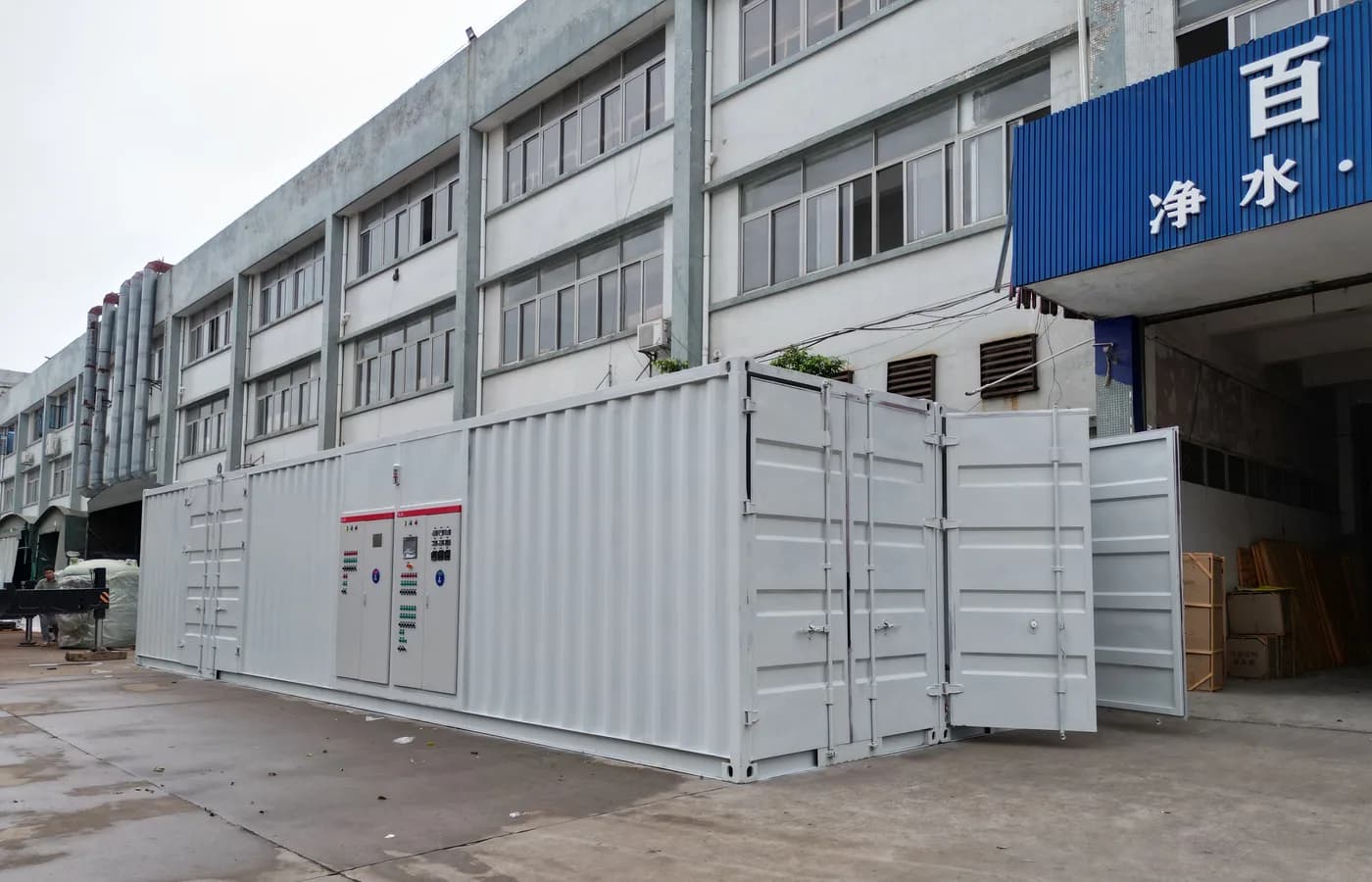
The featured photograph shows high-purity water equipment as context, not a membrane contactor or proof of oxygen concentration. Use the actual module documentation and installed measurements for acceptance. The linked carbon-dioxide guide addresses a different dissolved-gas objective. Distinguishing gas identity, utility basis, sample integrity and downstream re-entry helps the buyer purchase a complete oxygen-removal function without assuming that any degassing package or favourable conductivity value establishes the required low-oxygen state.
Questions buyers commonly ask
Can an air sweep selected for CO2 removal establish low oxygen?+
Do not assume it. Select the operating mode and gas composition specifically for the oxygen objective and offered contactor.
Why include water temperature in vacuum sizing?+
Temperature affects water-vapour load and the gas-transfer operating conditions. Obtain the complete design envelope and pressure basis.
Does low conductivity imply low dissolved oxygen?+
No. Conductivity reflects ionic behaviour; dissolved oxygen is a different property requiring appropriate treatment and measurement.
Should acceptance stop at the contactor outlet?+
Use the agreed requirement location. If water must remain low in oxygen at a downstream user, assess storage, distribution and re-entry along that route.
Turn the guide into a project brief.
Final process selection and performance commitments should follow the complete feed-water analysis, application requirements, site utilities and approved technical agreement.