An online hardness analyzer should protect a defined downstream process with a trustworthy result and a timely response. Select the measurand, sampling arrangement and decision logic together, rather than treating any low-range analyzer as proof that a softener cannot break through.
Specify the hardness decision explicitly
Identify the downstream equipment that the analyzer will protect and the hardness condition that requires action. Define whether the requirement is total hardness, a selected ion or another method-specific quantity. State the reporting basis, including any expression as calcium carbonate. A display labelled hardness is insufficient when its chemistry and units do not match the process requirement. Obtain approval of the measurement and release basis before comparing instrument prices or controller features.
Decide whether the measurement supports a warning, automatic softener changeover, water diversion or formal release. Each purpose has different consequences for delay and availability. Show the location of the protected process relative to the sample point and available holding capacity. A correct result arriving after the sampled water has already reached a sensitive membrane train may provide historical evidence without providing the intended protection. The procurement scope should make that timing relationship reviewable.
Match analytical method and usable range
Manufacturer offerings include different hardness methods, such as colorimetric and titrimetric analysis. Specify the method and range required for the actual outlet rather than choosing from the largest number on a product page. Ask about resolution, detection capability, uncertainty and the conditions under which performance is stated. A wide instrument range does not necessarily provide the decision quality needed close to a low release limit. Compare documented capabilities at the intended operating concentration.
Review interferences from the actual water and treatment chemicals with the supplier. Provide pH, salinity, colour, suspended material and relevant chemical residuals. Ask which limitations are addressed through sample conditioning and which make the method unsuitable. Avoid assuming that a standard factory calibration establishes accuracy in every industrial matrix. Where the decision is consequential, define a representative comparison test with an appropriate reference method before accepting the selected analyzer as a protective control input.
Send the feed-water analysis, target quality, required capacity and operating profile. We will help structure the next engineering questions.
Send your project inputsDesign a representative sample interface
Locate sampling after the relevant softener outlet and identify any blending or chemical injection before the protected process. Use a flowing sample arrangement with materials that do not contaminate the low-hardness sample. Review line length, flushing and dead volume. If multiple softeners share one analyzer, each selection path needs clear identification and adequate preparation before a result is attributed to that vessel. An unrecorded switch can make a correct analysis misleading in the operating trend.
Specify pressure, temperature and flow conditioning within the analyzer manufacturer's limits. Include isolation, indication, drain capacity and accessible consumable connections. The supplier should show where sample water goes during standby, calibration and maintenance. Review whether a conditioner changes the measurand or introduces an unacceptable delay. Request an interface drawing with responsibility for every valve and utility, so a complete instrument order does not arrive at site with an unfinished sampling installation.
Account for the complete measurement delay
Calculate the relationship between sample transport, conditioning, analysis cycle, signal processing and the final control action. Use supplier-confirmed cycle behaviour rather than assuming continuous instantaneous measurement. Include any multiplexing sequence and the delay before a previously unselected softener receives another result. Ask what happens to the displayed value while the next analysis is running. Operators need to distinguish a recent valid result from a retained value that no longer represents current outlet conditions.
Relate this delay to process flow and available storage or diversion. Define the amount of potentially affected water and how the site will manage it under the approved protection strategy. If the required response cannot be achieved with the proposed analyzer cycle, revisit the arrangement instead of hiding the gap inside a controller setting. A separate duty buffer, different sampling configuration or revised operating philosophy may be needed before the equipment can provide the intended assurance.
Specify reagents and maintenance support
Request the full reagent and consumable list with storage conditions and expected use under the proposed duty. Identify shelf life and delivery constraints for the destination. Ask how the instrument detects unavailable or exhausted reagent and whether that condition invalidates the output. A supply failure should not silently turn into a persistent low-hardness reading. Include tubing, pumps, seals and other service parts that the manufacturer identifies as necessary for reliable method execution.
Provide a maintainable cabinet location with appropriate access, environmental protection and drainage. Define calibration and verification procedures under the site's quality system, with traceable standards where the method requires them. Ask how maintenance mode appears in the control system and how the analyzer returns to service. Keep manual checks available for investigation without implying that an occasional grab sample can reproduce the timing protection expected from an online instrument during unattended operation.
Separate valid results from instrument faults
Specify value, timestamp and quality status as distinct control information. Include sample-flow failure, reagent problems, calibration activity, internal faults and communication loss. Determine whether the receiving PLC can distinguish an analytical exceedance from an unavailable measurement. A single analogue value without a usable quality indication may leave operators unable to tell whether water is acceptable or the analyzer has simply stopped producing new evidence.
Write the response to each unavailable state with operations and process engineering. If a bypass is allowed during maintenance, identify its authorization, indication and time limitation. Review alarms for stale values and implausible changes, while avoiding an automatic interpretation that masks a genuine breakthrough. Demonstrate how the plant preserves the identity of affected water and returns to normal service. These decisions belong in the approved cause-and-effect document rather than being left to the commissioning programmer.
Demonstrate analysis and protection together
Agree an acceptance plan that checks the method with suitable standards and representative site water. Compare online results with a defined reference method using appropriately matched sampling times and handling. Evaluate behaviour near the actual decision point rather than only at an easy midrange concentration. Retain raw observations, instrument status and sample conditions. The acceptance objective is a defensible measurement system, including its limitations, not an artificially perfect agreement between unrelated samples.
Test signal failure, low sample flow, reagent unavailability, stale data and softener changeover. Verify the final diversion or hold response with the installed system, including valve travel and confirmation. Distinguish simulation of a PLC input from a demonstrated sample-to-action test. Both may be useful, but they establish different parts of the chain. Record what was actually proven and any site conditions still needed before automatic quality release is enabled.
Prepare the hardness-monitoring enquiry
Send Baihuipu the outlet hardness requirement, reporting basis, softener arrangement, sample conditions and downstream flow diagram. Include expected analytical delay, operating coverage and required control responses. Request the analyzer, sample system, consumables, documentation and acceptance scope as a connected package. Use the related softener guide to review regeneration and duty changeover after the analytical decision is clear, while treating conductivity as a different measurement with its own process purpose.
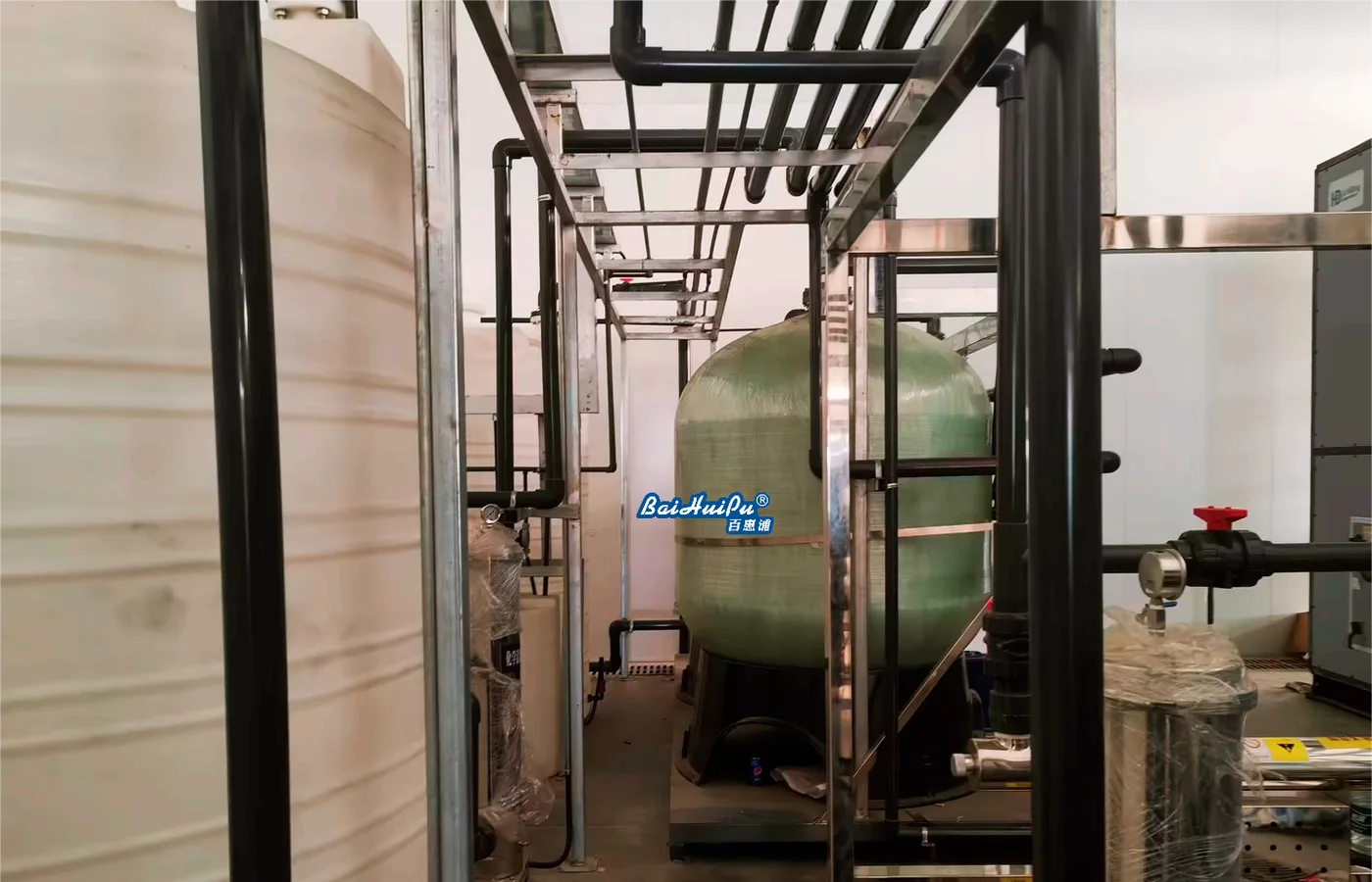
The photograph shows treatment vessels and piping as industrial context; it does not depict a hardness analyzer or establish breakthrough protection. Confirm instrument suitability through method documentation and representative acceptance records. A complete purchase gives operators a result they can interpret, a visible indication of measurement validity and an achievable response when water is unsuitable. Those deliverables make the analyzer useful beyond a number appearing on the plant screen.
Questions buyers commonly ask
Can conductivity replace a hardness analyzer?+
Conductivity responds to many ions and does not provide a hardness-specific release result.
Does an online analyzer always measure continuously?+
Some systems analyze in cycles. Include the actual sampling and analysis delay in the protection design.
What should happen when reagents are unavailable?+
Report invalid or unavailable analysis clearly and execute the approved plant response rather than retaining an apparently valid result.
Why compare results at matched sampling times?+
Softener conditions can change. Samples representing different water cannot establish method agreement or response performance.
Turn the guide into a project brief.
Final process selection and performance commitments should follow the complete feed-water analysis, application requirements, site utilities and approved technical agreement.