Chemical phosphorus removal should be evaluated as a reaction followed by a solids-separation duty. Industrial wastewater composition, phosphorus form and the analytical reporting basis determine what a treatability test demonstrates and what additional treatment remains necessary.
Make the phosphorus reporting basis unambiguous
Collect total phosphorus and appropriate dissolved or reactive measurements for the actual process stream. Ask the analytical laboratory to define preparation, filtration and digestion methods. Distinguish results reported as phosphorus from results reported as phosphate; those values are not numerically interchangeable. Use one stated basis in the feed analysis, design target and acceptance schedule. A quotation cannot be evaluated reliably when its inlet and outlet numbers describe different analytical quantities.
Identify likely sources from production chemicals, cleaners and raw materials. Include intermittent discharges and any segregated streams that can change the concentration or chemical form. A sample taken during ordinary rinsing may not represent a concentrated cleaning event. Record source timing and flow as well as concentration. This allows the design team to assess whether source control, buffering or a different treatment boundary is needed before selecting a chemical precipitation package.
Distinguish phosphorus forms and treatment claims
Chemical precipitation trials should establish which measured phosphorus fractions respond under the tested conditions. Do not assume that a successful reactive-phosphate result demonstrates removal of all organic or condensed forms measured by a total method. Ask the laboratory and process supplier to interpret the actual stream. Where conversion or another treatment step is proposed, define its evidence and operating requirements separately from the subsequent precipitation and solids-capture stage.
EPA's phosphorus-removal study discusses chemical treatment and the variability of dosing and sludge production across wastewaters. That supports using site-specific tests instead of transferring a generic dose. It does not establish a universal recipe for an industrial stream. Request an explanation of the proposed reagent and mechanism tied to the measured phosphorus and water matrix. Keep any final guarantee dependent on a defined feed envelope and demonstrated process arrangement.
Send the feed-water analysis, target quality, required capacity and operating profile. We will help structure the next engineering questions.
Send your project inputsDesign representative reagent trials
Collect samples across the conditions expected to control duty, preserving source descriptions and analytical history. Compare candidate reagents under an approved trial protocol that records addition order, mixing, pH and separation conditions. Include the untreated sample and relevant blanks or controls agreed with the laboratory. Record commercial-product strength and the basis used to express dose. This avoids comparing one vendor's solution volume with another vendor's active chemical mass as if they were identical.
Measure treated-water phosphorus on the same basis as the acceptance requirement. Include both dissolved and total observations where useful to distinguish reaction from solids escape. Retain raw results rather than only a selected best point. A narrow apparent optimum may be difficult to maintain through real production variation. Ask the supplier to identify the workable operating range and any conditions that require additional testing before equipment selection is finalized.
Include pH and alkalinity in the process boundary
Record starting and final pH during trials and assess the buffering behaviour of the actual wastewater. Reagent addition can alter chemistry and create another chemical demand. Do not assume a pH setpoint copied from another site will reproduce the result. If adjustment is required, include its reagents, mixing, measurement and response time. The neutralization package should be coordinated with the phosphorus duty rather than treated as an unrelated utility that always delivers a perfect inlet.
Review interactions with metals, hardness, competing constituents and upstream chemicals relevant to the sample. Where the chemistry is uncertain, obtain appropriate specialist interpretation or further trials instead of adding unsupported mechanism claims to the enquiry. Include temperature variation and sample aging where these affect the evidence. A practical design basis states what is known, what the tests covered and which feed changes would require renewed treatability review before relying on the same operating recipe.
Make precipitate capture a specified duty
After reaction, formed solids must be removed sufficiently for the receiving requirement. Evaluate the proposed clarification, flotation, filtration or combined arrangement on representative treated water. A clear-looking beaker does not define continuous separation performance. Ask how mixing and transfer affect floc before it reaches the separator. Include hydraulic variation, sludge withdrawal and any polishing stage needed to meet the total-phosphorus requirement rather than considering reaction chemistry complete at the dosing point.
Compare dissolved residual with total residual when interpreting a failed test. A low dissolved result with an elevated total value can indicate a different problem from insufficient reaction, subject to the actual analytical methods. Use that distinction to guide investigation instead of automatically increasing reagent. Specify accessible sample points around reaction and separation so operators can identify where performance changed. This helps keep chemical consumption and solids loading connected to evidence during commissioning and routine operation.
Account for sludge, residual chemistry and returns
Estimate additional solids from the proposed chemical programme using a justified basis and trial observations. Include the wet sludge route, storage and dewatering interfaces. Review residual reagent constituents and their relevance to reuse or downstream biological treatment. Removing phosphorus from water transfers it into another material stream; that stream still needs a defined accepted destination. Keep waste-management requirements with the site's responsible team and avoid assuming a beneficial use for sludge without verified evidence.
Identify returned supernatant, filtrate and cleaning water that can carry phosphorus back into the plant. Include their timing and composition in the balance where relevant. A treatment package may appear successful at its outlet while an unaccounted return increases upstream load. Define the sampling and review needed to distinguish these effects. Request that bidders include all routine liquid and solids interfaces so installed-scope comparisons do not omit the cost and capacity of handling the captured material.
Define control and acceptance around measured results
Specify feed-flow information, chemical-feed availability, pH where relevant and suitable analytical confirmation. Decide which online signals provide trends and which laboratory results authorize release. A general conductivity or turbidity signal should not automatically be treated as a phosphorus-specific measurement. Include the response to delayed results, failed dosing and an adverse total-phosphorus observation. Any diversion needs a real receiving capacity and an approved route.
Separate mechanical package checks from process acceptance. Verify pumps, materials, instruments, mixing and separation interfaces first, then test defined representative feed conditions with approved analytical methods. Record flow, reagent settings, operating state and solids withdrawal with each sample. State how excursions outside the feed envelope are handled and how repeat tests are agreed. This creates a reviewable acceptance basis without promising a numerical removal level unsupported by the actual treatability evidence.
Prepare a phosphorus-removal enquiry
Send Baihuipu source descriptions, flow profiles, consistently reported analyses, reagent trials and the final reuse or discharge requirement. Include pH and buffering observations, proposed solids capture, sludge destination and return streams. Request a proposal that distinguishes reaction, separation and analytical responsibilities. Identify any additional work needed to address phosphorus forms not represented by the initial tests, so the contract reflects the actual evidence available rather than an assumed universal precipitation response.
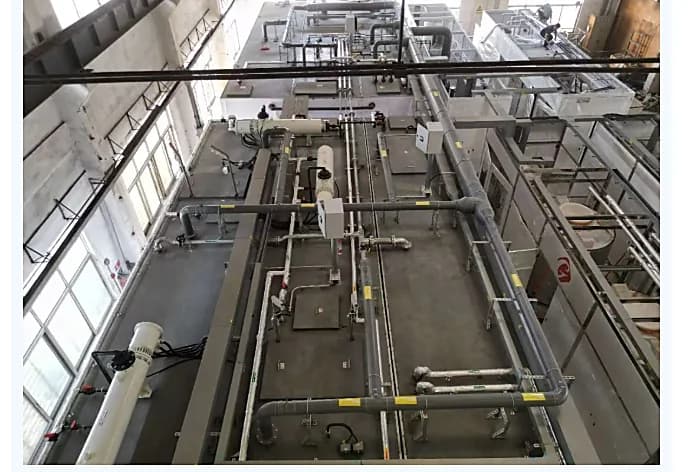
The image shows industrial wastewater equipment as manufacturing context; it does not prove phosphorus removal or identify the proposed chemical package. Confirm the actual offer through trial records, drawings and acceptance evidence. The linked neutralization and clarification guides address supporting duties. Their interfaces matter, but this purchase remains centered on a phosphorus-specific result measured consistently across the complete reaction and solids-removal boundary.
Questions buyers commonly ask
Are phosphorus and phosphate reported concentrations interchangeable?+
No. State the analytical reporting basis explicitly and use consistent units and conventions in feed data, design and acceptance.
Does a reactive-phosphate test prove total-phosphorus removal?+
Not necessarily. Match the laboratory method and phosphorus fraction to the required outlet, and investigate forms not represented by the test.
Why measure dissolved and total residuals?+
They can help distinguish reaction limitations from solids escape when interpreted with the actual methods and process conditions.
Can more reagent always correct a high outlet result?+
No. Review chemistry, mixing, separation and return streams. Additional dose can increase solids or residual constituents without resolving the actual cause.
Turn the guide into a project brief.
Final process selection and performance commitments should follow the complete feed-water analysis, application requirements, site utilities and approved technical agreement.