Cooling tower side-stream filtration targets a circulating solids inventory. Its value depends on how water and particles reach the filter, how the selected mechanism handles those particles and where the separated solids leave the cooling-water system.
Define the circulating solids problem
Describe the observed deposit and the equipment it affects before requesting a filter. Airborne dust, corrosion products, scale fragments and biological material have different properties. Collect representative circulating-water samples and inspect deposits where access permits. Separate a suspended-solids problem from dissolved chemistry and identify the consequence at heat exchangers or other users. A filtration package should be selected for an evidenced solids duty rather than a broad expectation that cleaner water resolves every cooling-system issue.
Map the sources and movement of particles through the tower, basin and circulating header. Identify seasonal changes, construction activity and intermittent production contamination. Note whether solids remain suspended or accumulate in quiet basin areas. These observations influence sampling and filter location. The concentration entering a convenient pipe tapping may not represent the inventory causing maintenance problems. Keep both the water-side data and physical deposit evidence with the enquiry so bidders understand what must change.
Keep filtration separate from blowdown reuse
Side-stream filtration treats part of the circulating water and returns it to the cooling circuit. Blowdown reuse handles a discharged stream and has a different water balance and treatment objective. Distinguish those boundaries in the flow diagram. A particulate filter does not remove the dissolved salts that govern a separate blowdown decision. Review cooling chemistry and biological management with the site's responsible specialists rather than assigning those duties implicitly to the filtration vendor.
LAKOS presents several side-stream filtration arrangements, which illustrates why the mechanism needs to match the solids. Use that limited context when comparing centrifugal separation, media filtration or other offered options. Do not transfer one supplier's capture claim to every candidate. Ask each bidder to state the particle fractions expected to be removed, the remaining solids and the cleaning or purge route. Equipment should receive credit for its defined function within the wider cooling programme.
Send the feed-water analysis, target quality, required capacity and operating profile. We will help structure the next engineering questions.
Send your project inputsSelect takeoff and return points together
Show the takeoff pressure, return pressure, elevations and normal operating variation. Determine whether a dedicated pump is required or whether an existing pressure difference provides the intended flow. Include conditions when cooling pumps change duty or tower cells are isolated. A side-stream line that flows well at full production may receive little water during reduced load. Request a hydraulic calculation and a way to verify actual filtered flow at commissioning.
Evaluate whether the return creates useful basin circulation or immediately short-circuits to the takeoff. Show the physical basin geometry, dividing walls and dead zones. Where basin sweeping is proposed, identify nozzle locations, required flow and the destination of mobilized solids. Moving deposits into suspension is only useful if they can reach a suitable removal path. Include the effect on operating tower cells and avoid assuming that a package flow rate alone establishes coverage of the basin.
Establish a filtered-flow basis from site evidence
Request the supplier's sizing basis and distinguish it from a generic percentage of main circulation. The relevant duty depends on solids ingress, particle behaviour, desired inventory control and the selected capture mechanism. Provide main flow, basin volume, operating hours and observed solids loading where available. If these data are incomplete, make the uncertainty explicit and agree an initial measurement programme. A familiar rule of thumb should not conceal an unexamined project assumption.
Compare performance at minimum, normal and maximum side-stream flow. Include bypass, cleaning and one-unit-out-of-service states. Ask how filter flow is measured or inferred, and how operators recognize that a closed valve or deteriorating pump has reduced it. Trend filter operating hours and actual flow with maintenance observations. This provides a defensible way to evaluate the installation after startup rather than relying solely on the appearance of one water sample.
Test the selected separation mechanism
Use representative solids at the intended water chemistry and temperature. If centrifugal equipment is offered, consider particle density and its operating range. For media or disc filtration, evaluate retention and cleaning recovery with the actual solids. Request paired inlet and outlet observations, reject measurements and operating settings. Where a short test cannot represent seasonal ingress or sticky biological deposits, state that limitation and define how longer-term performance will be reviewed.
Agree the practical outcome to be assessed without inventing an energy or maintenance saving. Reduced deposit accumulation may require a longer observation period than an immediate outlet sample. Establish baseline evidence and comparable operating conditions. Changes in cooling load, chemistry or cleaning practice can influence the result and should be recorded. A useful acceptance plan separates mechanical and hydraulic compliance from any longer-term operational benefit that still needs site evidence.
Account for backwash, purge and makeup
Identify where separated solids leave the system. Include peak backwash or purge flow, event timing and the receiving drain or tank. Returned wash water should be evaluated for whether it brings captured material back into circulation. Record associated water loss in the cooling-water balance and identify its effect on makeup demand. The filtration enquiry should show those flows even if a different contractor supplies the final waste connection.
Specify the water quality and pressure needed for cleaning and how it remains available during reduced cooling load. If filter cleaning draws from the same basin, verify the required operating condition. Review valves, strainers and purge lines for blockage and maintenance access. Demonstrate an unsuccessful-cleaning alarm and a defined response. An automatic sequence that repeatedly runs without removing solids can hide a loss of filtration while consuming water and operator attention.
Review materials, controls and maintainability
Select wetted materials, coatings, seals and electrical protection for actual cooling-water chemistry and outdoor exposure. Include treatment chemicals and cleaning agents in the review. Request isolation, pressure release and access for media or internal-component work. Show how maintenance affects cooling continuity. If a bypass is necessary, identify its operating state clearly so the site understands when solids removal is unavailable even though the main cooling loop continues to run.
Define start permissives, low-flow response, differential-pressure limits, cleaning states and power restoration. Keep the operator display specific about the filter and its supporting pump. If basin-sweeping equipment shares the flow, state how a change in one function affects the other. Record normal hydraulic conditions after commissioning. This makes later fault-finding more useful than treating every deposit recurrence as proof that the original filter mechanism was inappropriate.
Prepare a side-stream filtration enquiry
Send Baihuipu circulating-water analyses, solids and deposit observations, basin drawings, pump states, proposed connection points and waste destinations. Request a complete side-stream balance, hydraulic basis, separation evidence and maintenance arrangement. Agree which immediate checks establish installation compliance and which longer-term observations assess inventory control. Keep cooling chemistry, blowdown and microbiological responsibilities explicit so the filtration scope remains measurable and does not become an unsupported all-purpose treatment claim.
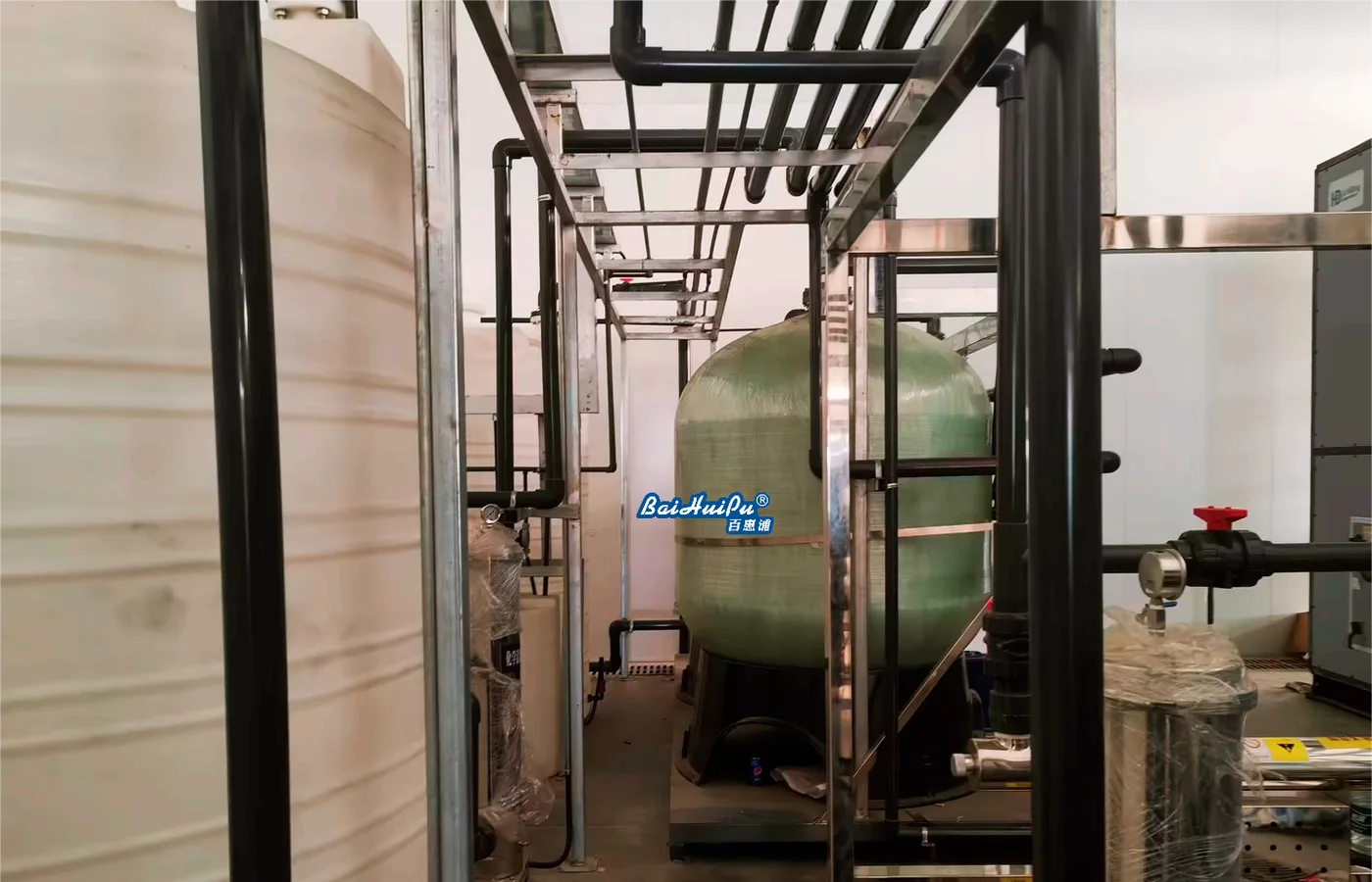
The image shows treatment vessels and process piping as equipment context; it does not identify a cooling tower installation or demonstrate heat-transfer savings. Review the offered drawings and site evidence for those questions. The linked blowdown guide covers a different water-reuse boundary, while the centrifugal-separation guide explains one possible solids mechanism. Their separate roles help the buyer compare a practical circulation-side solids package without confusing water quality, water conservation and unverified operating benefits.
Questions buyers commonly ask
Does side-stream filtration replace cooling tower blowdown?+
No. Particulate removal and dissolved-chemistry control have separate duties. Maintain an approved cooling-water balance and treatment programme.
Is a fixed percentage of circulation always the right filter size?+
No. Request the sizing basis against solids ingress, basin transport, capture mechanism and actual hydraulic conditions.
Why review the return location?+
A poorly placed return can short-circuit or leave deposits in quiet zones. Consider takeoff, return and basin transport together.
Can the purchase promise energy savings without a baseline?+
Avoid that claim. Agree measurable acceptance and collect comparable site evidence before attributing any operating benefit to filtration.
Turn the guide into a project brief.
Final process selection and performance commitments should follow the complete feed-water analysis, application requirements, site utilities and approved technical agreement.