Cooling tower blowdown reuse begins with the tower chemistry and the destination of recovered water. Specify a treatment route only after accounting for concentrated salts, treatment additives, variable solids and the final concentrate, then compare proposals using net acceptable water rather than a standalone skid recovery figure.
Start with the recovered-water destination
Define whether recovered blowdown will return as cooling makeup, supply another utility or serve a separate industrial process. Each destination has its own water-quality and availability requirements. Obtain those requirements from the receiving system owner and identify the contractual sampling boundary. A reuse proposal cannot be judged by producing clear water alone. The specification should state allowable constituents, flow conditions and what happens when the recovered stream is temporarily unavailable or unsuitable.
If the water returns to the cooling system, involve the tower's responsible water-treatment specialist in the design. Evaluate the resulting makeup blend and its effect on the existing chemistry programme. Reuse should not be treated as an isolated recovery skid that can operate independently of tower control. Define who approves changes and which monitoring establishes acceptable operation. Do not claim corrosion, deposition or biological control from a reuse system without the separate evidence and management programme those functions require.
Characterize actual blowdown and its variability
Sample the blowdown at a defined location under representative tower conditions. Include conductivity, pH, alkalinity, hardness, silica, relevant ions, solids and constituents important to the selected treatment route. Document analytical methods and the chemical programme operating at the time. Makeup-water analysis alone is not the same as blowdown analysis. The tower's operation, concentration and treatment additions can change the composition reaching the recovery package and determine which pretreatment questions need investigation.
Record variation with load, weather, operating modes and maintenance. Identify chemical addition events and unusual discharges that can enter the collection system. Where sampling different conditions is impractical, state the limitation instead of presenting one result as a complete envelope. Ask the treatment supplier to identify which uncertain constituents could change the process selection or operating limit. This focuses additional sampling on decisions that matter, rather than collecting a large dataset without a clear engineering purpose.
Send the feed-water analysis, target quality, required capacity and operating profile. We will help structure the next engineering questions.
Send your project inputsMap chemical-program interfaces
List treatment chemicals used in the cooling circuit, with product information supplied through the site's secure technical review process. Identify components that may affect membrane compatibility, fouling, adsorption, precipitation or waste acceptance. Do not infer composition from a product category alone. Coordinate the proposed recovery route with the chemical supplier and membrane supplier as appropriate, and obtain a review of the actual operating conditions rather than a generic statement that cooling blowdown is suitable for RO.
Define communication and approval when the tower programme changes. A new inhibitor, dispersant or biocide programme can change the recovery feed even when flow and conductivity appear similar. Include the recovery unit in the site's management-of-change procedure and retain the reviewed chemical versions. The equipment proposal should state its feed assumptions and exclusions clearly. Otherwise the plant may continue to expect unchanged performance after modifying a condition on which the original treatment assessment depended.
Compare pretreatment routes using representative evidence
Review solids removal, conditioning and other required steps from the actual feed analysis and treatment objective. Veolia's cooling-tower treatment material describes applications involving blowdown metals and suspended solids; that is context for evaluating relevant barriers, not a universal flowsheet. Some projects may need a different combination. Ask bidders to justify each stage and identify the evidence supporting it. Avoid adding equipment simply because it appears in a familiar reuse diagram.
Where precipitation, filtration or another variable operation controls suitability, request representative trials. Define inlet conditions, chemical assumptions, treated-water measurements and waste production. Examine the effect on downstream membrane feed rather than evaluating the pretreatment unit only by visual clarity. A trial should make clear what was demonstrated and what remains uncertain. Use those findings to refine the scope before committing to a full package guarantee, especially where source composition or chemical compatibility is incompletely characterized.
Set RO or alternative desalination limits
If desalination is required, evaluate the selected route against the full chemistry and desired recovered-water composition. For RO, require a justified operating envelope, scaling assessment and membrane compatibility review. Product suitability and concentrate constraints should guide the recovery decision. A higher recovery can change the limiting chemistry and maintenance duty. Do not copy a recovery target from a different industrial reuse stream or treat a generic design maximum as an obligation for this project.
Compare alternatives using the same delivered-water specification and feed cases. Include expected pretreatment, auxiliary utilities, cleaning and unavailable periods. If a model is used, retain the analysis, assumptions and software basis with the proposal. Where a constituent cannot be adequately characterized or modelled, identify a practical test or additional analysis. The useful decision is whether the proposed operating range is supported by evidence, rather than which bidder provides the most optimistic single recovery number.
Calculate net water reuse across the whole boundary
Prepare a balance from actual blowdown collection through acceptable recovered water and final discharges. Include backwash, rinsing, cleaning, off-specification diversion, storage changes and any other losses relevant to the package. Distinguish instantaneous skid recovery from water that the receiving process can actually use over the operating schedule. A quoted percentage without that boundary can hide a mismatch between tower discharge timing and the destination's demand for recovered water.
When recovered water returns to the same tower, review the overall circuit balance as well as the recovery-unit balance. Confirm that salts and other constituents have a defined final exit and that internal recycling does not conceal accumulation. Include the backup supply needed during outages. Use measured or explicitly justified assumptions for operating hours and chemical demand. Financial comparisons should retain those assumptions without inventing water savings, payback periods or discharge reductions that have not been calculated for the site.
Specify concentrate, storage and diversion interfaces
Identify the final concentrate and other waste streams with expected ranges of volume and composition. Confirm receiving capacity and acceptance with the site owner or approved waste contractor. Reuse does not eliminate contaminants merely by moving them into a smaller stream. If additional concentration or another waste treatment stage is proposed, assess it as a separate defined duty. Keep any unavailable disposal route visible as a project constraint instead of assuming future approval.
Size collection and recovered-water storage from actual flow timing and operational requirements. Define whether upset water is segregated and how unsuitable feed is diverted before entering sensitive equipment. Show sample locations, level controls and the route for off-specification product. A tank provides useful buffering only when its operating volume, mixing and control sequence match the intended purpose. Avoid treating storage as a substitute for identifying incompatible feed events or approving the final-use water specification.
Verify operation and prepare the project enquiry
Write acceptance tests around representative feed cases, agreed quality measurements and the net water balance. Verify chemical dosing, low-flow protection, quality diversion and the return to service after interruption. Record the tower operating condition with every performance test so results can be interpreted later. Factory demonstrations establish assembly and controls; site tests establish the installed water duty. Agree the response to changed feed and failed samples before acceptance, with responsibilities allocated across tower and recovery-system teams.
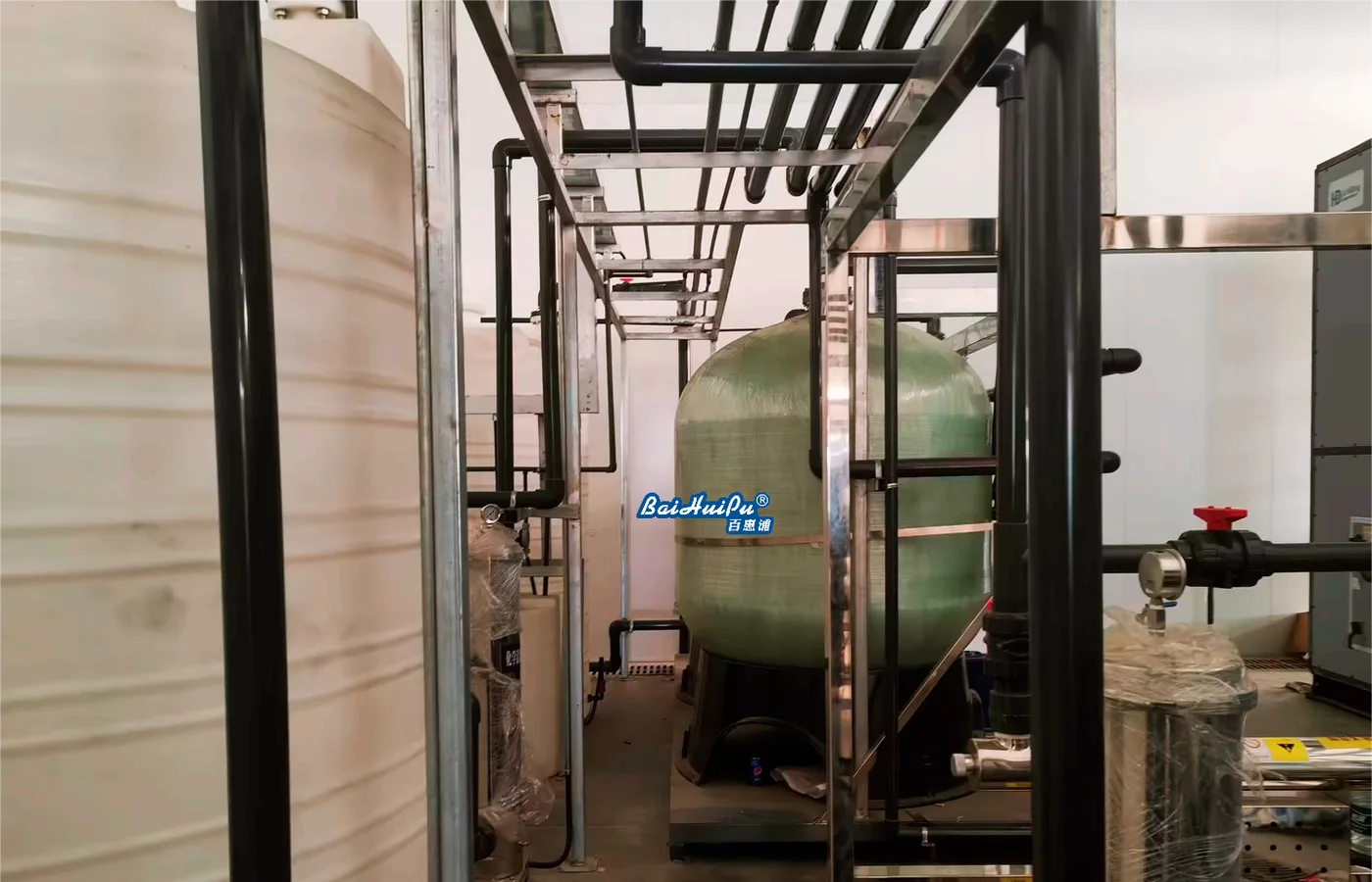
Send Baihuipu the blowdown analyses, tower operating records, chemical-program information, recovered-water destination and waste constraints. Request a route assessment with explicit assumptions, trial needs, net balance and acceptance boundaries. The featured image shows industrial vessels and process piping; it is not a cooling-tower reuse installation or evidence of water savings. A defensible proposal connects the tower chemistry to usable recovered water and a manageable final discharge, giving the buyer a complete industrial duty to compare.
Questions buyers commonly ask
Can cooling makeup analysis replace blowdown analysis?+
No. Use representative blowdown data because tower operation and treatment additions can change the recovery feed.
Does the highest RO recovery provide the best project?+
Not necessarily. Evaluate delivered quality, scaling limits, utilities, maintenance and the final concentrate route.
Must the tower chemical supplier be involved?+
Coordinate changes affecting feed compatibility and the receiving cooling circuit with the responsible specialists.
What is the difference between skid recovery and net reuse?+
Net reuse accounts for usable delivered water over the operating schedule, including relevant losses, diversions and interruptions.
Turn the guide into a project brief.
Final process selection and performance commitments should follow the complete feed-water analysis, application requirements, site utilities and approved technical agreement.