Ceramic membrane filtration can be a candidate for selected oily or demanding industrial streams, but material durability alone does not establish treatability. Specify the actual feed, channel geometry, hydraulic duty, cleaning and concentrate route around representative trial evidence before comparing package prices.
Describe the oil and water mixture accurately
Identify the industrial process, oil sources, detergents, suspended solids and operating changes that create the wastewater. Distinguish free oil, dispersed or emulsified material and dissolved constituents where relevant to treatment selection. Define the analytical methods with the laboratory because different oil-related results may describe different fractions. A single reported oil concentration does not establish membrane suitability or show whether upstream separation could remove a substantial part of the load more simply.
Supply temperature, pH, conductivity and relevant chemical composition across representative operating conditions. Include batch changes, cleaning solutions and solids that can obstruct flow channels. State the required filtrate quality and final reuse or discharge boundary. A visually clear filtrate is not evidence that dissolved contaminants meet that requirement. The enquiry should distinguish solids and emulsion separation from dissolved-organic or salt removal so the proposed membrane is assessed against the duty it can actually address.
Compare pretreatment and membrane roles
Evaluate whether free-oil separation, flotation, screening or another pretreatment stage is appropriate before ceramic filtration. These operations can serve different functions, and the best boundary depends on actual feed behaviour. Do not force the membrane to absorb every upstream process upset simply because its material is described as robust. Ask the supplier to identify feed exclusions, protective stages and upset-diversion requirements, with a diagram showing where each quality decision is made.
Use the related coalescing-separator and DAF guides for their separate primary-separation questions. A membrane route can be evaluated when those stages leave a stream requiring further separation, but it is not automatically a substitute for them. Compare complete treatment arrangements on net acceptable product and waste handling. Keep any pretreatment assumptions visible in quotations, particularly if the membrane trial uses laboratory-prepared feed that is cleaner or more stable than the water available at the factory.
Send the feed-water analysis, target quality, required capacity and operating profile. We will help structure the next engineering questions.
Send your project inputsSelect membrane material and channel geometry together
Ask for the active membrane layer, support material, nominal separation rating, module construction and seal details. A ceramic description alone does not identify the usable pH, temperature or chemical exposure limits of the assembled module. Obtain current supplier information and review every wetted component. Clarify how the specified retention is established and which contaminants are outside its intended separation range. Avoid equating a nominal pore rating with a guaranteed concentration for every oily stream.
Channel dimensions and arrangement influence handling of solids and the hydraulic cleaning problem. TAMI's published degreasing-bath example illustrates why channel choice deserves attention alongside membrane material; its operating results belong to that manufacturer's documented case. For a new project, require the bidder to explain the proposed geometry using actual solids characteristics and trial evidence. Do not copy another installation's performance into a Baihuipu claim or assume that more channels necessarily provide a better package.
Define crossflow and pressure measurements
Require a hydraulic diagram showing feed circulation, filtrate withdrawal, concentrate bleed, pressure measurement and any recirculation tank. Define the operating variables and their measurement locations. The pressure conditions driving filtration and the circulation duty are related but should not be confused. Ask how the system maintains its approved range as the feed becomes more concentrated, and identify where pressure loss or solids accumulation will be detected during normal operation.
Review pump selection, temperature rise, seals and materials for the actual mixture. Request operating power over representative conditions, with auxiliary equipment included, rather than comparing motor ratings alone. Define minimum batch volumes and the handling of transitions, low level and interrupted flow. The supplier should demonstrate that the proposed control arrangement supports the membrane's requirements without relying on an operator repeatedly adjusting undocumented valves to keep a trial running.
Design a trial that represents concentration duty
Agree a trial plan using representative feed and the proposed pretreatment boundary. Identify the operating mode, target concentration range, sample points and measurement methods. Evaluate performance as the retained material accumulates, rather than reporting only initial clean-water or fresh-feed conditions. Include realistic interruptions and restart where those events affect the industrial duty. Record feed preparation so the final report makes clear whether the trial used actual wastewater, a selected fraction or a synthetic mixture.
Measure filtrate quality, actual production, circulation conditions, pressure behaviour and cleaning events. Use the agreed analytical scope to distinguish separated constituents from those passing through. State how changes in temperature or feed composition affect interpretation. The trial should produce a net water and contaminant balance with practical limitations identified. Avoid turning a short successful run into an unsupported annual availability or recovery guarantee, especially when the site's process cycles were not represented in the test.
Include cleaning compatibility and recovery evidence
Request an approved cleaning procedure based on the exact module, seals and foulants. Identify chemical delivery, temperature control, circulation paths and waste segregation. A ceramic active layer's tolerance does not establish compatibility of pumps, housings, instruments or gaskets. Define how the system proves that cleaning solution reaches the required flow paths. Use the supplier's instructions and site chemical procedures, with deviations reviewed before they are used on the supplied equipment.
Evaluate post-cleaning operation as part of the trial programme. Establish what data support return to service and how cleaning effectiveness is assessed under comparable conditions. Specify rinsing and release criteria suitable for the downstream use. A clean-water test may provide useful information, but it does not replace actual-feed evidence after cleaning. Retain sequence records and chemical conditions so a later change in performance can be investigated without guessing what happened during the previous maintenance cycle.
Provide a realistic concentrate and maintenance route
Identify the final concentrate's volume, composition and handling properties at the proposed operating endpoint. Review where oil, solids and dissolved constituents go, including cleaning and flush wastes. Membrane filtration separates material; it does not make that material disappear. Confirm the receiving treatment or disposal arrangement with the site team before setting the endpoint. A design that achieves attractive filtrate production but leaves an unmanageable concentrate is incomplete at the project boundary.
Review module access, isolation, draining, lifting and replacement space. Ask for service parts, compatibility records and local availability. Include inspection and fault diagnosis instructions suited to the membrane construction. Define the response to suspected damage or unexplained filtrate deterioration, with appropriate testing recommended by the supplier. The maintenance comparison should account for the assembled package and support obligations, rather than assuming that a durable membrane material means the system has no consumables or service interruptions.
Request a trial-led package proposal
Send Baihuipu the process description, representative analyses, flow schedule, temperature range and final-use requirement. Request a route assessment identifying whether ceramic membrane trials are justified and which specialist supplier should provide them. Ask for the pretreatment boundary, module basis, hydraulic scope, cleaning evidence, waste balance and acceptance plan. Separate the responsibilities of the membrane provider, system integrator and site owner so the eventual commercial guarantee has an explicit and reviewable basis.
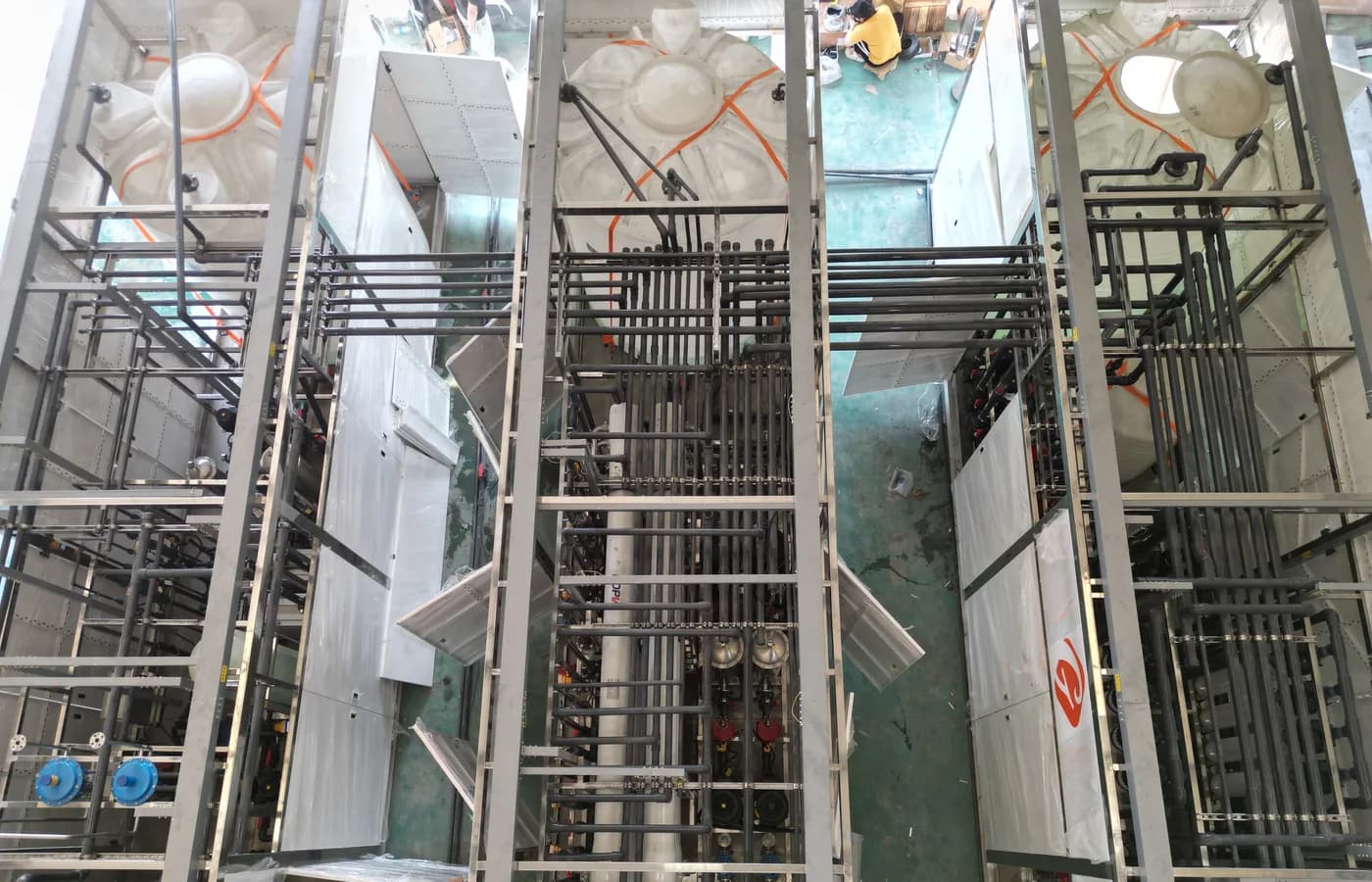
The featured photograph shows industrial piping and equipment under assembly; it does not identify ceramic membranes or demonstrate oily-water treatment results. Keep the article's images and cited manufacturer context separate from claims about a new project. A useful procurement decision connects feed behaviour with demonstrated separation, repeatable cleaning and a manageable concentrate. That evidence supports comparing ceramic filtration with other routes while avoiding invented rejection rates, customer outcomes or universal claims of fouling resistance.
Questions buyers commonly ask
Does ceramic filtration remove dissolved salts?+
Do not assume that from a ceramic MF or UF package. Define dissolved-species treatment separately from particle and emulsion separation.
Is membrane material the only compatibility concern?+
No. Review seals, housings, pumps, piping and instruments under the actual operating and cleaning conditions.
Why test at increasing concentration?+
Accumulating retained material can change hydraulics, fouling and filtrate production. Initial fresh-feed performance does not establish the complete duty.
Does filtration eliminate the oil waste?+
No. Define where retained oil and solids, concentrate and cleaning wastes will be handled.
Turn the guide into a project brief.
Final process selection and performance commitments should follow the complete feed-water analysis, application requirements, site utilities and approved technical agreement.