A coalescing oil-water separator can be considered for a suitable free-oil wastewater stream, but the equipment name does not establish suitability for every oily effluent. Procurement should begin with the oil state, water chemistry, solids and hydraulic profile. Representative testing and a clear separation boundary are more useful than an unsupported universal outlet concentration.
Define the oil-removal objective and downstream use
Identify where the wastewater originates and what the separator must protect. Free-oil recovery ahead of another treatment step is different from final discharge or membrane-feed preparation. State the downstream requirement and the measurement used to assess it. A separator may perform a useful pretreatment duty while leaving dissolved or emulsified contaminants that still require attention. Make the outlet boundary visible on the process diagram before comparing equipment offers.
Specify the oil or hydrocarbon analysis relevant to the actual stream, including sample handling and laboratory instructions. Different analytical descriptions do not necessarily measure the same material. Ask the laboratory and process owner to agree the acceptance basis, then give that basis to bidders. Do not convert a visual absence of floating oil into evidence that all measured oil-related constituents meet the final process requirement. Appearance, laboratory result and downstream suitability answer different questions.
Distinguish free oil from stable emulsions
Record the oils, detergents, cleaning agents and other chemicals entering the collection system. Coalescence depends on droplets combining into a separable phase; stable emulsions can frustrate that mechanism. Alfa Laval's oily-water technology discussion identifies limitations of static coalescing approaches where emulsified feeds vary. That is a reason to test the real water, not a basis for claiming that every emulsion requires the same alternative treatment or chemical programme.
Take samples during relevant production and cleaning activities, not just when a distinct oil layer is easy to see. Preserve information about temperature, mixing and time since collection because sample handling can alter the apparent separation behaviour. Ask bidders how they will distinguish free, dispersed and more stable oil forms for the proposed study. Where uncertainty remains, agree a trial programme with a documented feed range before releasing a full-scale equipment order.
Send the feed-water analysis, target quality, required capacity and operating profile. We will help structure the next engineering questions.
Send your project inputsReview collection and pumping before sizing the separator
Draw the route from the source to the separator inlet, including sumps, transfer pumps, valves, screens and recycle returns. Mechanical handling can change the droplet population, while intermittent sump discharge can create a hydraulic surge. Ask the process engineer and separator supplier to review the inlet arrangement together. It may be more useful to improve collection and transfer than to enlarge a separation chamber while leaving an unsuitable inlet condition unchanged.
Define normal flow, peak transfer flow and the duration of each event. Include washdown and any batch discharge connected to the same collection point. Specify whether equalization is available and which streams must be diverted during an upset. The quoted separator capacity should refer to a defined feed condition and hydraulic case. A daily average volume cannot establish how the equipment behaves when a short pump cycle delivers a much higher instantaneous inlet flow.
Use representative separation trials to set expectations
Ask for trials that reflect the actual oil, water, temperature and solids envelope. Record sample identity, handling, trial method, inlet and outlet analyses and observed residual phases. A simple settling observation can be an initial screening tool, but it does not automatically reproduce a continuously operated coalescing pack. Require the supplier to explain how the test supports the proposed equipment selection and what uncertainty remains when moving from the trial to the installation.
Agree how difficult feed cases will be treated in the proposal. If a stable emulsion needs chemical conditioning or another separation mechanism, identify that as an additional process step with its own evidence and residuals. Do not silently include it in a passive separator performance description. Compare trial results on the same analytical basis, and resist transferring a result from a clean test mixture to a factory effluent containing a different detergent or changing oil composition.
Specify solids management and accessible internals
Characterize suspended solids, settled material and any tendency for the feed to deposit sticky residues. Solids can accumulate in collection spaces or affect coalescing surfaces. Ask the bidder to identify screening, settling space, sludge withdrawal and cleaning needs for the actual stream. These tasks need physical access and an operating owner. A compact separation pack is of limited value if routine removal or cleaning requires unplanned dismantling of permanent pipework.
Request the materials and geometry of serviceable internals, the removal method and any restrictions on cleaning chemicals or mechanical cleaning. Show lifting and maintenance space on the general arrangement. Ask how the operator will recognize accumulated oil, excessive solids or changed hydraulic conditions without opening an operating vessel unnecessarily. Include spare internals or service parts where justified by availability and duty, and distinguish their expected maintenance function from an unsupported fixed replacement interval.
Close recovered-oil, sludge and off-specification routes
Document how separated oil is collected, stored and transferred. Identify the destination and any conditions imposed by the receiving party. Recovered material may contain water or other contaminants and should not be described as a saleable product without evidence. Similarly, sludge and cleaning water require defined handling. The separator quotation should state its outlet interfaces and the equipment needed to move each residual rather than ending at a collection nozzle with no site plan.
Provide an approved route for water that does not meet the intended downstream condition. The response could be holding, retreatment or transfer to another treatment system depending on the factory design. Avoid returning every upset automatically to the same separator inlet, because repeated circulation may not resolve the underlying limitation. Review the combined water and contaminant balance and ensure that routine cleaning and upset handling do not create an uncontrolled load elsewhere in the plant.
Agree monitoring and acceptance under stated feed conditions
Write an acceptance protocol that records inlet conditions as well as outlet analysis. Include flow, temperature, relevant chemical use and the operating state of collection and transfer equipment. Define sample points that represent the feed and treated stream, with appropriate laboratory handling for oil-containing samples. If an online monitor is included, confirm what it measures and how it will be compared with the agreed laboratory method rather than assuming that two differently defined readings are interchangeable.
Test alarms, level functions and diversion arrangements using approved procedures. Demonstrate that operators can remove oil and solids and restore the unit after maintenance. Factory water tests can demonstrate mechanical and control functions, while process acceptance may require actual site effluent. State those boundaries in the handover record. A useful acceptance decision combines analytical results, the feed envelope and evidence that the residual-handling arrangement works during the intended production schedule.
Prepare an evidence-based oil-separator enquiry
Send Baihuipu the source-stream list, oil and detergent information, representative analyses, flow events, temperature range and downstream treatment requirement. Include collection drawings, pumping details, footprint and residual destinations. Request a suitability review before asking for a guaranteed outlet value. Where testing is proposed, agree the samples, analytical methods, deliverables and decision criteria so the study can resolve a purchasing question rather than produce an isolated demonstration.
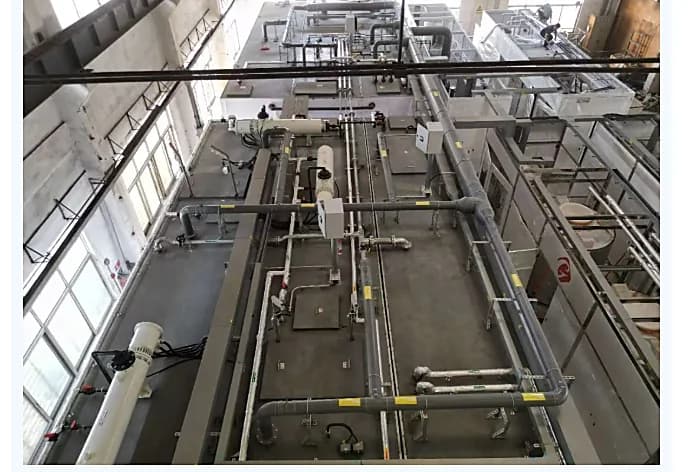
The featured photograph shows industrial wastewater equipment and does not identify a dedicated coalescer model or prove oil-removal performance. The linked flotation and equalization articles support comparison with adjacent process options. For a coalescing package, focus the enquiry on feed suitability, inlet handling, accessible internals and accountable residuals. That scope helps distinguish a useful free-oil pretreatment barrier from a broader treatment obligation that the selected mechanism has not been shown to meet.
Questions buyers commonly ask
Can a coalescing separator remove all emulsified oil?+
Do not assume it can. Stable emulsions and changing detergents require representative suitability testing and may need a different or additional treatment mechanism.
Is daily wastewater volume enough to size the separator?+
No. Provide instantaneous flow cases, surge durations, oil state, temperature and solids. The collection and pumping arrangement also affects the feed presented to the unit.
Does clear separator effluent prove compliance with an oil limit?+
No. Use the agreed analytical method and representative samples. Visual clarity does not establish the concentration of every dissolved or dispersed oil-related constituent.
What should be included beyond the separation vessel?+
Define inlet handling, solids withdrawal, recovered-oil storage and transfer, monitoring, cleaning access, off-specification routing and the site acceptance programme.
Turn the guide into a project brief.
Final process selection and performance commitments should follow the complete feed-water analysis, application requirements, site utilities and approved technical agreement.