MVR evaporation can be part of an industrial wastewater recovery route, but collected condensate still needs a defined quality and reuse boundary. A low-conductivity reading alone does not establish suitability for the intended process. Specify how condensate is separated, sampled, assessed, polished where necessary and released under representative feed and operating conditions.
Define the condensate product and its intended destination
Start with the actual reuse point: cooling makeup, equipment washing, another treatment stage or a production process. Each destination can impose different constraints on organics, dissolved substances, temperature and operating continuity. Ask the receiving process owner to approve a written quality and quantity requirement. Avoid treating an undefined recovered-water label as a specification. Identify whether the evaporator supplier is responsible at the condensate outlet or at a later point after polishing and storage.
Veolia describes mechanical vapor recompression within its industrial evaporation offerings and places evaporation within wider recovery and residuals-management routes. That establishes the technology context, not a universal condensate quality. For procurement, show the condensate tank, transfer pumps, sample points, treatment stages and final handover point on the same diagram. Assign responsibility for quality changes across those interfaces so that the buyer can compare complete recovery proposals on a consistent product boundary.
Characterize feed constituents that affect condensate assessment
Collect analyses and process information for each wastewater source proposed for the evaporator. Include dissolved salts, suspended material, organic constituents, cleaning chemicals and relevant volatile substances rather than relying only on a total dissolved-solids value. Ask the analytical laboratory which additional measurements are appropriate for the source chemistry and reuse destination. If the feed composition is not yet established, identify the missing evidence before asking a supplier to guarantee a final recovered-water quality.
Describe changes caused by production campaigns, cleaning batches, upstream treatment and recycled streams. Record the blend and operating period associated with trial samples. Some contaminants can transfer with vapor, while droplets carried from the boiling liquid can introduce nonvolatile material into the condensate path. Treat these as different mechanisms requiring investigation. A single successful sample under a favourable blend should not be presented as evidence covering every planned source or an untested future production campaign.
Send the feed-water analysis, target quality, required capacity and operating profile. We will help structure the next engineering questions.
Send your project inputsSeparate entrainment control from dissolved-contaminant removal
Ask the evaporator supplier to describe vapor-liquid separation, droplet removal and the operating conditions that affect carryover. Review foaming, liquid level, feed surges and separation-device maintenance as part of the package narrative. Where a demister or similar component is used, request its inspection access and approved maintenance method. These details help define the separation boundary, but their presence should not be converted into an unsupported promise that all contaminants remain outside the condensate.
Investigate volatile transfer separately from mechanical entrainment. Better droplet removal cannot by itself establish removal of every compound that can enter the vapor phase. Ask for relevant feed chemistry, trial results and an explanation of the expected transfer mechanism. Where chemical addition is proposed to influence operation, review its effect on condensate, concentrate and downstream reuse together. A treatment choice that stabilizes evaporation still needs to be assessed against the final water requirement and residual-handling plan.
Build a representative sampling and trial programme
Agree trial objectives before collecting water. The study should identify feed identity, operating conditions, condensate collection method and the analyses needed to make a reuse decision. Record the treatment configuration and any chemical addition. Ask whether the trial reproduces relevant concentration and operating behaviour, and list limitations where it does not. Laboratory or pilot evidence should explain which design assumption it supports rather than being treated as a miniature version of every full-scale operating case.
Provide sampling locations that distinguish raw condensate, polished water and the receiving tank. Use suitable containers, preservation and holding times specified by the laboratory, especially where volatile or low-level constituents are relevant. Record temperature and timing to avoid comparing samples taken during different plant states without recognizing the difference. Include startup and upset recovery in the sampling plan where these states affect collection, and define whether that water is held separately from accepted production.
Choose polishing from measured residual quality
Review analytical results against the receiving process requirement and identify the specific remaining gap. Potential polishing routes have different functions, and a generic filter cannot be assumed to solve every organic or dissolved-contaminant problem. Ask for a technology assessment or representative trial that addresses the identified constituent. Compare the proposed stage with the condensate temperature, chemistry, variability and available utilities, and obtain written equipment suitability where the feed differs from a conventional water source.
If membranes, adsorption, biological treatment or another polishing route is proposed, define the associated pretreatment, residuals and maintenance obligations. Request evidence for the proposed duty without assuming that a familiar technology name establishes removal. Distinguish treatment of a particular measured constituent from a broad claim of reusable or pure water. The contract should link the polishing scope to the actual quality boundary and identify who is responsible when the incoming condensate exceeds the agreed operating envelope.
Design collection, diversion and product release together
Provide a collection strategy that prevents uncertain water from automatically entering accepted product storage. Decide which measurements support immediate operating decisions and which laboratory results govern batch or periodic release. Conductivity can help indicate ionic carryover, while other constituents may require different evidence. Define invalid-signal and pending-result states explicitly. An analyzer reading should support only the quality conclusion that the measurement and sampling arrangement can reasonably establish.
Show diversion capacity, transfer routes and the operating response when product water cannot be released. Returning every rejected batch to the evaporator feed may increase the burden without resolving the contaminant pathway, so review the combined balance. Coordinate tank levels and downstream demand with evaporator operating constraints. The site needs an approved response to a full product tank or unavailable polishing stage, and that response should be tested rather than left to improvised valve operation during commissioning.
Specify acceptance under documented operating conditions
Define separate acceptance items for condensate production, quality at the stated boundary, polishing operation and control response. Record the feed blend, evaporation conditions, product flows and sampling sequence during the test. Specify the laboratory, reporting limits and handling of results near the requirement. Where a supplier offers a performance commitment, require its conditions and exclusions to be explicit and consistent with the factory's planned feed envelope and reuse schedule.
Challenge startup routing, invalid instrumentation, rejected quality and loss of a downstream utility using approved procedures. Keep factory functional tests distinct from site process acceptance when representative wastewater is unavailable at the workshop. The completed handover should include analytical results, operating records, alarm and diversion evidence and outstanding limitations. This provides a traceable baseline for later changes in condensate quality without inventing an energy saving, recovery percentage or customer performance result that has not been demonstrated.
Prepare the condensate-interface enquiry
Send Baihuipu the wastewater source list, representative analyses, intended reuse destination, quality limits, operating schedule and existing evaporation information. Include sampling access, available footprint, utilities, product storage and residual destinations. Ask the engineering team to review the condensate path and any proposed polishing before a final supply boundary is priced. Where evidence is incomplete, request a study with defined samples and deliverables that can resolve the remaining procurement decision.
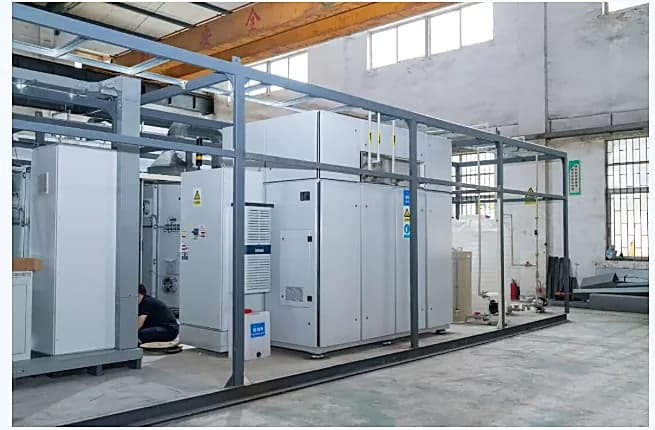
The featured photograph shows an MVR wastewater evaporator during factory assembly and does not establish condensate quality or a particular project's performance. The related reuse and TOC resources provide wider planning and analytical context. Keep the purchasing decision focused on measured contaminants, representative operating states and the final release point. A complete proposal should connect separation, sampling, polishing, collection and control so recovered water is accepted on evidence rather than inferred from the evaporation process name.
Questions buyers commonly ask
Is MVR condensate automatically suitable for direct industrial reuse?+
No. Compare representative condensate analyses with the actual receiving process requirement, including relevant organics, dissolved constituents, temperature and operating variability.
Can conductivity alone prove condensate quality?+
No. Conductivity supports assessment of ionic content but does not establish all organic or volatile-contaminant requirements. Select analyses from feed chemistry and the reuse objective.
Does a demister eliminate the need for polishing?+
Not necessarily. Droplet removal addresses entrainment; it does not prove that every relevant constituent is absent. Determine polishing needs from representative evidence.
What should a condensate acceptance test record?+
Record feed identity, operating state, collection and polishing configuration, flow, sampling locations, analytical methods, laboratory results and the response to water that cannot be released.
Turn the guide into a project brief.
Final process selection and performance commitments should follow the complete feed-water analysis, application requirements, site utilities and approved technical agreement.