A temporary treatment package can support an outage only when the site interfaces and water-release sequence are ready. Procurement should define usable supply, waste routing, temporary connections and the transition back to permanent equipment alongside the rental equipment itself.
Define temporary supply as a service duty
State why temporary treatment is needed, which users it must supply and the dates when those users require released water. Include normal, minimum and peak demand, quality requirements and available storage. Distinguish equipment arrival from usable-water availability. A delivered container still needs unloading, connections, checks and process stabilization. Build the enquiry around the time at which compliant supply must be available rather than the time a vehicle reaches the gate.
Veolia describes temporary mobile services covering several treatment technologies and packaged arrangements. This establishes that the temporary-service boundary can be broader than a single RO unit. It does not prove availability, capacity or compatibility for another supplier. Ask Baihuipu to confirm the actual proposed service and equipment scope against the site's duty. Keep any rental, staffing or rapid-delivery commitment dependent on an explicit offer rather than implying that every equipment manufacturer maintains an available fleet.
Gather feed and utility data early
Provide a representative feed analysis and its expected variation during the outage. The temporary connection may use a different source from the permanent plant, so confirm the actual location and supply history. Include pressure, temperature, flow availability and any disinfectants or suspended solids. Request the offered treatment train's feed envelope and pretreatment assumptions. Temporary operation does not make membrane or resin compatibility requirements less relevant.
List power, grounding, instrument air, dilution water and communications available at the intended installation point. Identify utility connections that themselves depend on the equipment being shut down. A temporary plant relying on a pump or power panel inside the outage boundary can create a circular dependency. Resolve those interfaces before mobilization. Ask the supplier to identify all required auxiliaries, including pumps and storage, so the site's readiness checklist covers a functioning system rather than the principal treatment skid alone.
Send the feed-water analysis, target quality, required capacity and operating profile. We will help structure the next engineering questions.
Send your project inputsEngineer temporary feed and product connections
Show connection types, ratings, hose or pipe materials, elevations, lengths and physical protection. Review mechanical support and the consequences of vehicle movement or other site activity near temporary lines. Confirm pressure loss at the required flow and the allowable inlet conditions of the temporary package. A hose that reaches the connection is not necessarily an adequate hydraulic or mechanical interface for continuous industrial supply.
Separate product-water paths from untreated or incompatible systems using an approved connection and isolation arrangement. Define which valves establish supply and how their positions are verified. For high-purity duty, review the temporary materials, cleaning and flushing requirements against the receiving process. Include sampling points on the final installed route. A package outlet sample cannot establish that water remains suitable after passing through unreviewed hoses, storage or site connections.
Provide a real waste and reject destination
List RO concentrate, filter backwash, resin regeneration, cleaning wastes and startup flushes relevant to the offered process. State peak flows and chemistry at each site connection. Confirm the receiving system's capacity and the responsible site's acceptance before operation. A temporary drain routed to a convenient floor opening can become the limiting interface even when product water meets its requirement.
Include storage and controlled transfer if the normal waste system is unavailable during the outage. Record ownership of consumables and waste handling in the service agreement. Distinguish routine waste from occasional cleaning or regeneration events, which can have different timing and characteristics. Keep concentrate management separate from product-water release so a successful quality sample does not obscure an unresolved reject route. The temporary service needs both sides of the water balance to remain operable.
Plan changeover around water release
Write the sequence from installation checks through flushing, stabilization, sampling and authorization to supply users. Identify who reviews results and which analytical methods are required. Allow for laboratory turnaround and any failed sample response in the schedule. If the temporary supply needs a buffer tank, confirm usable inventory and how its quality is maintained. The permanent plant should not be removed from service merely because the temporary unit can start its pump.
Where a parallel proving period is possible, define the test boundary and how temporary water is kept from critical users until released. Specify isolation, pressure matching and the physical transition to the temporary header. Include the effect of changeover on user pressure and quality. Use an approved step-by-step plan with named operational responsibilities so the site is not forced to improvise a valve sequence while production is waiting for water.
Make staffing, consumables and downtime explicit
State whether the supplier provides equipment only, startup attendance or ongoing operation. Define who monitors quality, replenishes chemicals, changes filters and responds outside normal hours. Include consumable stock and replenishment lead time for the expected service duration. A rental rate without those responsibilities can conceal a large difference between offers. Request a clear response arrangement for equipment faults rather than assuming that a temporary package arrives with continuous technical support.
Review how the plant maintains supply during servicing or an unexpected stop. Available storage can provide time, but its duration depends on actual demand and usable volume. Establish alarm ownership and communications before operation begins. Define the process for extending the service if permanent equipment returns late. Include any limitations on feed, weather or utilities in that discussion so the temporary period is managed against a known operating envelope rather than an open-ended continuity promise.
Include return to permanent supply in the contract
Plan the permanent plant's restart, sampling and release before scheduling removal of temporary equipment. Identify whether the temporary system remains available during proving and how the supply transition is authorized. Check retained water, cleanliness and pressure conditions in the permanent header after the outage. Restoration should be treated as a separate controlled event, not simply the reverse of connecting a hose.
Define demobilization steps, drainage, preservation, site cleanup and removal of temporary electrical and piping connections. Record which temporary modifications must be restored and how completion is verified. Include handling of remaining chemicals and wastes. If the rented equipment returns with a particular drained or preserved condition, obtain the supplier's procedure. These closeout requirements avoid leaving a temporary bypass or unused connection in a state that later creates an unexplained operating route.
Send an outage-ready temporary-treatment enquiry
Send Baihuipu the outage boundary, water demand, feed analysis, quality-release requirements, site connection drawings and utility availability. Request a mobilization and commissioning plan with explicit service scope, waste routing, staffing and return-to-permanent sequence. Agree evidence of usable supply before the outage's critical transition. Ask for confirmation of actual equipment availability and delivery commitments in the offer; do not infer them from the existence of a packaged or containerized product.
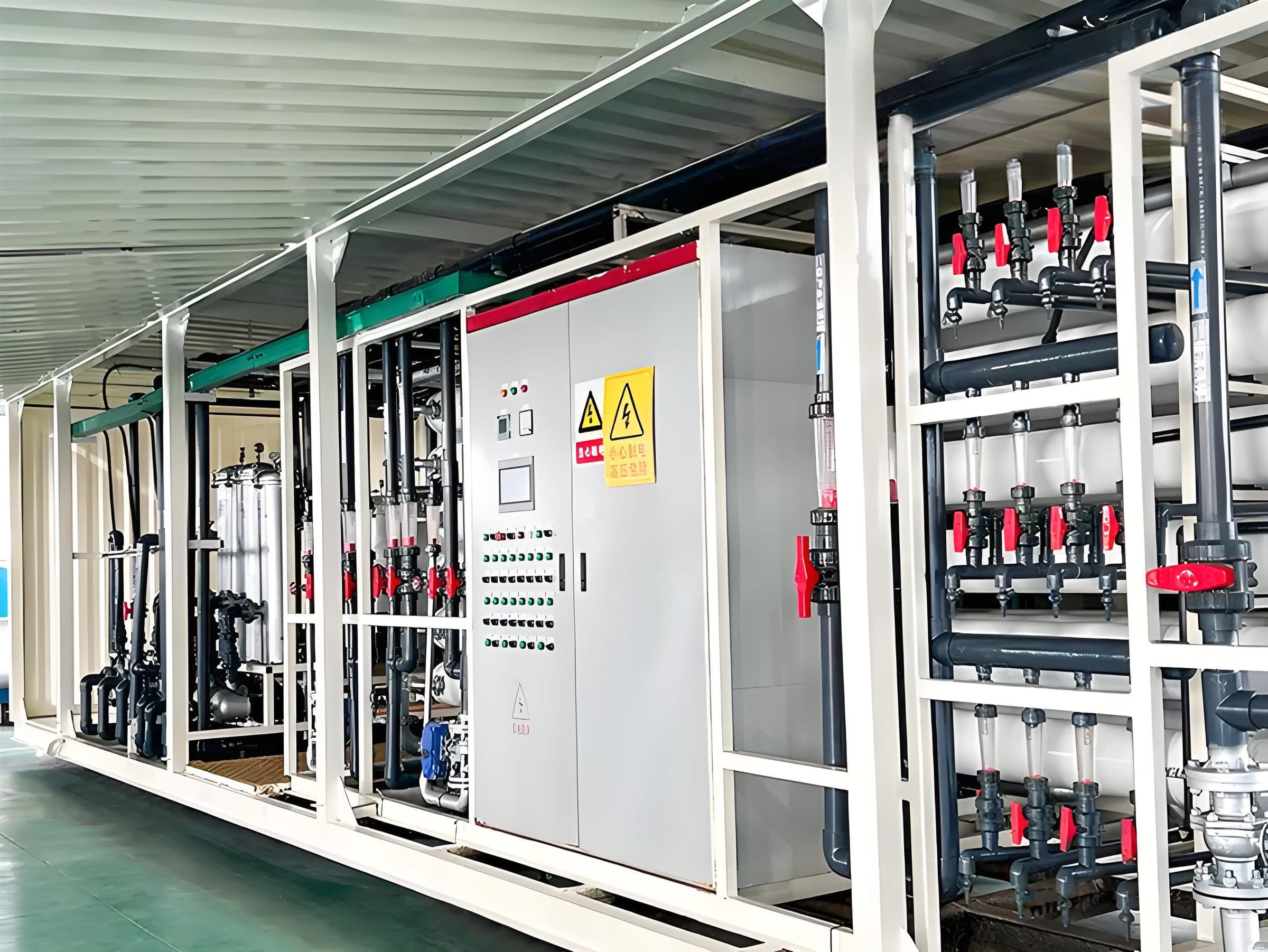
The photograph shows containerized equipment prepared for a remote project as context. It does not document rental availability or a guaranteed deployment time. Use the actual offer, readiness inspection and released-water evidence for those decisions. The linked factory-acceptance and distribution guides cover useful component checks, while this enquiry connects them into a temporary supply service with a defined start, operating boundary and controlled end.
Questions buyers commonly ask
Is equipment arrival the same as available water supply?+
No. Include unloading, utilities, connection checks, flushing, stabilization, sampling and release before critical users depend on it.
Can a temporary RO use any available feed connection?+
Confirm the actual feed analysis and hydraulics against the offered equipment envelope. Temporary service does not remove those process limits.
Who should own daily operation?+
Specify staffing, monitoring, consumables and fault response explicitly. Equipment-only rental and operated service have different responsibilities.
When should the temporary plant be removed?+
After permanent supply has completed its approved restart and release sequence, with a controlled changeover and documented demobilization plan.
Turn the guide into a project brief.
Final process selection and performance commitments should follow the complete feed-water analysis, application requirements, site utilities and approved technical agreement.