Winterization of an outdoor treatment skid must cover small water-filled components and interrupted utilities as well as the main process pipes. The enquiry should distinguish operating heat-loss protection from an achievable shutdown and drain strategy when power is unavailable.
Define the actual cold-weather design conditions
Provide the site's outdoor minimum design temperature, wind exposure and expected duration of cold conditions using the project's approved basis. Identify whether equipment is indoors, under a canopy, inside an unheated container or fully exposed. Include conditions during transport and storage when equipment may retain test water. A general statement that a skid is suitable for winter does not establish the boundary against which its thermal and mechanical arrangements were designed.
List normal operating temperatures, minimum flows and the longest expected idle period. Identify components that remain filled even after the main process stops. Small instrument lines, valve cavities, sample panels and pump casings can have different freezing behaviour from large headers. Record which fluids require protection and which may have an approved alternative handling method. Do not assume that a chemical line is protected simply because its contents are not pure water; obtain the relevant product information.
Separate insulation from heat input
Insulation reduces heat transfer but does not create heat. nVent describes electric heat tracing as replacing heat lost through insulation on pipes and associated equipment. This limited principle supports a practical design question: what maintains the required condition when water is not flowing? Request a heat-loss calculation and the selected thermal arrangement for the actual geometry, insulation, ambient exposure and minimum maintained temperature rather than a catalogue heater size without its assumptions.
Review insulation thickness, weather protection, terminations and removable sections for maintenance. Include valves, supports and other heat-loss locations identified by the designer. Wet or damaged insulation can change the installed thermal behaviour. Ask how personnel inspect heat tracing without destroying the weather barrier. If an enclosure provides the primary protection, define its heating, ventilation and cold-air leakage assumptions. A container wall alone does not establish a controlled internal temperature after utilities fail.
Send the feed-water analysis, target quality, required capacity and operating profile. We will help structure the next engineering questions.
Send your project inputsSpecify heat tracing as a complete electrical system
Ask for circuit schedules, cable type, output basis, controls and installation instructions for the offered components. Check pipe and component temperature limits as well as the fluid's freeze-protection need. Include electrical protection, connection boxes and suitable environmental ratings under the responsible electrical design. The process vendor and electrical contractor should agree the boundary so a cable supplied on a skid is not mistaken for a complete energized and monitored protection system.
Identify sensing locations and explain how they represent the protected components. A warm point near a heater may not describe an exposed sample line at the opposite end of the skid. Specify how a failed circuit or sensor becomes visible to operators. Where continuity matters, consider the available response time and the site's utility philosophy. Do not claim continued protection through a power outage unless the proposed backup or shutdown arrangement has a defined and demonstrated basis.
Audit every retained-water location
Trace the approved drain sequence through pumps, housings, instruments, low points and branches. Compare drawings with the actual assembled skid because a nominally sloped pipe may still contain a pocket at a valve or flexible connection. Identify components that require manual action and provide access to them. A single drain valve on the main header does not demonstrate that all freeze-sensitive cavities become empty.
If compressed air or another purge is proposed, obtain component-approved limits and a controlled procedure. Avoid using an unspecified utility pressure to clear equipment that was not designed for it. Document where expelled liquid and gas go and how completion is confirmed. Coordinate draining with membrane preservation and any high-purity cleanliness requirements. Freeze protection should not introduce an incompatible chemical or leave a sensitive component in a prohibited dry condition without the relevant supplier's review.
Engineer the loss-of-utility state
Walk through power loss, enclosure-heater failure, stopped circulation and unavailable instrument air. Determine which valves move, which remain in place and whether automatic draining is actually possible. Include the time and access needed for a manual response during the site's credible operating conditions. A procedure that requires staff to reach inaccessible outdoor drains after the equipment is already cold may not provide the intended protection.
Define alarms and escalation against the protection strategy rather than an arbitrary temperature display. Where the plant chooses controlled draining, specify the permissives, destinations and confirmation of completion. Where it relies on backup power, identify supported circuits and the consequence of backup failure. Keep any residual vulnerability explicit. The purchaser needs an achievable operating state during an outage, not merely a drawing of heaters that work only while normal utilities remain available.
Coordinate process compatibility and maintenance
Check limits for membranes, resins, seals, analyzers and stored chemicals during low-temperature exposure and reheating. A process component may require a different preservation method from the adjacent pipe. Assign responsibility for confirming those instructions. If antifreeze or another preservation liquid is considered, require explicit compatibility and release procedures for the actual equipment and water use. Do not introduce a convenient fluid into a high-purity train without a documented treatment and flushing plan.
Plan access to valves, lifting points, instruments and labels after insulation is fitted. Include replacement weatherproofing and electrical reconnection in maintenance instructions. Changes to pipework or instruments should trigger review of thermal coverage. Record the installed heat-trace circuits and protected components so later modifications do not leave an unrecognized cold spot. A maintained register can be more useful than a general winterization label that remains on the skid after its configuration has changed.
Verify installation and restart readiness
Before shipment, inspect insulation coverage, drain locations, sensor placement and electrical records against approved drawings. At site, confirm utility connections and test protection circuits with the responsible electrical personnel. Demonstrate alarms and utility-loss states through approved simulations. A warm-weather electrical test does not alone prove the full thermal design, so retain the calculation and installation evidence that support conditions not reproducible during commissioning.
Define inspection and release after suspected freezing or an extended cold shutdown. Check relevant components and restore approved operating conditions before pressurizing or supplying a critical user. Include preservation removal and water-quality checks where applicable. Record any damage or uncertainty rather than assuming that an unfrozen main pipe means every instrument and housing is intact. The restart procedure should connect mechanical condition, thermal protection and process quality in a sequence operators can follow.
Prepare a winterization RFQ
Send Baihuipu the approved ambient basis, operating states, equipment layout, utility reliability and shutdown access constraints. Request a coordinated proposal for insulation, heat tracing, enclosure conditions, drainage and monitoring. Include the component suppliers' restrictions and a clear division of process, electrical and site responsibilities. Agree acceptance evidence for calculations, installation, alarms and achievable outage response rather than a broad promise that equipment is winter-ready under unspecified conditions.
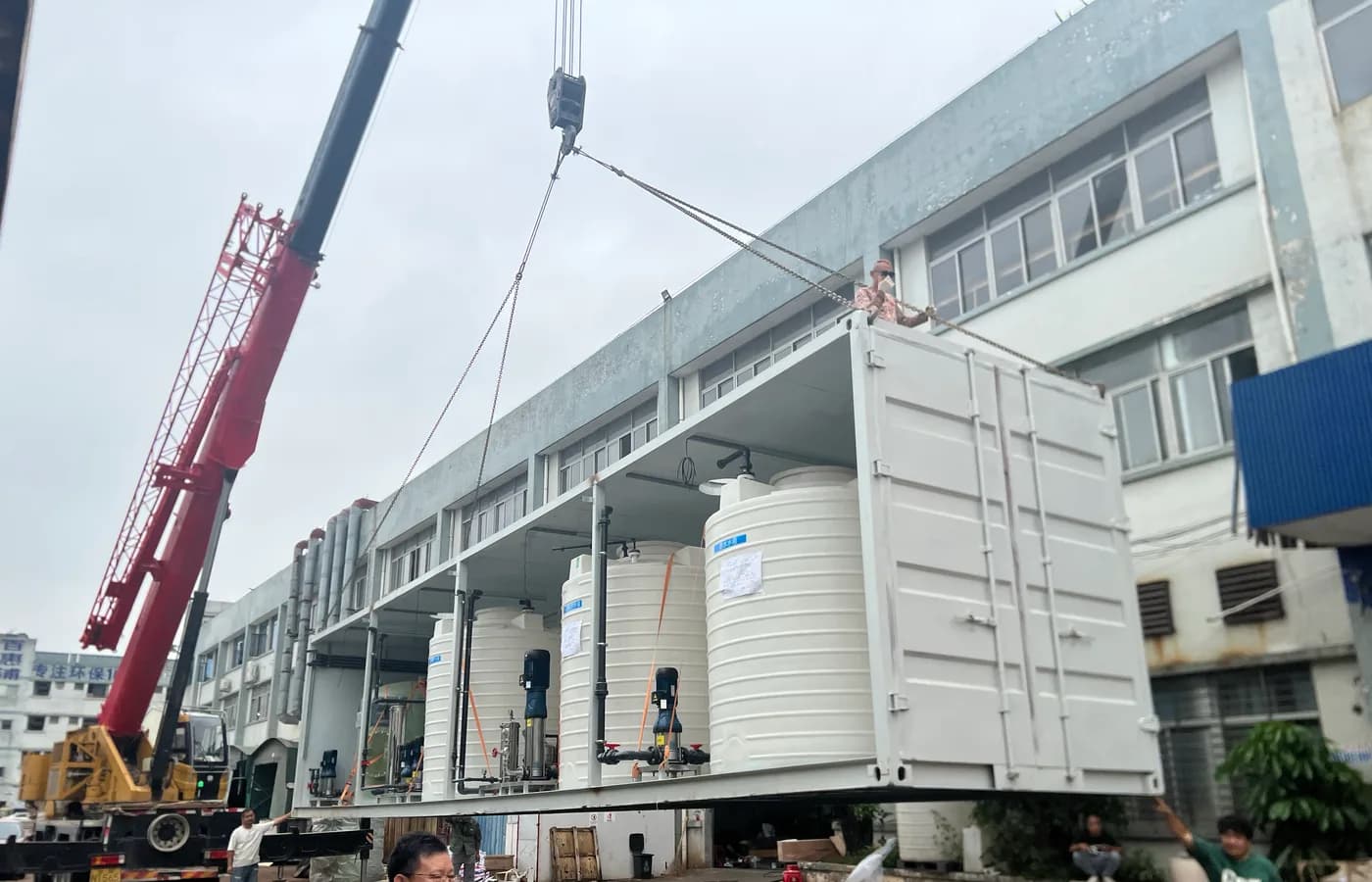
The photograph shows containerized treatment equipment prepared for delivery as context; it does not demonstrate installed heating or cold-weather qualification. Confirm the actual thermal package through drawings, component records and tests. The related membrane-preservation and storage guides address separate requirements that need coordination. A complete cold-weather purchase makes those interfaces explicit and gives the site a practical protection and restart plan when normal flow or electrical supply is interrupted.
Questions buyers commonly ask
Does insulation prevent freezing indefinitely?+
No. It slows heat loss. Define heat input or an approved drain and preservation strategy for the actual ambient and outage conditions.
Is one drain valve sufficient for a skid?+
Verify all water-retaining locations. Pumps, instrument lines, housings and valve cavities may require separate provisions.
Can any antifreeze be used in a water-treatment train?+
No. Obtain explicit component compatibility and an approved removal and release procedure for the intended water use.
What should acceptance cover in warm weather?+
Retain thermal calculations and installation evidence, then test electrical protection, monitoring and utility-loss states using approved methods.
Turn the guide into a project brief.
Final process selection and performance commitments should follow the complete feed-water analysis, application requirements, site utilities and approved technical agreement.