Industrial sludge decanter selection requires a common trial basis for cake, liquid clarity and loading. Bowl speed, scroll differential speed and torque interact with feed variation, so the enquiry should cover operating control and the returned centrate as carefully as the discharged cake.
Specify dry material as well as liquid flow
Characterize the sludge sources and the way they are blended before dewatering. Include biological solids, chemical precipitates, abrasive grit and intermittent cleaning returns where present. Measure dry-solids concentration alongside flow so the proposed machine can be assessed against mass loading. A volume-flow figure alone can conceal a major change in the material the scroll must transport. Provide representative variation rather than selecting a single sample from an unusually stable production period.
Identify upstream storage, mixing and feed-pump arrangements. Settling in a holding tank can change the composition delivered during the same shift, even when the average tank sample looks consistent. Record temperature and unusual feed chemistry that may affect conditioning or materials. Ask the supplier which properties remain uncertain and whether a pilot trial is needed. Machine selection should follow the actual industrial suspension, not an assumed equivalence to a municipal sludge with a similar solids percentage.
Understand the bowl and scroll separately
A solid-bowl decanter separates material through centrifugal settling and uses a scroll to transport accumulated solids. Flottweg explains that differential speed affects solids residence and transport within the bowl. This is a useful mechanism description, not a guaranteed cake result for another sludge. Ask bidders to identify the offered bowl, scroll, drive and adjustment ranges, and explain which variables can be changed during operation under the approved machine limits.
Treat bowl speed, feed flow, pond depth and differential speed as interacting decisions. A setting that improves one observed output may worsen another or increase transport resistance. Request an operating envelope supported by trials and the actual offered design. Avoid specifying one universal speed or treating the largest available centrifugal force as automatically optimal. The buyer needs a controllable separation process whose acceptable operating region remains clear when sludge composition changes.
Send the feed-water analysis, target quality, required capacity and operating profile. We will help structure the next engineering questions.
Send your project inputsDesign a balanced demonstration trial
Agree the sample source, conditioning method, test duration and measurements before comparing machines. Record feed solids, cake solids, centrate suspended solids, flow and chemical consumption on a common basis. Include the achieved operating settings. Calculate solids capture from a consistent mass balance where the measurements support it, and identify uncertainty. Comparing only the driest cake can reward an operating point that sends an unacceptable amount of material back to the water-treatment plant.
Test meaningful feed variations and allow the machine to reach a documented stable condition before recording comparative data. Preserve the original results, including less favourable operating points. If trial equipment differs from the proposed machine, ask how the supplier translates the evidence and what limitations remain. A laboratory spin test may help characterize the suspension, but it does not reproduce every aspect of continuous scroll transport, feed acceleration, polymer distribution or installed liquid discharge.
Coordinate polymer preparation and injection
Select conditioning through representative trials rather than copying a chemical dose from another installation. State whether consumption is reported as active polymer or supplied product and relate it to dry-solids feed. Include dilution water, preparation time and storage where relevant. The linked polymer make-down guide addresses preparation equipment; the centrifuge enquiry still needs to define injection location, mixing and the condition of the floc reaching the bowl inlet.
Review how changes in polymer grade or feed consistency affect operating settings. Ask what observations indicate poor conditioning versus excessive machine loading. Include the effect of feed-pump shear and the route through connecting pipework. A successful beaker test can be undermined before material reaches the separator. Define which supplier owns the coordinated conditioning trial and startup adjustments so the centrifuge and chemical package are accepted as a functioning interface rather than unrelated components.
Define torque and overload responses
Obtain the manufacturer's approved torque-related control and protective functions. Explain whether differential speed changes automatically with load and how feed is reduced or stopped when transport becomes unsuitable. Record the response to an interrupted cake discharge or feed slug. The operator should see meaningful machine states rather than a generic fault after the system has already reached a protective trip. Keep adjustment limits and authorization responsibilities clear in the commissioning documentation.
Specify startup, normal stopping and interrupted-power behaviour using the offered equipment instructions. Include flushing or clearing arrangements where required and the utilities they depend on. Review restart after an abnormal stop with the supplier rather than assuming that restoring a run signal is sufficient. Machine protection is part of the purchased process capability. A quotation should explain how the system responds to difficult feed without encouraging operators to override the limits needed to protect rotating equipment.
Account for the centrate and cake routes
Measure centrate volume and composition under the proposed operating cases. Include suspended solids and relevant soluble constituents when assessing its return point. Returned load may arrive during only part of the day, so evaluate the instantaneous effect as well as the daily total. A high cake-solids result does not establish that the rest of the treatment plant can receive the separated liquid without buffering, diversion or additional treatment capacity.
Review cake discharge height, conveyor duty, bridging and the intended container or disposal route. Use actual trial cake to assess handling where feasible. Include wash and flushing streams in the total liquid balance. Ask how a full container or stopped conveyor affects machine operation. Complete dewatering scope connects the separator to achievable liquid and solids destinations; a skid that ends at two open outlets leaves major operating responsibilities unresolved for the purchasing team.
Plan the installed mechanical service boundary
Request foundation loads, vibration requirements, noise information and access for the actual offered machine. Include removal paths and lifting provisions for major rotating components. Review abrasion protection against the identified feed and ask which parts are replaceable. Materials and wear arrangements should be justified for the industrial sludge rather than inferred from the equipment's general wastewater description. Clarify which inspections require specialist service and which can be performed by trained site staff.
Define electrical supply, drives, ventilation and any cooling or lubrication utilities. Review drains and housekeeping around maintenance tasks. Obtain an appropriate spare-parts and service proposal tied to the operating schedule and local support. Avoid comparing bare machine prices while excluding the structural, access and auxiliary work that makes one offer usable. The installed boundary and service consequence of a planned overhaul can materially affect whether the proposed dewatering arrangement fits the factory's operating constraints.
Prepare the decanter RFQ and acceptance plan
Send Baihuipu sludge-source information, concentration histories, trial results, required operating hours and the centrate receiving limit. Add cake handling, space, lifting and utility constraints. Request a coordinated machine, conditioning, controls and service scope. Agree acceptance measurements and the conditions under which they are collected, including the handling of feed excursions. Separate mechanical checks from demonstrated separation so successful rotation is not mistaken for proof of useful sludge-processing performance.
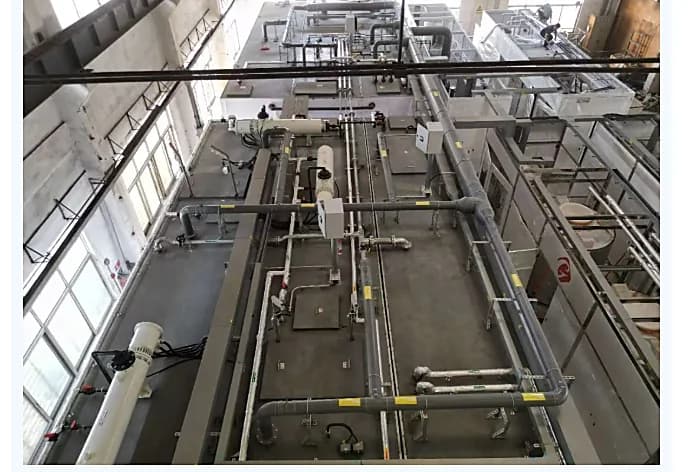
The featured photograph shows industrial wastewater equipment as manufacturing context and does not identify a decanter or prove cake dryness. Use the offered machine documentation and site evidence for acceptance. The related screw-press article provides a different technology boundary for comparison. Evaluate alternatives on the same feed, dry-solids duty and residual-stream basis, with achievable operating settings, rather than importing a published performance percentage from a different sludge or another customer's installation.
Questions buyers commonly ask
Is maximum cake dryness the only selection criterion?+
No. Compare solids capture, centrate load, throughput, conditioning, utilities and handling under the same feed conditions.
What does differential speed describe?+
It is the relative speed between the bowl and scroll. It affects solids transport and residence and must remain within the offered machine envelope.
Can a laboratory spin test replace a continuous trial?+
It can support characterization, but continuous feed, conditioning and scroll transport introduce additional questions that may require pilot or site evidence.
Why assess the centrate return point?+
Its solids and soluble load return to the treatment plant. Evaluate both instantaneous and daily effects, including flushing and wash streams.
Turn the guide into a project brief.
Final process selection and performance commitments should follow the complete feed-water analysis, application requirements, site utilities and approved technical agreement.