A blower package should satisfy the biological oxygen requirement through the actual diffuser and basin system over its operating range. Nominal air capacity is insufficient without a common air reference, pressure envelope, minimum mixing requirement and a workable duty-and-standby control sequence.
Begin with the biological operating cases
Obtain the process designer's oxygen-demand basis across normal production, peak loading, low loading and startup. Distinguish carbonaceous treatment, nitrification and other identified demands instead of inferring air capacity directly from wastewater flow. Include temperature and feed variability used in the biological assessment. Where industrial inhibition or uncertain biodegradability remains unresolved, identify that uncertainty before asking a blower supplier to guarantee treatment outcomes that air delivery alone cannot establish.
Separate oxygen supply from the air needed for mixing or other equipment functions. An industrial basin may still need solids suspension when biological oxygen demand falls. Membrane scour air, where present, can have a different duty and control requirement from process aeration. Identify each user and its approved operating envelope. This prevents a project from assuming that a single minimum blower flow automatically satisfies every biological, mixing and membrane-related requirement in the treatment train.
Translate demand through a defined transfer basis
Ask the aeration designer to explain the relationship between oxygen demand and required delivered air. Record the assumptions for the actual wastewater, liquid temperature, basin conditions and diffuser arrangement. Xylem's aeration guidance identifies the difference between clean-water transfer and wastewater operation. Use appropriate project-specific correction evidence rather than adopting a clean-water efficiency figure as a direct promise of transfer in a chemically variable industrial stream.
Make the calculation boundary reviewable. Identify which party supplies diffuser transfer data, which party establishes process demand and which party converts that information into the blower duty. Include fouling and ageing assumptions where justified by the proposed operation. Keep measurement uncertainty visible. The purpose is a coordinated design basis, not a chain of optimistic component figures whose conditions differ. Resolve disagreements before purchase rather than leaving them for the commissioning team to discover at full production load.
Send the feed-water analysis, target quality, required capacity and operating profile. We will help structure the next engineering questions.
Send your project inputsPut every airflow on a common reference
Require bidders to state whether flow is actual, standard or normal volume, and define reference temperature, pressure and humidity. Include site altitude and inlet conditions. Two offers with similar displayed volume units may deliver different air mass when their reference conditions differ. Ask for conversion assumptions and an unambiguous duty schedule. Avoid comparing capacity or specific power until both offers have been placed on the same air and measurement basis.
Describe the blower-room environment and the temperature range at the inlet. Include ventilation, inlet filtration and expected dust conditions. Obtain performance across the relevant ambient cases rather than only a convenient catalogue point. Identify restrictions caused by hot inlet air or equipment cooling requirements. A nominal blower rating does not establish that the installed room can support continuous operation through the factory's actual seasonal conditions and simultaneous heat release from other equipment.
Establish the complete pressure envelope
Build the required discharge pressure from liquid submergence, diffuser resistance and distribution losses under defined conditions. Include the operating liquid-level range and the credible dirty-diffuser state. Check losses through inlet filters, silencers, valves and headers within the correct calculation boundary. The blower should be selected against a pressure range, not merely the water depth printed on a basin drawing. Assign responsibility for confirming that range as the detailed design develops.
Review each branch and its control valve or balancing device. A shared header can serve users with different depths or resistance, and the lowest-resistance branch may not represent the governing case. Specify the instruments needed to confirm distribution. Consider how isolating one basin affects the remaining branches and blower operating point. The project needs a coordinated hydraulic and pneumatic system rather than a powerful machine connected to an air network whose balancing method is undefined.
Match turndown to the real load profile
Request approved operating maps for the offered blower technology, including minimum and maximum flow at relevant pressure. Ask the manufacturer to identify unstable or prohibited regions and the protection used to avoid them. Variable speed does not imply unlimited turndown. Include the air requirement during low production and the minimum needs of the connected diffusers. Where excess air would be vented, show that operating state and its effect on total package power.
Compare multiple-machine arrangements using the same load profile and availability requirement. Define duty, assist and standby transitions, including the period while another machine accelerates or stops. Review whether a smaller trim machine or a different arrangement is justified by the actual demand variation. Xylem describes group control as a way to coordinate blower combinations; the buyer still needs the offered sequence and operating maps to demonstrate suitability for this particular industrial air network.
Define useful controls and fault responses
Coordinate dissolved-oxygen feedback with airflow and pressure control at the appropriate levels. Specify how analyzer maintenance, lost signal and a stale reading affect automatic demand. The biological process owner should define permissible fallback states. A failed instrument should not silently continue requesting the last displayed air quantity indefinitely. Record which settings belong to the blower package and which belong to the plant control system, with clear ownership of commissioning adjustments.
Include high temperature, unsuitable pressure, lost cooling and equipment trips in the cause-and-effect review. Ask what the remaining machines and basin valves do after a trip. Demonstrate approved transitions without forcing equipment outside its limits. Record local and remote control permissions and restart requirements. Effective automation gives operators an understandable available-air state and a recovery path, rather than simply adding a remote start contact to machines whose interactions have not been assessed.
Compare installed power and service scope
Define the energy boundary to include the offered drives and auxiliaries at the specified operating cases. Keep any efficiency comparison tied to reference air, pressure, ambient conditions and test method. Avoid transferring a vendor's headline savings claim to an unrelated factory. Obtain electrical input data and the limits of any predicted annual assessment. The appropriate comparison depends on the real operating profile, including low-load periods and the combination of machines actually running.
Review noise, vibration, foundation requirements, ventilation and access for filter and major-component service. Specify lifting routes and replacement clearances before placing the package in a crowded equipment room. Ask which maintenance tasks need specialist attendance and how long an individual unit is unavailable under the supplier's proposed service plan. Compare spare parts and local support with the same availability objective, rather than treating every blower with equal nominal capacity as equally maintainable after installation.
Prepare an auditable blower enquiry
Send Baihuipu the oxygen-demand schedule, diffuser information, air-reference conditions, pressure cases, site environment and connected-user diagram. Add minimum mixing requirements, availability needs and control interfaces. Request coordinated calculations and a common performance-test basis. Separate factory machine evidence from site distribution and biological verification. Mechanical delivery of air can be tested directly; biological outlet results also depend on the feed and reactor conditions stated in the approved process acceptance plan.
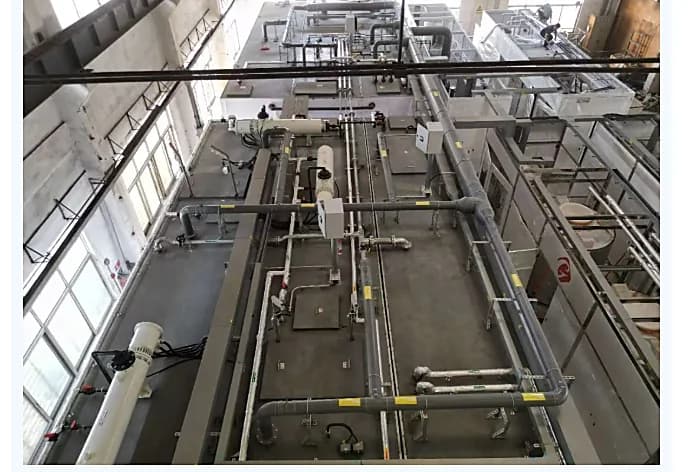
The featured image shows industrial wastewater equipment as manufacturing context, not a specific blower or proof of oxygen-transfer efficiency. Review actual offered equipment documents and installed test records. The linked reactor guides define adjacent process boundaries. Keeping blower delivery, diffuser transfer and biological treatment evidence connected but distinct helps the purchasing team identify missing scope and compare air-supply packages without inventing guaranteed removal performance or a site-wide energy-saving percentage.
Questions buyers commonly ask
Does variable speed provide unlimited blower turndown?+
No. Obtain the approved operating map and minimum flow at the required pressure, including the connected diffuser limits.
Why distinguish air volume reference conditions?+
Air mass depends on temperature, pressure and humidity. Normalize the reference before comparing capacity or specific power between offers.
Can low oxygen demand eliminate mixing air?+
Only if the process design confirms adequate suspension by the available means. Mixing and oxygen delivery can impose different minimum duties.
Does a blower capacity test prove wastewater treatment performance?+
It establishes defined air-delivery evidence. Biological acceptance also needs the agreed feed, reactor conditions, transfer basis and analytical results.
Turn the guide into a project brief.
Final process selection and performance commitments should follow the complete feed-water analysis, application requirements, site utilities and approved technical agreement.