An industrial sludge screw press enquiry should connect feed variability, floc conditioning and the destination of both cake and filtrate. A wet-volume capacity alone cannot establish the solids-processing duty or the usefulness of the resulting dewatered material.
Characterize sludge before choosing the machine
Describe where the sludge originates and how its composition changes. Biological sludge, precipitated metal hydroxides and abrasive mineral solids may require different evaluation. Measure dry solids as well as wet flow, and identify oil, fibres, grit and unusual chemicals. Include the effect of upstream storage and aging. Two samples with similar solids concentration can dewater differently when their particle structure, conditioning history or biological condition differs.
Separate the daily solids-production requirement from the peak feed-pump flow. Calculate the dry mass that must be processed during the actual available operating hours, including planned cleaning and interruptions. Keep assumptions visible when converting wet volume into solids duty. If upstream clarification produces intermittent concentrated withdrawals, determine whether a buffer tank will smooth that load. A quoted volume per hour without its solids basis can make competing machines appear more comparable than they are.
Understand the continuous screw-press boundary
HUBER's Q-PRESS description identifies flocculated sludge passing into a filter basket with a slowly rotating auger. This supports the basic distinction between continuous screw dewatering and the separate batch plate-filter process. It does not establish the suitability of a particular alternative on your sludge. Ask each supplier to explain its own drainage zones, transport arrangement and discharge-resistance mechanism using the offered machine's drawings.
Mark the package boundary from sludge and polymer entry through filtrate collection and cake discharge. Include pumps, mixers, screens, wash connections and any cake conveyor. A machine supplied without its required conditioning or handling interfaces may be a valid component offer, but it is not equivalent to a complete dewatering package. State these differences in the quotation schedule so the buyer can compare installed duty rather than the price of an incompletely defined machine.
Send the feed-water analysis, target quality, required capacity and operating profile. We will help structure the next engineering questions.
Send your project inputsUse trials to evaluate floc robustness
Collect samples across realistic production and chemical conditions. Record sludge age, temperature, solids content and storage history. Screen candidate polymers with the supplier, then assess the chosen conditioning under representative transfer and mixing. A floc that looks convincing in a beaker can break during pumping or behave differently at the press inlet. Request trial records that connect polymer preparation and dose to observed drainage, cake formation and filtrate quality.
Where the procurement consequence warrants it, use continuous equipment trials rather than relying solely on bench screening. Observe startup, stable running and changes in feed concentration. Retain paired feed, cake and filtrate measurements with the operating settings. Distinguish the evidence actually demonstrated from an extrapolated capacity claim. Agree what further testing is needed if the sample does not represent a difficult campaign or an upstream treatment change expected after the press is installed.
Specify dry-solids and hydraulic limits together
Ask for the proposed operating envelope in both wet feed and dry-solids loading. Identify the effect of variable concentration on throughput, conditioning and cake quality. Discuss any minimum stable duty and how the machine responds when incoming sludge becomes dilute. A larger feed pump does not automatically increase dewatering capacity. The screening and drainage mechanism still has to separate water while retaining and transporting the conditioned solids.
Define which settings operators may change and which require a supplier review. Screw speed, discharge resistance and polymer adjustment interact, so acceptance should record their combined conditions. Include motor load, overload response and the consequence of a blocked cake outlet. If the package has parallel machines, specify how feed is divided and how one unit is isolated. Compare available solids-processing capacity during maintenance as well as at the normal all-machines-running condition.
Account for filtrate and wash water
Measure the filtrate flow and suspended load rather than treating returned water as negligible. Determine where it re-enters the wastewater process and whether it carries a concentration or timing shock. Screen washing and startup flushes can add further return flow. Include these streams in the site balance and identify the receiving tank's available capacity. A good cake result does not by itself demonstrate that the wider treatment plant can accept the liquid side of dewatering.
Ask how filtrate is collected without leakage and how operators sample it safely. Provide access to clean drains that can accumulate fibres or precipitate. If the press needs wash water, state its quality, pressure and supply continuity. Confirm the intended sequence when wash water is unavailable. Substituting any convenient process water can introduce deposits or chemistry that changes screen condition, so the selected source belongs in the approved operating scope.
Make cake handling and maintenance practical
Specify the cake's receiving container or downstream conveyor, required elevation and the physical route for disposal handling. Include access for clearing a blocked discharge under an isolated condition. Avoid assuming that all dewatered sludge flows freely through the same chute. Sticky material can bridge, while abrasive solids can affect wear. Request a trial observation of discharge behaviour and identify any requirement for a different conveyor or storage arrangement.
Review screen access, screw removal, lifting provisions and wear-part replacement with the installed building layout. Include chemical and mechanical cleaning limits for the actual materials. Ask which maintenance activities require a complete shutdown and how long the upstream storage can accommodate it. Define spare screens, seals and other supplier-recommended parts in the offer. These details make continuity and service cost assessable without inventing a fixed lifetime for components on an untested sludge.
Agree controls and an acceptance programme
Test the complete start and stop sequence, including sludge feed, polymer preparation, mixer availability, press rotation and cake handling. A downstream conveyor failure should have a defined effect on incoming sludge. Include loss of wash water, low polymer availability, abnormal motor load and power restoration. The operator interface should distinguish those events so a conditioning fault is not repeatedly addressed by increasing machine speed or opening an uncontrolled bypass.
Separate mechanical inspection from process acceptance. Confirm materials, guards, interfaces and instrument operation before evaluating representative sludge. For process tests, agree feed conditions, sampling methods, stabilization and the measured cake and filtrate requirements in advance. Include repeated runs where variability matters. Record any feed excursion outside the approved envelope and distinguish it from equipment defects. The resulting evidence should describe a repeatable operating condition, not a single hand-selected cake sample.
Send a complete screw-press enquiry
Send Baihuipu sludge analyses, production variation, trial history, available hours, polymer information, wash utilities and the cake destination. Request a proposal that connects dry-solids duty with conditioning, machine hydraulics, filtrate return and maintenance requirements. The linked filter-press guide supports comparison with a different dewatering mechanism; the clarifier guide helps define the upstream sludge withdrawal. Compare those interfaces on the same site balance before selecting a machine.
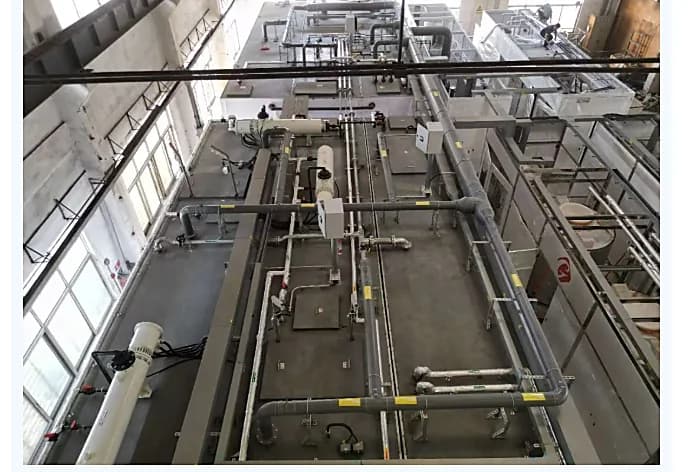
The photograph shows industrial wastewater equipment as manufacturing context and does not identify a screw press or demonstrate cake quality. Confirm the offered package through its drawings, trial records and agreed acceptance plan. A sound purchase makes the liquid return and the solids-disposal route as visible as the dewatering machine itself. This gives operations staff an achievable way to handle routine variability without relying on unverified throughput or dryness promises.
Questions buyers commonly ask
Is wet sludge flow sufficient to size a screw press?+
No. Provide dry-solids loading, composition and available operating hours alongside hydraulic flow. The required duty depends on all of them.
Can a polymer be selected from one visual beaker result?+
Use screening to identify candidates, then evaluate representative drainage and floc robustness under the intended transfer and continuous operating conditions.
Why include filtrate in the project balance?+
Filtrate and wash returns can change hydraulic and suspended-solids loading at their receiving point. Their destination affects the whole wastewater process.
Does this replace the batch filter-press buying decision?+
It is a different equipment mechanism. Compare representative tests, operating continuity, handling and installed scope before choosing the dewatering route.
Turn the guide into a project brief.
Final process selection and performance commitments should follow the complete feed-water analysis, application requirements, site utilities and approved technical agreement.