A composite media vessel purchase needs more than diameter and nominal working pressure. The liner, fittings, internal distributors, draining states and handling method must suit the actual pretreatment service and the complete installed operating sequence.
Identify the exact media-vessel service
Describe the process medium and the bed installed in the vessel. Filtration, adsorption and ion exchange can expose a vessel to different chemicals, temperatures and hydraulic cycles. Provide media type, quantity, operating water level and the proposed internal arrangement. Include backwash, regeneration, cleaning and standby conditions. A vessel selected from diameter alone may fit the room while remaining unsuitable for its chemical exposure or transient operating states.
Distinguish a composite media tank from an RO membrane housing. Their internal duties, supports and access requirements differ even when both use reinforced composite construction. Ask the supplier to identify the actual offered vessel model, liner, outer reinforcement and connection details. Pentair's Structural documentation includes separate installation and handling information, illustrating why product-specific instructions matter. Use the offered manufacturer's current documents rather than assuming every FRP vessel shares the same allowable service and handling method.
Review liner and wetted-component compatibility
List normal water chemistry and every chemical that can reach the vessel during approved operation. Include regenerants, oxidants and cleaning agents at their actual concentrations and temperatures. Review the liner, neck, threaded inserts, seals and internal distributors separately where materials differ. A broad claim of corrosion resistance does not establish compatibility with every combined exposure. Request a documented statement against the defined service rather than a generic description of the composite shell.
If chemical concentration changes during dilution or transfer, identify the peak exposure at the vessel connection. Avoid approving compatibility from a final diluted concentration when a different local condition is credible. Ask whether cleaning or sanitization is restricted by the vessel or its internals. Keep those restrictions aligned with the selected media supplier's procedures. An approved media-cleaning method is not automatically approved for the surrounding vessel, seals and distributor assembly.
Send the feed-water analysis, target quality, required capacity and operating profile. We will help structure the next engineering questions.
Send your project inputsDefine pressure, temperature and cycling states
Provide minimum and maximum operating pressures and temperatures at the vessel, including pump shutoff conditions and any credible control failure considered in the project design. Request the manufacturer's actual service limits and any relationship between pressure and temperature. Include expected operating cycles rather than treating the package as permanently steady. The nominal flange or valve rating should not be substituted for the offered vessel's documented allowable conditions.
Review how pressure is limited and observed during startup, backwash, rinse and isolation. Show relief or other protection where required by the approved design, with a suitable discharge destination. Evaluate adjacent piping and valve actions for transient consequences. The separate water-hammer assessment may inform those limits, but it does not replace vessel-specific review. Keep assumptions explicit so the vessel supplier and system integrator agree which conditions the hardware is expected to withstand.
Check draining and potential vacuum conditions
Follow the sequence when a vessel is drained, a downstream pump operates, a line siphons or a high-level connection empties. Positive-pressure rating alone does not establish allowable vacuum service. Request the offered manufacturer's vacuum limitations and approved protective arrangement. Assess air admission, venting and drainage as a connected system. A small vent connection provides little protection if its valve is closed, obstructed or controlled without regard to the draining state.
Include maintenance and abnormal shutdown in the review, not only automated service operation. Determine how operators verify that the vessel is safe before opening any connection. If a vacuum breaker or other device is specified, define its material, capacity, installation and inspection requirements. The design should account for the actual rate at which liquid can leave. Do not assume that adding any vent component automatically resolves every siphon or vacuum scenario.
Coordinate distributors, media support and backwash
Request drawings showing the inlet distributor, collector, riser, support layers and any retention devices. Establish who selects those internals and who confirms compatibility with media size and operating direction. A purchased vessel shell may not include a complete process-ready arrangement. Compare the same boundary across quotations. Review how backwash flow and bed movement affect internals, and obtain a clear statement of the allowable operating envelope for the complete assembled unit.
Check connection sizes and pressure loss at service and cleaning flow. Identify access for internal assembly and replacement, including the limitations of the vessel opening. Confirm how media is loaded and unloaded without damaging the liner or distributor. If a resin trap or downstream retention device is required, treat it as a separately defined protective interface. It does not excuse an internal design that allows normal media loss during approved operating sequences.
Plan supports, lifting and installed access
Review the vessel base, supports and site foundation with the offered manufacturer's instructions. Include filled weight, media weight and any relevant transport or installation loads in the structural scope. Adjacent pipework should not rely on the vessel neck as an improvised support. Ask for acceptable nozzle loading or connection-support instructions where provided. A tank that stands correctly when empty may experience a different load distribution after media and water are added.
Define approved lifting and handling methods before delivery. Show transport clearance, unloading equipment and the route to the installed position. Protect the vessel against impact and inspect it after handling according to the manufacturer's guidance. Do not improvise lifting from a connection unless the offered instructions explicitly permit it. Preserve access to valves, instruments and the top opening after building services are installed, so routine media work does not require an unplanned dismantling project.
Agree inspection and documentation evidence
Request model identification, drawings, material information, operating limits and inspection records appropriate to the contract. If a particular certification or code basis is required, name it and verify the offered evidence rather than assuming it from a catalogue family. Keep any required pressure-testing method within the manufacturer's approved procedure and the site's responsible engineering review. A test intended to demonstrate compliance should not expose the composite assembly to an unapproved condition.
At site, inspect handling condition, support alignment, piping loads, vents and protection devices before filling. Demonstrate the approved startup, backwash and draining sequences with the actual valves and controls. Record pressure observations at defined points. Include operator training on inspection and return to service after maintenance. Where acceptance remains limited to the shell and mechanical interfaces, state that clearly; filtration or ion-exchange performance requires separate process evidence on the installed media.
Prepare a composite media-vessel enquiry
Send Baihuipu the process description, media and internal arrangement, chemistry, temperature, pressure states, cleaning sequence and installation drawings. Request a proposal that distinguishes shell, internals, valves, protection, handling and site-support responsibilities. Agree inspection evidence and approved operating instructions before fabrication or shipment. This exposes the gaps that can otherwise appear between a vessel catalogue selection and an operable pretreatment package.
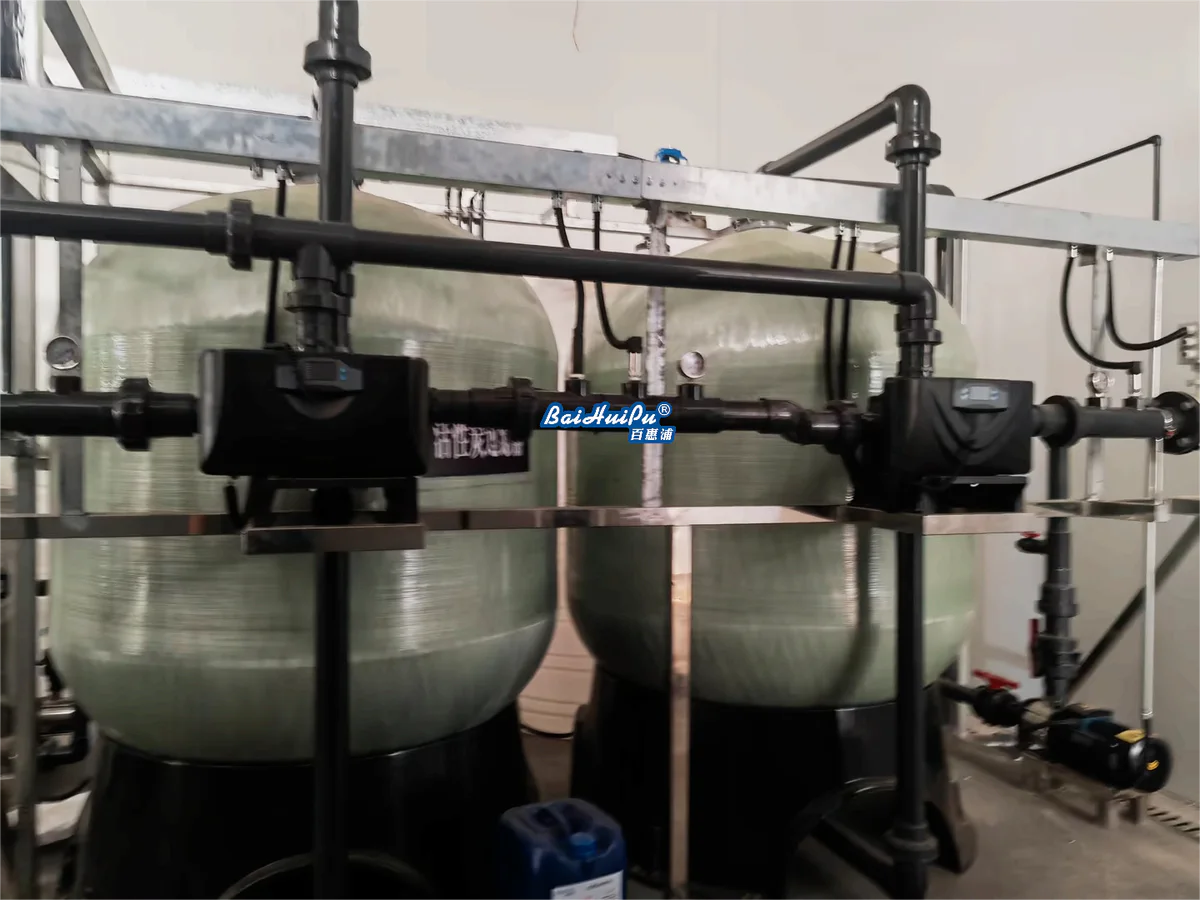
The image shows media-filtration vessels within an existing treatment record as context; it does not certify the material or rating of a proposed vessel. Verify the actual offered model through its documentation and inspection. The related multimedia article addresses bed and backwash process duty, while the membrane-housing guide concerns a different component. Keeping those boundaries clear lets the purchaser assess compatibility, structural limits and maintenance alongside the intended treatment function.
Questions buyers commonly ask
Does a positive-pressure rating establish vacuum capability?+
No. Obtain the offered vessel manufacturer's limits and evaluate draining, siphoning and other potential vacuum states explicitly.
Can a cleaning procedure approved for media be used automatically?+
Review the vessel liner, seals, distributors and temperature limits as well as the media. Approval must cover the complete wetted assembly.
Are shell-only and complete vessel quotations comparable?+
Only after normalizing the scope. Identify distributors, supports, valves, protection devices and installation responsibilities in each offer.
Can the top connection always be used for lifting?+
Follow the product-specific handling instructions. Do not infer a lifting point from a convenient connection or from another vessel design.
Turn the guide into a project brief.
Final process selection and performance commitments should follow the complete feed-water analysis, application requirements, site utilities and approved technical agreement.