Hexavalent chromium treatment needs a defined reduction step and evidence that the treated batch can proceed to the next stage. Procurement should connect segregated source chemistry, representative trials, pH and ORP control, subsequent solids removal and suitable chromium analyses at the release boundary.
Preserve a defined chromium-bearing source
Identify the production operations that generate chromium-bearing wastewater and collect representative analyses from each relevant discharge. Distinguish total chromium from hexavalent chromium using appropriate methods. Include flow, temperature, acid-base condition and other constituents that affect treatment. A single total-metal result cannot establish the oxidation state that the reduction stage must address. Describe batch releases and cleaning campaigns separately so the proposed package is assessed against credible source variation rather than an unrepresentative daily average.
Review segregation and compatibility with the responsible process and chemical engineers. Other industrial streams can change reaction chemistry or create unsuitable conditions when mixed. Do not combine unknown wastes merely to simplify a tank layout. Establish which sources are permitted into the reduction feed and how an unexpected discharge is held for review. The treatment supplier needs a controlled source envelope before making a meaningful proposal for reagent, contact time, monitoring and subsequent chromium removal.
Separate chemical reduction from physical removal
The reduction step changes chromium to a form suitable for the intended downstream removal route; it does not by itself remove chromium mass from water. Show the subsequent precipitation and solids-separation boundary in the process diagram. Include the intended final water destination. A reduction-vessel outlet should not be described as fully treated discharge merely because a control reading has reached its target. The overall process still needs the defined chemical, physical and analytical evidence at each boundary.
EPA's metal-finishing guidance treats hexavalent chromium measurement as direct performance evidence and includes pH, ORP and other variables in process monitoring. Use that distinction in procurement. ORP can support an approved reaction-control strategy, but it is not a species-specific chromium analyzer. Ask the supplier to explain what each signal establishes and what it cannot establish. This keeps an accessible control number from becoming an unsupported substitute for the analysis required by the site's release plan.
Send the feed-water analysis, target quality, required capacity and operating profile. We will help structure the next engineering questions.
Send your project inputsEstablish the reaction basis through trials
Use qualified treatability testing on representative industrial wastewater to select reagent and operating conditions. Record source chemistry, mixing, temperature, additions and analytical results. Evaluate competing reagent demand and variability rather than assuming a theoretical chromium calculation completely defines practical consumption. Keep any test-derived setpoints specific to the tested stream and proposed procedure. Avoid copying a universal pH or ORP value from an application note into a different factory's automatic release logic.
Assess the full sequence through the planned precipitation and separation stages. Some additives, complexing agents or mixed contaminants can affect downstream performance even when reduction is demonstrated. Retain raw laboratory observations and the limits of the interpretation. Identify whether a batch or continuous trial is needed to address scale and hydraulic uncertainty. The purchasing team should understand what evidence supports the proposed process and which source changes would require additional review before operating settings are revised.
Define reaction volume and contact conditions
Provide normal and peak feed schedules, batch sizes and upstream holding capacity. Ask the supplier to define usable reaction volume, mixing and the basis for contact under the proposed operating sequence. In continuous service, review short-circuiting and changing flow. In batch service, define when the reaction period begins relative to filling and reagent distribution. Nominal vessel volume does not establish that every portion of wastewater has received the required and demonstrated treatment opportunity.
Specify materials and mechanical details against the actual feed and reagents. Include access for inspecting deposits, cleaning instruments and maintaining mixers. Determine how a vessel is isolated and drained without sending unverified contents into the release route. Account for cleaning liquid and abnormal batches. A complete package needs an achievable maintenance and containment state, because a process that cannot be safely held or inspected may lose its defined chemistry and analytical boundary during routine plant operation.
Coordinate pH, ORP and reagent control
Request a control narrative showing the order and interaction of chemical additions, mixing and measurement. Identify the reference system and electrode arrangement used for ORP, including its compatibility with the industrial stream. Setpoints are meaningful only within their defined measurement and chemistry basis. Include instrument cleaning, checking and replacement access. A stable displayed ORP does not necessarily establish representative reaction conditions if the electrode is coated, damaged or located where reagent is locally concentrated.
Distinguish low reagent inventory, failed delivery, invalid pH, invalid ORP and lost mixing as separate states. Define what each does to feed and transfer under the approved process plan. Include maximum permitted automatic addition and an appropriate response to failure to reach the expected condition. The equipment should support controlled investigation of an abnormal batch rather than continue adding chemical indefinitely. Agree these responsibilities between the treatment supplier, instrument supplier and site control-system owner before acceptance.
Make analytical release operationally achievable
Select appropriate species-specific and total-chromium analyses with the responsible laboratory. Agree sampling location, preservation, timing and potential interference review for the actual wastewater. Define which result authorizes transfer to precipitation and which result establishes final discharge or reuse suitability. Record the batch or time period represented by each sample. An isolated acceptable laboratory result is weak evidence when it cannot be connected reliably to the water that was actually released from the treatment stage.
Provide hold capacity and a clear release procedure while required results are pending. Include sample identification, approval and the response to an inconclusive or unsuitable result. If a rapid onsite method is proposed, establish its intended role and verification against the approved analytical programme. Do not assume that a screening test is interchangeable with every required laboratory determination. Procurement should connect the analytical workflow to real plant hydraulics so operators can wait for evidence without creating an uncontrolled overflow route.
Include precipitate, sludge and residual streams
Review the chemistry used after reduction to precipitate and separate chromium. Include reagent interactions, residual dissolved metals and solids-capture evidence from the complete treatability sequence. The downstream equipment should be selected for the actual resulting slurry rather than a generic clean-water duty. Where polishing is proposed, establish its feed limits and acceptance role. A resin or membrane package should not be expected to compensate automatically for an undefined reduction or precipitation process.
Characterize sludge and other residuals through the appropriate site programme and define their receiving route. Include reagent packaging, cleaning returns and off-specification holding in the balance. Avoid making unsupported statements about sludge classification or recovery value. The actual composition and destination determine the handling requirements. Assign responsibility for measurements and documentation so a compact reaction skid does not conceal a residual-management duty that remains outside both the supplier's price and the owner's operating plan.
Prepare the chromium-reduction enquiry
Send Baihuipu segregated source analyses, chromium-species data, flow schedules, treatability evidence and the required downstream endpoints. Include laboratory turnaround, holding capacity, site utilities and permitted feed boundaries. Request an integrated reaction, instrumentation, release and precipitation interface. Agree acceptance for mechanical function, protective states and chemical performance under defined conditions. Keep simulated controls testing separate from analytical demonstration on representative wastewater, with unresolved chemistry or source uncertainty explicitly recorded.
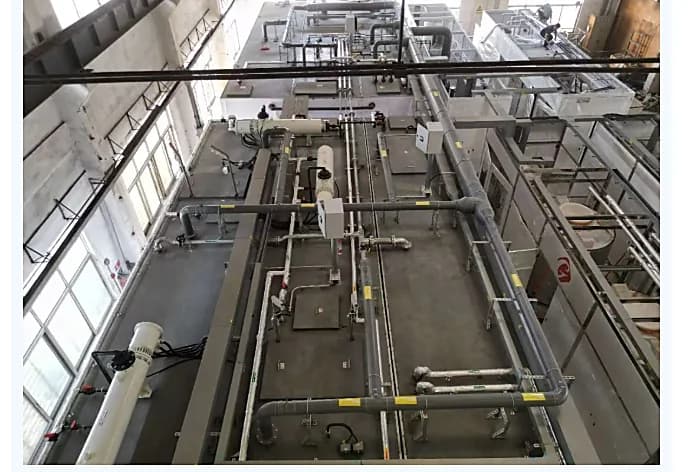
The featured image shows industrial wastewater equipment as manufacturing context and does not identify a chromium-reduction installation or establish any discharge result. Use the actual offered process and test records for acceptance. The linked neutralization and resin articles describe adjacent but different duties. A complete procurement specification connects reduction, subsequent removal and analytical confirmation without treating an ORP endpoint, a pH reading or successful equipment startup as proof that the final water is acceptable.
Questions buyers commonly ask
Does reduction remove chromium mass from the water?+
No. It changes the chromium state for the intended downstream treatment. Define precipitation, separation and final analytical requirements separately.
Can ORP alone authorize final chromium discharge?+
Treat ORP as process-control evidence within an approved strategy. Use appropriate chromium analyses for the actual release requirement.
Can setpoints be copied from another factory?+
Do not assume equivalence. Establish chemistry, electrode basis and operating conditions through representative trials and the approved design.
Why retain wastewater while awaiting analysis?+
Holding connects the laboratory decision to the actual batch and allows controlled investigation without releasing water whose treatment remains unverified.
Turn the guide into a project brief.
Final process selection and performance commitments should follow the complete feed-water analysis, application requirements, site utilities and approved technical agreement.