An industrial SBR must have time and capacity for its whole operating cycle, including settling and decanting. Procurement should connect feed treatability, batch scheduling, upstream storage, biomass management and protected effluent withdrawal so daily capacity remains credible under actual factory inflow.
Establish suitability for the industrial source
Provide flow and organic-load histories across production, cleaning and shutdown periods. Characterize biodegradability and possible inhibition through appropriate testing. Include salinity, temperature and other relevant variations. The SBR process name does not establish that a particular industrial wastewater is biologically treatable. Ask the process specialist to identify the supported feed envelope and any segregation or pretreatment required before reactor sizing and an outlet commitment can be assessed on a defensible basis.
Define the final water destination and the biological objectives separately. Carbon removal, nitrification and other proposed functions require their own design assumptions and evidence. Consider the effect of intermittent factory feed on biomass maintenance. Avoid assuming that batch operation automatically solves every variability problem. A reactor can be scheduled flexibly only within its actual biological, hydraulic and solids-separation limits, which should be identified before equipment, storage and commissioning responsibilities are divided between suppliers.
Understand the proposed cycle
EPA describes conventional SBR operation through fill, react, settle, decant and idle phases. An offered industrial system may modify or combine activities, so request the actual sequence and process diagram. Identify when wastewater enters, when mixing or aeration operates and when clarified water leaves. Do not assume that all units sold as SBRs have the same inflow or decanter arrangement. Their operating boundaries and evidence for protecting settling can differ materially.
Ask how each phase supports the stated treatment objective. Record the maximum working level, minimum level and usable batch volume. Include sludge wasting and any required cleaning activity within the schedule. Reactor volume alone does not establish daily throughput. The purchaser needs a complete time-and-volume balance showing how the offered basins repeatedly process the required industrial inflow while preserving the conditions needed for biological reaction and the intended solids-separation step.
Send the feed-water analysis, target quality, required capacity and operating profile. We will help structure the next engineering questions.
Send your project inputsCalculate capacity using the complete schedule
Review normal, peak and low-production schedules using the approved cycle lengths and usable decant volume. Include periods when a basin cannot receive influent. Distinguish installed volume from volume actually exchanged during each cycle. If the supplier claims flexible timing, ask what limits prevent shortening reaction or settling below the supported process basis. A capacity table should show the actual operating combinations rather than multiply the entire tank volume by an optimistic number of daily cycles.
Assess maintenance and unavailable-basin cases against the site's continuity requirement. Determine whether inflow must be reduced, stored or routed to an approved alternative when one basin is unavailable. Include commissioning and biological startup, when full treatment duty may not yet be established. The comparison should show realistic plant capability under the specified conditions. A redundant pump does not provide biological redundancy when there is no available reactor volume or acceptable route for incoming wastewater.
Provide an achievable inflow-storage strategy
Map factory discharges against the times when reactors can accept feed. Establish upstream storage using the actual inflow and cycle schedule, including credible peaks. Define mixing and any necessary source segregation in that storage. An SBR can perform several functions in one vessel, but it does not eliminate the need to accommodate wastewater arriving while that vessel is settling, decanting or otherwise unavailable for the proposed fill sequence.
Specify high-level response and the destination of abnormal influent. Include how production personnel learn that available treatment or holding capacity is constrained. Review the transfer-pump and inlet-valve interfaces with the cycle controller. A tank shown upstream on a diagram is insufficient if its usable volume, controls and overflow route are undefined. The procurement package should demonstrate how water remains within the approved treatment boundary through both routine scheduling and a delayed or interrupted batch.
Coordinate aeration and mixing across liquid levels
Define oxygen demand and minimum mixing for the actual reactor levels and operating phases. Diffuser submergence and available pressure can change as the basin fills or decants. Ask the aeration designer to coordinate those conditions with blower operation and the process sequence. Keep oxygen transfer, solids suspension and any anoxic mixing requirement distinct. Equipment that performs well at the maximum tank level may not establish acceptable operation throughout the entire batch range.
Include instrumentation and control assumptions for dissolved oxygen and other signals used to alter the cycle. Specify sensor validity, maintenance and fallback decisions. If a phase duration can change automatically, define the allowable range and its effect on hydraulic capacity. Avoid allowing an unreviewed controller adjustment to consume the storage margin assumed by another part of the design. Biological optimization and factory inflow accommodation must remain coordinated within the documented operating envelope.
Protect settling and decanting
Obtain representative settling evidence for the actual biological sludge and expected feed conditions. Define how quiescent settling is established and how inflow or other disturbances are handled in the offered design. Request the basis for the decant start, duration and withdrawal location. A clear sample from the tank surface does not prove that the decanter will maintain acceptable solids separation through its full drawdown or at the maximum proposed withdrawal rate.
Review scum exclusion, sludge-blanket clearance and the condition of water initially held in decanter piping. Include the response to a failed decanter drive, valve-position mismatch or unsuitable outlet quality. Define where a questionable decant can be held. The purchased process should provide a protected withdrawal sequence rather than rely on operators to infer that settling must have completed because a timer expired. Agree which observations and instruments support the approved release decision.
Define wasting and recoverable control states
Establish sludge-wasting responsibilities and the measurements used to manage biomass inventory. Include transfer, storage and dewatering interfaces, with returned liquid accounted for in the balance. Avoid defining wasting solely as an arbitrary daily pump runtime without a process basis. The biological designer should identify what operating evidence is needed to assess sludge condition and adjust the approved programme as actual industrial loading becomes known during startup and subsequent operation.
Specify how the controller handles interrupted power or an incomplete phase. Record level, sequence position and valve status needed for a safe and controlled restart. Include manual operation and the conditions requiring supervisor review before decanting. A simple restart at the first timer can produce a hydraulically or biologically unsuitable sequence if the basin already contains a partially treated batch. Test recovery using approved simulations and document the resulting states so operators understand what water remains eligible for release.
Prepare an SBR procurement enquiry
Send Baihuipu source analyses, biodegradability evidence, inflow schedules, required endpoints and the available storage arrangement. Include maintenance cases, aeration utilities, sludge destinations and the desired control interfaces. Request a time-and-volume balance, actual cycle narrative and decanter evidence. Agree mechanical and process acceptance separately, with representative loading and biological readiness defined. Record what is demonstrated at commissioning and which operating cases rely on reviewed design calculations or additional trial evidence.
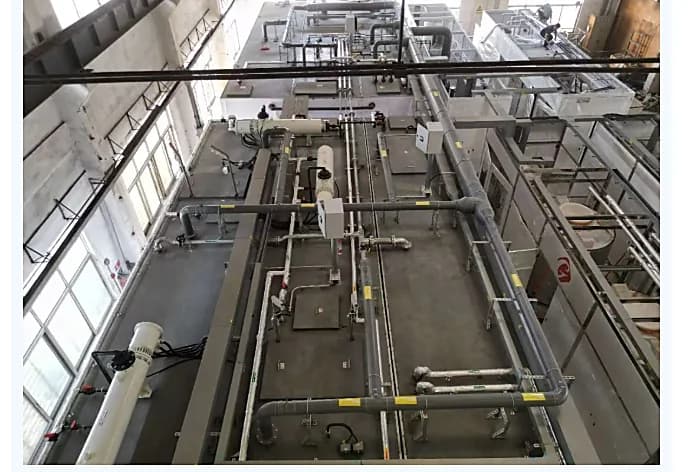
The featured photograph shows industrial wastewater equipment as context and does not identify an SBR or establish biological removal. Use offered process documents and site analytical records for acceptance. The related equalization and MBR guides address upstream buffering and a different solids-separation route. Comparing these boundaries explicitly helps the buyer assess whether batch settling fits the factory's real inflow and staffing constraints without claiming that every compact biological package provides the same installed capability.
Questions buyers commonly ask
Does total reactor volume equal the treated volume per cycle?+
No. Define the usable exchanged or decanted volume, operating levels and the time required by the complete cycle.
Can upstream storage always be omitted?+
Only when the offered inflow and cycle arrangement demonstrably accommodates the actual source schedule, including interruptions and maintenance cases.
Does a timer prove settling is satisfactory?+
No. Establish representative settling behaviour and a protected decant sequence with appropriate checks and defined responses to unsuitable conditions.
Why test restart after power interruption?+
The basin may contain a partly treated batch. Recovery must preserve the treatment and hydraulic boundary before feed or decant resumes.
Turn the guide into a project brief.
Final process selection and performance commitments should follow the complete feed-water analysis, application requirements, site utilities and approved technical agreement.