On-site hypochlorite generation changes the chemical-supply boundary of an industrial water plant. The enquiry needs to cover salt and water quality, electrical duty, hydrogen management, product storage and continuity of disinfectant delivery through planned and unplanned generator outages.
Define the disinfectant demand boundary
Identify each industrial water user and the purpose of chlorination at that location. Provide water-flow histories, seasonal conditions and representative demand measurements where available. Distinguish generator output from applied dose and from residual at the required monitoring point. These are different quantities. A generator selected from average water flow alone may not establish the capacity needed during peak demand, product transfer or an interruption in the normal production schedule.
State the approved treatment objective and the limits imposed by downstream materials or production chemistry. Some receiving equipment requires oxidant removal before use, so include that interface in the overall water train. Hypochlorite generation does not by itself establish effective disinfection or compatibility with every process. Ask the process owner to define contact conditions, residual monitoring and release requirements separately from the equipment supplier's demonstration of generated-product concentration and quantity.
Identify the offered electrolysis process
ProMinent describes hypochlorite generation from diluted salt solution and highlights hydrogen extraction within its electrolysis package. Different cell arrangements can have different product and auxiliary boundaries. Ask each bidder to identify the actual process, including whether its cell system is membrane separated or an open-cell arrangement. Obtain the process diagram and product specification rather than assuming that every equipment item described as electrochlorination has interchangeable chemical outputs or installation needs.
Define the complete scope from salt receiving to the dosing-system inlet. Include brine preparation, feed-water conditioning, cells, rectifier, ventilation, product tanks and controls. Identify any residual brine, cleaning liquid or other waste stream. Record which components are site supplied and which are included. A quotation should allow the buyer to trace the generated chemical through a complete and operable arrangement, with clear responsibility for every utility and residual-stream connection.
Send the feed-water analysis, target quality, required capacity and operating profile. We will help structure the next engineering questions.
Send your project inputsSpecify salt and feed-water quality
Obtain the offered manufacturer's requirements for salt purity and relevant impurities. Review the proposed local salt supply against that specification with documented analyses. A generic description such as industrial salt does not establish suitability for the cell or product objective. Include transport, storage and dissolving arrangements that preserve the required condition. Ask how changing salt lots is managed and what checks are needed before accepting a different supplier or grade.
Provide feed-water analyses, temperature and supply-pressure variation. Include softening or other conditioning where required by the offered design, along with its regeneration and waste interfaces. Determine how hardness breakthrough or inadequate water flow is detected and what stops generation. Keep pretreatment duty visible in capacity and utility comparisons. The generator cannot be assessed independently of the actual water supplied to its cells, especially when a favourable catalogue rating assumes a narrower temperature or quality envelope.
Engineer hydrogen extraction as a complete system
Salt electrolysis can generate hydrogen, so request the manufacturer's ventilation and gas-management requirements for the exact offered process. Have the responsible project engineers coordinate the package with the room and discharge location under applicable site requirements. Define ventilation proving, interlocks and the response to extraction failure. Do not treat an exhaust connection on the skid as evidence that the installed system has an acceptable hydrogen route through the building and into its surroundings.
Include duct routing, discharge restrictions and the ownership of any required detection or protective functions. Review operating, standby, cleaning and power-loss states with the supplier. Obtain an approved commissioning procedure for the gas-management interfaces using appropriate simulations or measurements. Avoid inventing a universal ventilation rate or relying on normal room ventilation without design evidence. The purchase should specify a coordinated protective arrangement whose required performance and responsibilities can be reviewed before equipment arrives on site.
Match product inventory to generation availability
State generated-product concentration on a clear analytical basis and define the duty over the relevant operating conditions. Calculate storage and transfer needs from the actual demand profile and approved availability strategy. Include the effects of maintenance and interrupted utilities. A large generator running intermittently and a smaller continuously operating generator can create different inventory and turnover conditions. Compare the complete supply arrangement rather than equating nominal output with continuous chemical availability at every dosing point.
Review product ageing, temperature and storage compatibility with the supplier and chemical specialists. Specify the sampling and checks used to establish usable product quality. Avoid excessive inventory assumptions that ignore changes during storage. Include high and low levels, transfer failure and the consequence of a full product tank. Where backup chemical supply is required, define its approved connection and concentration differences so an outage strategy does not introduce an unreviewed dosing or materials problem.
Coordinate dosing and residual measurement
Identify the product-transfer boundary and the delivery conditions needed by each metering system. Include dilution, injection, mixing and backflow prevention appropriate to the actual arrangement. Specify dose verification during commissioning and the response to no water flow. A running generation cell and a running metering pump are separate equipment states; neither alone proves that the intended disinfectant quantity has reached the process or that the required residual has been achieved.
Choose residual monitoring and sampling for the stated water objective. Define measurement validity, transport delay and maintenance states in the control system. The linked chlorine-analyzer article addresses those analytical interfaces. Where water subsequently feeds RO or another oxidant-sensitive process, coordinate dechlorination and protective actions explicitly. Keep generation capacity, applied chemical, measured residual and final process-water release as distinct evidence so operators can locate a failure without assuming one successful upstream signal validates the complete treatment train.
Include cleaning, electrical and residual duties
Request cell inspection and cleaning requirements using the manufacturer's approved methods. Include chemical compatibility, isolation, flushing and the destination of cleaning liquid. Define how operators confirm readiness after maintenance. Review replacement access for cells, power components and ancillary equipment. Routine service should be achievable without dismantling unrelated piping or losing access to the ventilation components on which the approved operating state depends.
Obtain electrical input and utility requirements across the offered operating range, with reference conditions stated. Include pretreatment, ventilation and auxiliary consumption when comparing total installed scope. Any predicted operating-cost comparison should use local salt, energy, water and maintenance assumptions that the purchaser can review. Do not transfer a vendor's consumption figure or savings percentage to another installation without confirming its basis. Record uncertainty where actual demand or local supply quality remains to be demonstrated.
Prepare the electrochlorination procurement package
Send Baihuipu water-use profiles, chlorination objectives, source analyses, salt availability, installation drawings and continuity requirements. Include ventilation-routing constraints, electrical conditions and the dosing interfaces. Request a coordinated scope and an acceptance plan for product quality, delivered quantity, protective functions and outage transitions. Keep chemical-generation acceptance separate from process disinfection acceptance, which also depends on the treated water and the approved contact and monitoring conditions at the actual point of use.
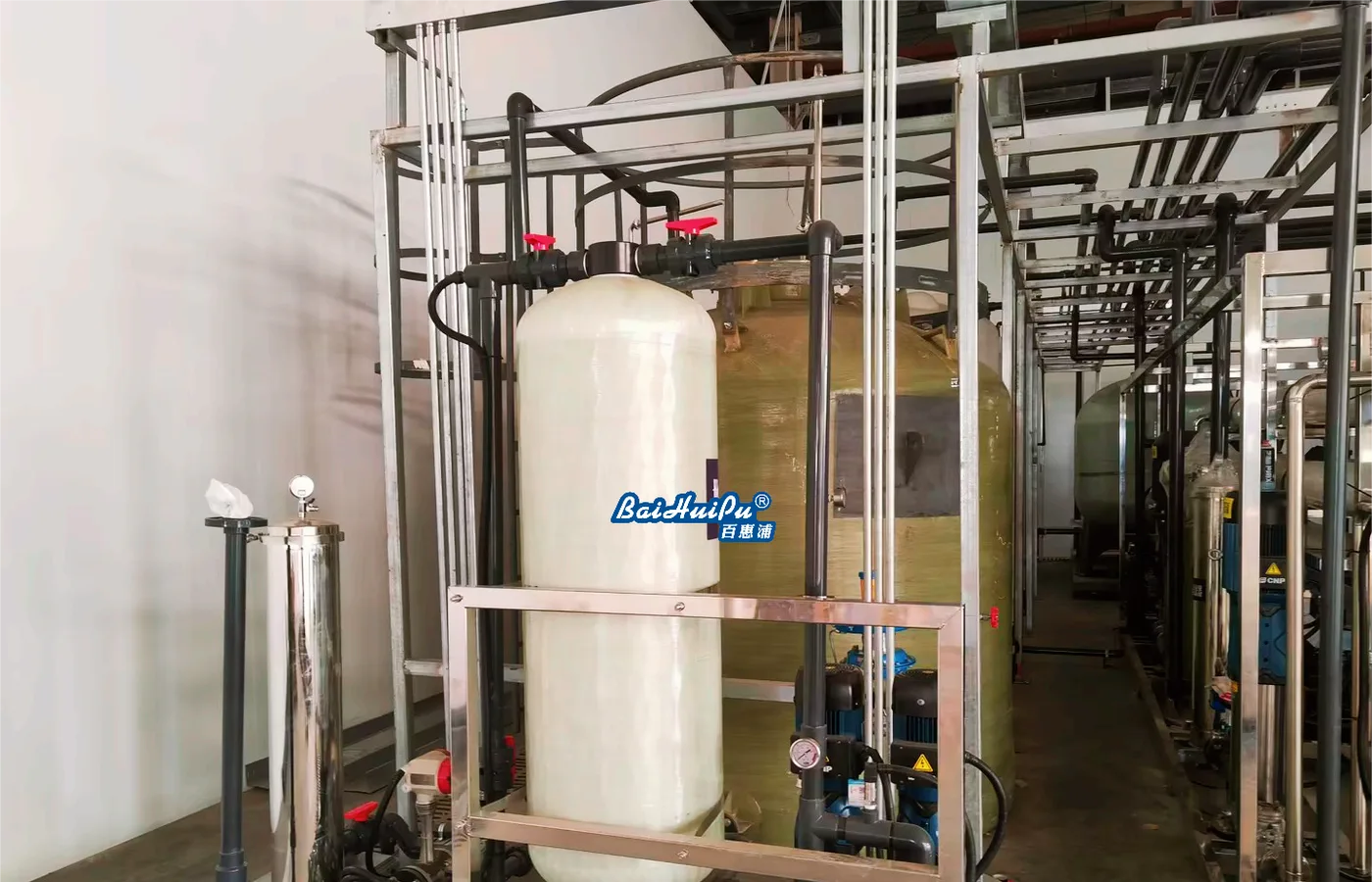
The featured photograph shows industrial water equipment as context and does not identify an electrochlorination cell or establish disinfectant performance. Use the offered process documents and site test evidence for acceptance. The related chemical-storage guide helps define receiving and inventory interfaces. A complete enquiry joins generation, hydrogen management, storage and dosing without implying that on-site production removes the need for engineered chemical handling, appropriate maintenance or a verified downstream water-quality decision.
Questions buyers commonly ask
Does generated hypochlorite output prove disinfection?+
No. Disinfection also depends on the actual water, dose delivery, contact conditions and appropriate residual or other verification at the required location.
Can any industrial salt be used?+
Verify the offered cell manufacturer's purity and impurity limits against documented supply analyses and storage conditions.
Is a skid exhaust flange a complete hydrogen-management system?+
No. Coordinate extraction, proving, interlocks, ducting and discharge with the responsible project engineers and the offered equipment requirements.
Why define backup-product concentration?+
An alternate supply can differ from generated product. Review dosing capacity, settings, materials and the approved changeover procedure before use.
Turn the guide into a project brief.
Final process selection and performance commitments should follow the complete feed-water analysis, application requirements, site utilities and approved technical agreement.