A water-treatment chemical package begins at delivery and ends at the dosing or preparation connection. Define unloading, inventory, compatible materials, containment and control responsibilities together so the factory can receive and use the selected chemical within an engineered site arrangement.
Draw the delivery-to-dosing boundary
Identify each chemical, its delivered concentration and the equipment that will receive it. Mark the receiving connection, storage tank, transfer arrangement and final dosing or preparation interface on one drawing. State who supplies hoses, unloading equipment, valves and controls. A dosing skid quotation may begin at a small suction connection and leave the entire delivery route unresolved. The project needs an assigned responsibility for that route before equipment layouts are fixed.
Obtain the chemical supplier's current product and handling information for the actual grade proposed. Review it with the responsible site disciplines when selecting materials and operating arrangements. Similar chemical names can conceal different concentrations or additives. Avoid treating one compatibility statement as covering every delivered product. If the chemical programme is still undecided, define that uncertainty and a selection hold point rather than approving a tank based on an assumed future chemical.
Size usable inventory around actual logistics
Estimate normal and variable consumption from the agreed water-treatment programme. Include commissioning, seasonal changes and production schedules where they affect demand. Compare consumption with delivery quantity, lead time and site access. Gross tank volume is different from usable inventory after operating levels, residual contents and any required free space are considered. Ask the supplier to state these quantities separately so purchasing can judge whether the storage arrangement matches the replenishment plan.
Review the consequence of an interrupted delivery or unavailable tank. Decide whether duty storage, reserve inventory or another operational measure is appropriate for each chemical. Do not assume a universal number of storage days makes every programme reliable. Chemicals with limited storage stability or special temperature needs may impose different constraints. A realistic inventory proposal follows the actual product and supply chain, including the site's ability to inspect and maintain the equipment while treatment continues.
Send the feed-water analysis, target quality, required capacity and operating profile. We will help structure the next engineering questions.
Send your project inputsVerify all contacted materials
Create a materials schedule for tank surfaces, linings, gaskets, hoses, valves, pumps and instruments. Confirm suitability at the actual concentration and temperature, including cleaning and any dilution step. A compatible tank shell does not establish the suitability of its fittings or level device. Ask for manufacturer-supported material selections and any limitations. Keep substitutions subject to the approved chemical basis so a procurement change does not silently invalidate the reviewed arrangement.
Include external exposure, mechanical support and the environment around transfer connections in the design review. Assess access for inspection and the ability to recognize degradation under the site's maintenance programme. Where a tank depends on a lining or other protective construction, define documentation and inspection needs. The correct scope varies with the equipment and chemical; the purchase specification should identify the responsible engineering assessment rather than attach an unsupported blanket lifetime to the installation.
Engineer receiving and unloading interfaces
Locate the unloading area and review the actual delivery equipment with the chemical supplier and site team. Identify connection types, identification, isolation, routing and the destination of residual contents. Determine how the operator confirms the correct product and available capacity before transfer. The package should provide a clear process for receiving chemicals rather than relying on matching hose appearance or an informal understanding between the driver and a visiting commissioning technician.
Define communication and stop arrangements between unloading and the receiving system. Review how transfer is terminated and how the line is left after delivery. Include any necessary drain or flushing destination and prevent an undefined waste connection from becoming a routine site improvisation. Acceptance should demonstrate the assigned interfaces with the intended equipment. A pump operating on water inside the workshop does not verify every condition involved in an actual chemical delivery at the factory.
Separate inventory indication from protection functions
Specify continuous level information for operating inventory and identify any separate protective functions needed by the engineered design. State the purpose, response and independence required for each. Manufacturer information describes independent overfill prevention as a distinct function in chemical storage applications; whether and how it applies here requires the project assessment. Do not treat the presence of a level transmitter as proof that every receiving or transfer protection has been completed.
Review alarms, permissives, final devices and confirmation signals together. Define the response to unavailable level information, unexpected valve state or communication loss. If an action relies on an operator, identify the available response time and how the alarm reaches that person. Test the complete chain during commissioning. The acceptance record should state which functions were demonstrated and under what conditions, rather than equating a simulated screen indication with proven interruption of the actual transfer path.
Provide containment and segregated drainage
Have the responsible site disciplines define containment and separation for the actual chemical inventory and installation requirements. Include unloading connections, transfer equipment and likely maintenance locations in the review. Route collected liquids to a defined inspection and disposal process. A contained area is not a useful control if its drain normally bypasses the intended boundary or sends incompatible material directly into a common wastewater stream without assessment.
Consider access, weather exposure and the way operators identify and respond to collected liquid. Specify level or leak observations where the design requires them and define their control-system interface. Keep incompatible chemical routes distinct according to the approved design. The procurement documents should show what is included and what the civil or site contractor supplies. This makes the package reviewable without inventing a generic containment size or claiming compliance with requirements that have not been established for the project.
Match transfer equipment to the receiving duty
State transfer flow, destination pressure, elevation and operating sequence. Distinguish bulk transfer from final metering into the water process. Review pump suction, dry-running response, trapped liquid and maintenance isolation with the selected equipment supplier. Include recirculation or pressure management only where the design justifies it. A transfer package should support the receiving tank or dosing skid's actual needs without imposing an unreviewed pressure or flow condition on its connections.
Define how a receiving day tank calls for replenishment and how filling stops. Include maximum inventory, unavailable destination and conflicting commands from local and remote controls. Agree what happens after a power interruption and how the operator confirms readiness to restart. Show the responsibility for each signal on an interface list. Many avoidable commissioning gaps arise because two vendors each assume the other provides the final permission or stop command across the package boundary.
Prepare acceptance and the project enquiry
Request drawings, materials records, instrument schedules, operating narratives and test plans before fabrication. Inspect the supplied scope and demonstrate relevant functions with a medium and procedure approved for the equipment. Final site acceptance should verify installed receiving, level, transfer and drainage interfaces under an agreed plan. Send Baihuipu the selected chemical data, consumption envelope, delivery information and site constraints so the quotation can identify remaining engineering decisions and assigned responsibilities.
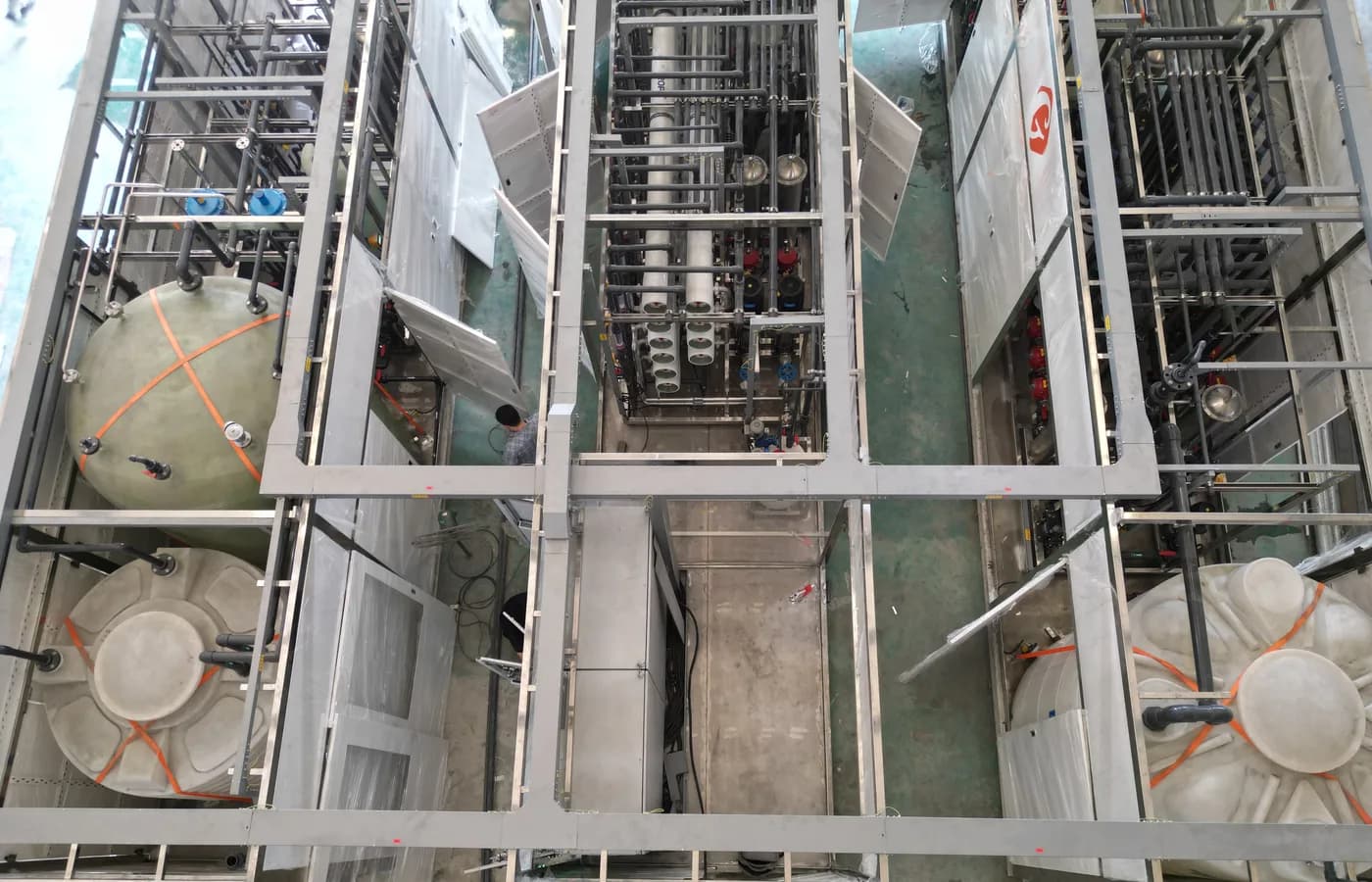
The photograph shows industrial equipment layout as context; it does not depict a chemical storage installation or establish chemical compatibility. Confirm the actual package through approved documents and site verification. A complete enquiry follows the product from delivery to the dosing boundary and accounts for maintenance and residual liquids. That practical boundary helps the owner compare offers that otherwise appear similar while omitting materially different parts of the receiving and storage duty.
Questions buyers commonly ask
Is tank volume the same as usable chemical inventory?+
No. Operating levels, residual contents and the approved filling basis affect usable inventory.
Does a compatible tank establish package compatibility?+
No. Review every contacted material, including hoses, seals, valves, pumps and instruments.
Can a dosing skid quote cover bulk unloading automatically?+
Only if that scope is explicitly included. Mark the delivery and transfer responsibilities on the interface drawing.
Should inventory measurement and protective functions be defined separately?+
Yes. State each function, its response and the required engineering basis, then test the complete installed chain.
Turn the guide into a project brief.
Final process selection and performance commitments should follow the complete feed-water analysis, application requirements, site utilities and approved technical agreement.