High COD alone does not establish whether anaerobic treatment is suitable for an industrial wastewater. Procurement should connect biodegradability and inhibition evidence with biomass retention, startup planning, downstream polishing and an engineered biogas destination.
Separate total COD from usable biological load
Collect representative flow and composition data across production campaigns, cleaning events and source changes. Total COD is an aggregate analytical result; it does not identify the biodegradable fraction or guarantee useful anaerobic conversion. Request appropriate biodegradability and inhibition testing for the actual stream. Include suspended and soluble fractions where they matter to the proposed reactor. Record how samples were stored and prepared so the trial evidence can be interpreted against the intended feed.
Identify process chemicals that may inhibit or destabilize the selected biology. Salinity, cleaning agents, temperature shifts and unusual production discharges deserve explicit review. Do not assume that a wastewater is suitable because another facility in the same industry uses anaerobic treatment. The purchasing question concerns this source mixture and its variation. If source segregation can remove an unsuitable discharge, compare that option before asking a biological package to absorb every intermittent condition from the factory.
Explain the offered reactor mechanism
Veolia describes Biothane UASB as an anaerobic granular-biomass technology for wastewater treatment. This establishes one process class and its biomass-retention concept, not a transferable performance promise. Ask each supplier to explain the offered reactor, mixing or recirculation, solids retention and gas separation. Distinguish a granular high-rate reactor from a mixed digester or an anaerobic membrane arrangement. Their feed limits and equipment boundaries should not be treated as identical merely because all operate anaerobically.
Request a process diagram showing influent preparation, recirculation, reactor liquid, biomass, gas and residual solids routes. Explain where the biological conversion occurs and how active biomass remains in the system. Include the mechanism used to manage incoming solids and floating material. A reactor-volume quotation without those interfaces leaves the buyer unable to compare useful treatment capacity, startup needs or the consequence of changing feed composition.
Send the feed-water analysis, target quality, required capacity and operating profile. We will help structure the next engineering questions.
Send your project inputsBuild a representative treatability programme
Agree test objectives with the process specialist, including the evidence needed for conversion potential and inhibition. Use samples that represent difficult as well as ordinary operation. Record feed composition and test conditions with the results. A positive test on one convenient soluble organic stream may not cover the combined factory wastewater. Ask what uncertainty remains and whether a continuous pilot is justified before selecting a reactor or making a contractual outlet commitment.
Connect laboratory findings to the proposed design basis through documented assumptions. Specify the feed envelope, organic-loading basis, temperature and expected variability. Keep raw observations and interpretation available for review rather than relying only on a summary removal percentage. If the supplier proposes staged loading or acclimation, include that in the startup schedule. Biological readiness is a process condition that needs evidence; it is not established solely by completing mechanical installation.
Define equalization, temperature and nutrient interfaces
Identify the buffering needed to keep feed within the demonstrated envelope. Include flow peaks, concentrated cleaning discharges and the consequence of a stopped downstream user. Review mixing and diversion within the equalization boundary. A nominal tank volume does not guarantee an acceptable biological inlet if incompatible streams enter without control. State how abnormal feed is identified and where it can be held while its suitability is reviewed.
Assess temperature management, pH and buffering requirements with the selected biology and trial evidence. Include nutrient or trace-element requirements only on an approved site-specific basis. The package needs a clear statement of which utilities and chemicals it relies on and how their failure affects loading. Avoid prescribing a universal recipe. The proper operating conditions belong to the actual wastewater and reactor system, and their ownership should be explicit in the proposal.
Make biomass supply and startup achievable
Specify the source, suitability, transport and handling of seed biomass where required by the offered process. Obtain a startup plan tied to feed availability, analytical support and operator attendance. Include how loading increases are authorized and how adverse trends are investigated. Production schedules should allow the biological process to establish its approved state rather than assuming full design duty immediately after filling the vessel.
Discuss planned and unplanned feed interruptions. Ask how the biomass is maintained during shutdown and what evidence is needed before returning to normal loading. Include the consequences of a toxic or otherwise unsuitable discharge, without inventing a universal recovery time. Define supplier support and responsibilities for startup data interpretation. The buyer needs to compare an operable commissioning service, not simply a reactor with an undefined requirement to obtain and establish its own biological inventory.
Engineer the complete biogas boundary
Identify expected gas constituents through a justified design basis and appropriate testing, then define collection, conditioning and the approved destination. Include condensate, pressure control and the interface with any energy user or disposal equipment. Biogas can contain hazardous components and combustible material, so the detailed gas-system design belongs with qualified responsible engineers. Obtain the site's applicable design requirements and approvals rather than treating a pipe leaving the reactor as a completed gas-handling scope.
Define what happens when the intended gas user is unavailable. Include instruments, alarms and protective equipment within a clear vendor and site boundary. Keep any energy-recovery claim dependent on measured conversion, gas characteristics, availability and the actual receiving equipment. A process that generates gas does not automatically establish useful energy export or a financial saving. The proposal should describe which measurements and interfaces would be needed to evaluate those outcomes after operation begins.
Include liquid polishing and residual solids
State the required downstream water condition and compare it with the demonstrated anaerobic outlet. Residual organics, suspended solids and nutrients may require further treatment depending on the use or discharge requirement. Include the hydraulic and analytical interfaces with that stage. The linked aerobic-treatment guides cover possible different process boundaries, but they should not be added as generic guarantees without evaluating the actual anaerobic effluent and its receiving requirement.
Account for biomass withdrawal, trapped solids, gas-system condensate and cleaning returns. Identify storage and disposal responsibilities and include returned liquid in the overall plant balance. Review access for inspecting separators and other internal equipment. A biological conversion package still has maintenance and residual-stream duties. Ask bidders to show those flows explicitly so a small equipment footprint is not mistaken for a small total installed scope or negligible ancillary treatment requirement.
Agree acceptance and send a complete RFQ
Separate vessel, instrument and control inspections from biological process acceptance. Agree representative loading conditions, stabilization criteria, sampling methods and the data needed to establish performance. Include gas-system readiness and downstream availability before starting process tests. Document feed excursions and their treatment in the acceptance procedure. Avoid a test plan that selects one favourable operating period while excluding routine source variation that the package was intended to manage.
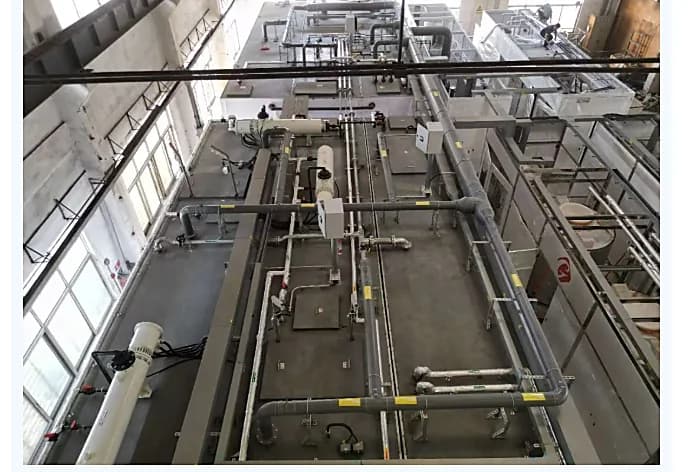
Send Baihuipu source analyses, flow and load histories, treatability evidence, temperature conditions, startup constraints and the proposed gas and liquid destinations. Request explicit reactor, biomass, utility, monitoring and service boundaries. The featured photograph shows industrial wastewater equipment as manufacturing context; it does not identify an anaerobic reactor or demonstrate gas production. Assess the actual offer through specialist process evidence, approved drawings and an acceptance programme suited to the defined wastewater.
Questions buyers commonly ask
Does a high COD value prove anaerobic suitability?+
No. Establish biodegradable load, inhibition and representative operating conditions. Total COD alone does not describe biological conversion potential.
Can full duty be assumed immediately after mechanical startup?+
No. Obtain a biomass and loading plan with approved evidence for progression to normal service. Include analytical support and operator responsibilities.
Does biogas production automatically mean energy savings?+
No. Useful recovery depends on measured gas characteristics, equipment, availability and the receiving system. Keep financial claims separate from conversion potential.
Is anaerobic effluent automatically ready for reuse?+
No. Compare its demonstrated condition with the actual reuse requirement and specify any necessary downstream treatment and release evidence.
Turn the guide into a project brief.
Final process selection and performance commitments should follow the complete feed-water analysis, application requirements, site utilities and approved technical agreement.